Kirjojen hintavertailu – 12 903 725 kirjaa ja 27 kauppaa

Kirjailija

Jacob D. Myers

Kirjat ja teokset yhdessä paikassa: 7 kirjaa, julkaisuja vuosilta 2015–2025, suosituimpiin kuuluu In Tongues of Mortals and Angels. Vertaile teosten hintoja ja tarkista saatavuus suomalaisista kirjakaupoista.

Nimi esiintyy myös muodoissa: Jacob D Myers

7 kirjaa

Kirjojen julkaisuvuodet: 2015–2025.

Stand-up Comedy, Theology, and Ethics

Stand-up Comedy, Theology, and Ethics

Jacob D. Myers; Nicole Graham

BLOOMSBURY PUBLISHING PLC
2025
sidottu
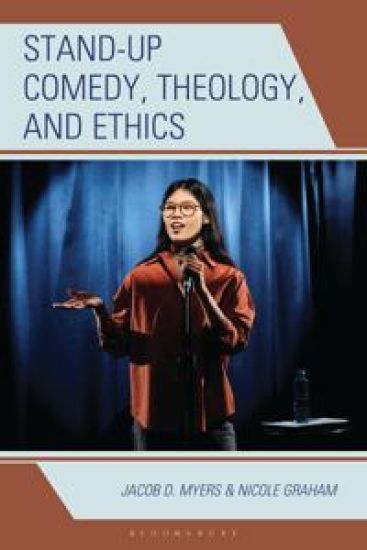
Bringing together the distinct but connected disciplines of theology and ethics, Stand-up Comedy, Theology, and Ethics adds to the growing field of humor and religion. Beginning by re-considering what we know about jokes and laughter, the authors propose that more attention needs to be paid to the quasi-sacramental, magical quality of jokes and the ways laughter can shift the affective states of an audience. They then turn their attention to key issues and debates within stand-up comedy. First, is the comical legitimacy or illegitimacy of comedians who employ humor ambiguously so that we are not sure at who or what they are “punching”. Second, is the phenomenon of canceling comedians for their behavior off stage. Third, is the sociopolitical possibilities of stand-up. Ultimately, the authors argue that there is theological, religious, and ethical significance to contemporary stand-up comedy.
Preaching Philosophy

Preaching Philosophy

Jacob D. Myers; Sunggu A. Yang

Baylor University Press
2025
pokkari
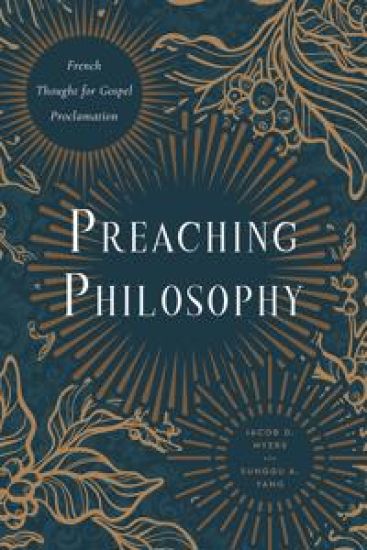
Philosophy preaches, and the pulpit preaches philosophy. As with all guilds, homiletics orients itself around a canon that constitutes its ways of being, behaving, and belonging. Part of the process of becoming a homiletician entails demonstrating one's mastery of certain concepts and texts. Doctoral research in homiletics maintains its disciplinary boundaries by requiring students to demonstrate familiarity with and understanding of those authors who have established the "proper" methods and modalities of preaching. In Preaching Philosophy, Jacob D. Myers and Sunggu A. Yang stage an intervention at this foundational pedagogical site by challenging the philosophical assumptions operative in the works of a selection of canonical characters and texts in the field of homiletics. The book arises from the conviction that critical homiletical scholarship must extend beyond those authors and texts that predominate preaching syllabi in North American seminaries and divinity schools. Furthermore, Myers and Yang argue that it is not enough to challenge another's wisdom on how to preach faithful and effective sermons. Rather, one must also discern and question the a priori assumptions undergirding said wisdom. This is precisely what Preaching Philosophy seeks to do: to trouble the philosophical assumptions presupposed by foundational figures in homiletics. Much homiletical theory prior to the 1960s arises from Kantian convictions about the limits of human rationality vis-à-vis the divine. As traditional, deductive preaching styles made way for the inductive logics constituting the New Homiletic, Heidegger and Kierkegaard came to supplant Kant's long ascendancy by shifting attention to the role of discourse in sermonic reception. Building on this foundational shift, Preaching Philosophy looks to francophone theorists from the second half of the twentieth century to intervene in how we conceptualize homiletical theories and theologies. Each chapter stages a critical encounter between a foundational homiletician and a French philosopher in hope of introducing new concepts and angles of critique into homiletical scholarship.
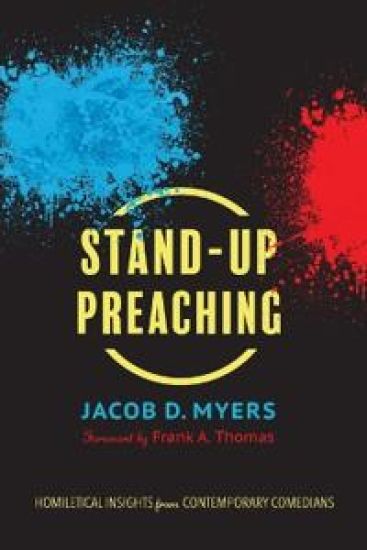
Stand-Up Preaching

Stand-Up Preaching

Jacob D Myers; Frank a Thomas

Cascade Books
2022
pokkari
Few vocations share more in common with preaching than stand-up comedy. Each profession demands attention to the speaker's bodily and facial gestures, tone and inflection, timing, and thoughtful engagement with contemporary contexts. Furthermore, both preaching and stand-up arise out of creative tension with homiletic or comedic traditions, respectively. Every time the preacher steps into the pulpit or the comedian steps onto the stage, they must measure their words and gestures against their audience's expectations and assumptions. They participate in a kind of dance that is at once choreographed and open to improvisation. It is these and similar commonalities between preaching and stand-up comedy that this book engages. Stand-Up Preaching does not aim to help preachers tell better jokes. The focus of this book is far more expansive. Given the recent popularity of comedy specials, preachers have greater access to a broad array of emerging comics who showcase fresh comedic styles and variations on comedic traditions. Coupled with the perennial Def Comedy Jams on HBO, preachers also have ready access to the work of classic comics who have exhibited great storytelling and stage presence. This book will offer readers tools to discern what is homiletically significant in historical and contemporary stand-up routines, equipping them with fresh ways to riff off of their respective preaching traditions, and nuanced ways to engage issues of contemporary sociopolitical importance.
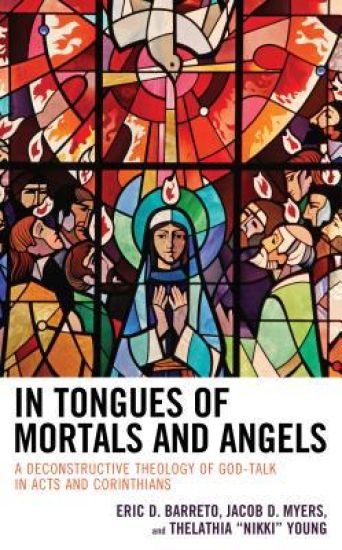
In Tongues of Mortals and Angels

In Tongues of Mortals and Angels

Eric D. Barreto; Jacob D. Myers; Thelathia “Nikki” Young

Lexington Books/Fortress Academic
2018
sidottu
Through close textual engagement, theological exposition, ethical reflection, and interdisciplinary collaboration, this book presents a constructive theology of divine speech in the Acts of the Apostles and 1 Corinthians in critical conversation with contemporary issues of sociopolitical, ecclesial, and theological importance. In particular, the authors attend to pericopes in Acts and Paul that open up fresh ways of thinking about divine discourse, preaching, and advocacy in light of contemporary matters of theological and ethical import. In addition to classical modes of textual and theological analysis, the authors attend to the sociopolitical and sociolinguistic aspects of speech as they arise in these pericopes. As such, the authors are simultaneously deconstructing these texts through postcolonial and post-structural analyses to expose these texts to an alterity at work therein, an alterity that has been muted by centuries of biblical interpretation.
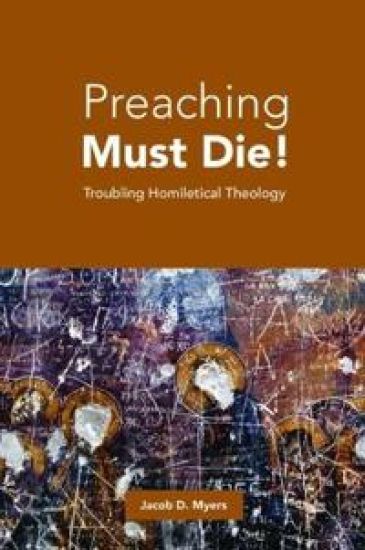
Preaching Must Die!

Preaching Must Die!

Jacob D. Myers

Fortress Press,U.S.
2017
sidottu
The real question for homiletics in our increasingly postmodern, post-Christian contexts is not how we are going to prevent preaching from dying, but how we are going to help it die a good death. Preaching was not made to live. At most, preaching is a witness, a sign, a crimson X marking a demolition site. The church has developed sophisticated technologies in modernity to give preaching the semblance of life, belying the truth: preaching was born under a death sentence. It was born to die. Only when preaching embraces its own death is it able to live. This book, then, is a bold homiletical manifesto against preaching in support of preaching, and beyond preaching to the entire worship experience. It troubles modern homiletical theologies in light of the trouble always already at work within preaching. Hereby, it supports a way of preaching-and teaching preaching-that moves counter to the "wisdom of this world." It aims to joins in God's self-revealed counterlogic of superabundance that saturates and thereby breaks open worldly systems of thought and practice. The purpose of this book is to expose preaching to its own death-to help it embrace its death-so that it can discover what eternal and abundant life might look and feels like.
Making Love with Scripture

Making Love with Scripture

Jacob D. Myers

Fortress Press,U.S.
2015
pokkari
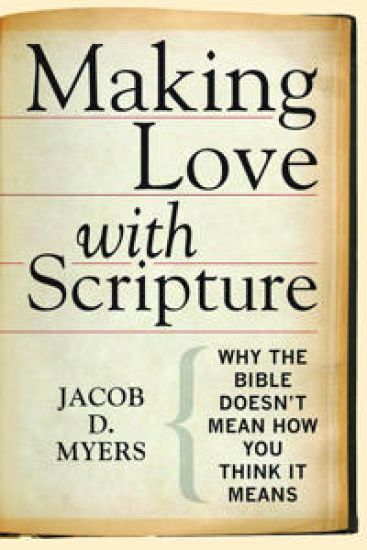
Making Love with Scripture offers an accessible way of thinking about scriptural interpretation, showing how the destabilization of the text can open us up to the Iiberative work of God's Spirit. It also shows how such a destabilization neither obviates deep evangelical commitments nor renders the text meaningless and ineffectual. It posits a mode of understanding the Word of God revealed in Scripture that melds what is best and life-giving from both the evangelical and mainline traditions. Making Love with Scripture is written for those who reject the dichotomy between evangelical hermeneutics that affirm the importance of Scripture for Christian faith and practice and mainline hermeneutics that diminish or ignore the Bible's significance in favor of acts of justice in the world. It addresses those of us who seek a way toward the liberation of the created order out of systems of oppression and marginalization while at the same time affirming the agency of the Word in and through the biblical witness.