Kirjojen hintavertailu – 12 880 658 kirjaa ja 26 kauppaa

Kirjailija

Jacob Lauinger

Kirjat ja teokset yhdessä paikassa: 4 kirjaa, julkaisuja vuosilta 2012–2025, suosituimpiin kuuluu The Amarna Letters. Vertaile teosten hintoja ja tarkista saatavuus suomalaisista kirjakaupoista.

4 kirjaa

Kirjojen julkaisuvuodet: 2012–2025.

The Amarna Letters

The Amarna Letters

Jacob Lauinger; Tyler Yoder

Lockwood Press
2025
sidottu
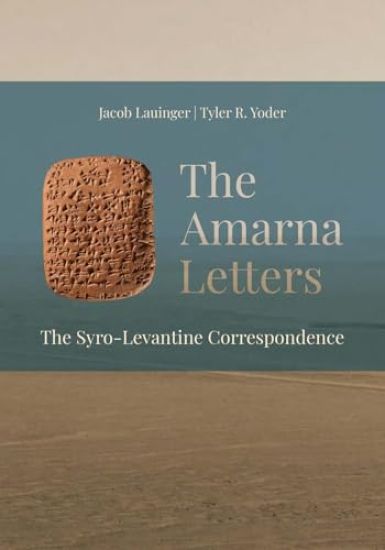
During Egypt's Eighteenth Dynasty (ca. 1550-1292 BCE), the New Kingdom pharaohs campaigned repeatedly in Syria and the Levant, establishing political control over much of the region. As a result of these conquests, the rulers of Levantine city-states sent letters written in Akkadian in the cuneiform script on clay tablets to the Egyptian pharaohs. So, too, did the kings of the other great geopolitical powers of the time--Assyria, Babylonia, Hatti, and Mittani--maintain an active diplomatic correspondence with Egypt's pharaohs. Beginning in the nineteenth century CE, local farmers and, later, archaeologists working at Akhetaten (modern Tell el-Amarna), the one-time Egyptian capital, discovered remnants of this correspondence, mostly dating to the reigns of Amenhotep III (ca. 1388-1350 BCE) and his son and successor Akhenaten (ca. 1350-1333 BCE), with some dating to Tutankhamun (ca. 1333-1323). This is a period of increasing friction as the great powers sought to extend their borders. The Amarna Letters thus illuminate a pivotal point in Egypt's foreign relations during the Late Bronze Age. Even though they provide us with a narrow window of only about thirty years time (1358-1325 BCE), they are an important witness to the general nature of Egypt's diplomatic relations during the Eighteenth and Nineteenth Dynasties. This new, digitally borne edition of the Amarna Letters offers the first complete collection of the letters with responsible transliterations that have been checked against available photographs and hand copies; clear and consistent translations; and an up-to-date and extensive bibliography. As such it is, and will remain, an essential resource.
The Labors of Idrimi

The Labors of Idrimi

Jacob Lauinger

Society of Biblical Literature
2024
pokkari
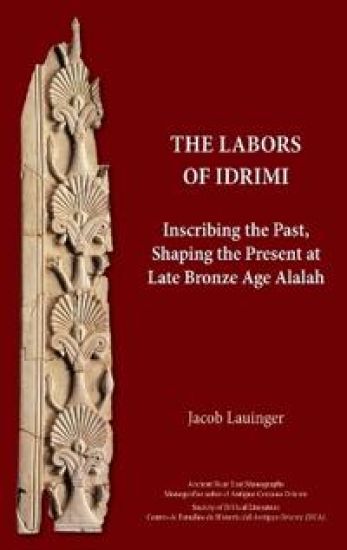
Since the 1949 publication of the Late Bronze inscriptions on the Statue of Idrimi, scholars have debated the significance of the carefully structured and vividly detailed cuneiform text that recounts the rise of King Idrimi of Alalah. Jacob Lauinger significantly advances prior scholarship through an in-depth historical analysis that combines textual and material perspectives on both the statue and the inscriptions. His study reveals how two distinct inscriptions were added to an originally anepigraphic statue to advance a claim about royal legitimacy long after Idrimi's death during a time of political upheaval at Alalah.
The Labors of Idrimi

The Labors of Idrimi

Jacob Lauinger

Society of Biblical Literature
2024
sidottu
Since the 1949 publication of the Late Bronze inscriptions on the Statue of Idrimi, scholars have debated the significance of the carefully structured and vividly detailed cuneiform text that recounts the rise of King Idrimi of Alalah. Jacob Lauinger significantly advances prior scholarship through an in-depth historical analysis that combines textual and material perspectives on both the statue and the inscriptions. His study reveals how two distinct inscriptions were added to an originally anepigraphic statue to advance a claim about royal legitimacy long after Idrimi's death during a time of political upheaval at Alalah.
Bismaya

Bismaya

Jacob Lauinger; Monica Louise Phillips; Benjamin Studevent-Hickman; Karen Wilson

Oriental Institute of the University of Chicago
2012
nidottu
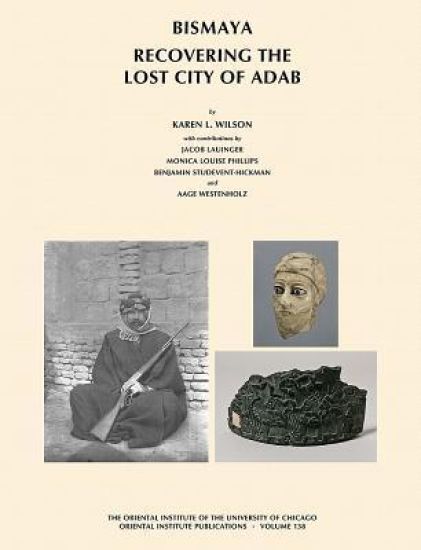
An expedition from the University of Chicago excavated the site of Bismaya (ancient Adab) from December 24, 1903, until late June 1905. The excavations were directed first by Edgar J. Banks and then, briefly, by Victor S. Persons. Over 1,000 artifacts, many of them early cuneiform documents, were sent to Chicago, where they are now housed in the Oriental Institute Museum The results of the Bismaya excavations were never properly published, and most of the material was never published at all. Banks wrote a lively and highly readable popular account, Bismya, or the Lost City of Adab, that appeared in 1912 and gave the impression that his field methods were considerably less than satisfactory. However, that was not the case. Banks kept a careful field diary, complete with highly accurate sketches, and sent detailed weekly reports, lavishly illustrated with his own drawings, back to Chicago. These materials show that he excavated a mid-third millennium B. C. temple and discovered some of the world' s first historical inscriptions incised on stone vessels dedicated in that structure. He also uncovered residences of the late Early Dynastic period, two Akkadian administrative centers, and a palace of the Isin-Larsa/Old Babylonian period. This monograph presents this large and significant corpus of unpublished material and includes analyses of stratigraphy, architecture, sculpture, cylinder seals, metalwork, and pottery, and discussions of chronology, the succession of the first kings of Adab, and administrative practices during the third millennium B. C.