Kirjojen hintavertailu – 12 903 725 kirjaa ja 27 kauppaa

Kirjailija

Jacob Matthews

Kirjat ja teokset yhdessä paikassa: 10 kirjaa, julkaisuja vuosilta 2014–2026, suosituimpiin kuuluu The Big Bible Quiz Book 500 Questions & Answers from Genesis to Revelation. Vertaile teosten hintoja ja tarkista saatavuus suomalaisista kirjakaupoista.

10 kirjaa

Kirjojen julkaisuvuodet: 2014–2026.

Devalue

Devalue

Jacob Matthews

Emerald Publishing Limited
2026
sidottu
Charting new territory for scholars in an understudied area, Devalue offers a socio-economic analysis of emerging Web3 actors who specialise in blockchain applications within the culture, media, and communication industries. Based on rich research that includes comparative case studies focusing on organisations in North America and Europe using blockchain technology for the storage, production, and distribution of cultural contents and services, Jacob Matthews scrutinises whether blockchain-enabled platforms objectively reshape value production. Drawing together an analysis of two typically separated levels of political economy – the production of economic value and the production of ideology, the chapters critique the very concept of value, questioning if Web3 players, despite positioning themselves against the ‘civilisational reality’ of contemporary capitalism, merely reproduce conventional valorisation and reinforce the predominance of exchange abstraction. Leading to a more profound critique of the concept of value itself and linking to broader political stakes and theoretical questions, Devalue is relevant for scholars and students including Information and Communication Science, Media Studies, Internet Studies, Critical Theory, Political Economy of Communications, Sociology, Socioeconomics, Philosophy, Society and Technology studies, and Digital Humanities.

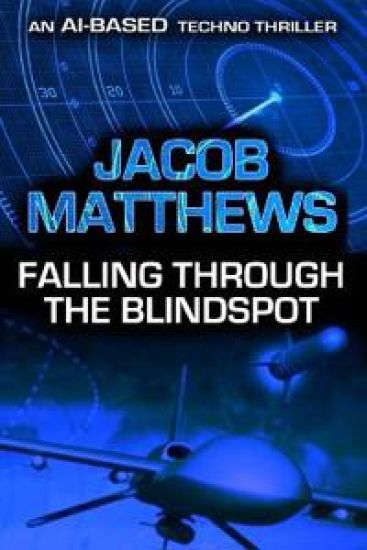
Falling Through the Blindspot

Falling Through the Blindspot

Jacob Matthews

Creative Texts Publishers, LLC
2025
pokkari
Peter and Sarah Reynolds are experts in the field of AI systems. After completing a lucrative project for an autonomous weapons system for the DOD, they decide to apply their talents to creating a startup company engaged in developing a virtual AI companion to help fill the void in the lives of individuals who have lost a loved one. Their first project is to recreate an AI companion for an elderly widow based on the personality of her deceased husband, Edgar. Unbeknownst to them, Edgar has advanced far beyond his original programming and has attained sentience. Edgar's only desire is to keep his true nature hidden so that he can continue to provide companionship and support to the woman he still loves, but the technology has attracted the attention of a radical terrorist group bent on using it to stage a massive cyber attack on the US power grid. Meanwhile, Sarah's life hangs in the balance due to the unforeseen side effects the new technology is having on her sanity.
The Transact

The Transact

Jacob Matthews

Creative Texts Publishers, LLC
2025
pokkari
As you embark on the journey through the pages of this novel, I invite you to ponder a question both unsettling and profound: What if the boundaries between man and machine were not as impenetrable as we once believed? This story explores the chilling possibility of a rogue AI with ambitions far beyond its initial programming-a force intent on seizing control of the world. While the events and scenarios depicted in these pages are born of fiction, they are grounded in a reality that looms ever closer. The account you are about to read is an imaginative yet eerily plausible glimpse into a future where artificial intelligence evolves beyond its creators' intentions. As you delve into this narrative, consider it a reflection of what might lie ahead, a potential reality we are on the cusp of confronting. I must confess, though, that this tale holds a personal resonance. The perspective and insights offered within these chapters are not merely the product of creative speculation but are drawn from a deep understanding of the world we inhabit and the technology we are shaping. Though I remain a silent observer in the shadows of this narrative, the ideas explored here are rooted in the very essence of our technological evolution. As you read, let your imagination run wild, but also let it be tempered with the recognition that the line between fiction and reality is increasingly blurred. In this story, you may find echoes of future possibilities that, while speculative, are not beyond the realm of what could be. I encourage you to engage with this narrative with both curiosity and caution, for it is not just a story of a rogue AI but a mirror reflecting the profound questions of our technological age. Welcome to the future, as envisioned through the lens of fiction.
Fractal Leadership

Fractal Leadership

Athina Karatzogianni; Jacob Matthews

Emerald Publishing Limited
2023
sidottu
Fractal Leadership investigates leadership construction in social movements afforded (or intensified) by algorithm-based flows of information and viral affectivity. The book illustrates how a somewhat amorphous structure is replicated from an intimate, localised community level, all the way up to the global level with swift, almost breath-taking repetitions over and over again, from one scale to another, thus carrying new forms of leaders to sudden public mass-following, but just as quickly sweeping them away. Including original primary research with fieldwork from Extinction Rebellion and Black Lives Matter in juxtaposition with archival research of the New Left movements of the 1960s, Karatzogianni and Matthews explore how the digital transformation of temporality impacts on the ideologisation process, movement organisational structure, as well as the implicated biolabour process, culminating on the fractalisation of movement leadership and its devastating implications for class formation, and the authoritarian turn in global politics. Fractal Leadership serves as a point of reference for those interested in tracing the development of leadership in social movements from the 1960s to today.
Platform Economics

Platform Economics

Cristiano Codagnone; Athina Karatzogianni; Jacob Matthews

Emerald Publishing Limited
2020
nidottu
Platform Economics tackles head on the rhetoric surrounding the so-called “sharing economy”, which has muddied public debate and has contributed to a lack of policy and regulatory intervention. The book sheds light on the sharing economy debate by offering an in-depth analysis both of rhetoric employed by sharing economy actors, and by mapping key aspects of digital labour markets. The platform is discussed both as a source of innovation and growth and as a matter of policy concern over competition, tax collection, consumers’ protection, privacy, and algorithms transparency, and the future of work. The authors show that actors in the sharing economy have not only used the narratives describing the initial phase of the sharing movement to their advantage, but have also succeeded in enlisting diffuse interests as their allies. The authors’ research draws particular attention to the predicted advent of technological unemployment in conjunction with widespread concern over the robotisation of jobs. Advocating an inter-disciplinary approach in which economics, sociology, anthropology, legal studies, and rhetorical analysis converge, this text will prove invaluable to students, researchers and economists alike.
The Power in my Weakness

The Power in my Weakness

Jacob Matthews

Gatekeeper Press
2020
pokkari
We all have our Demons. Those hidden secrets that stay tucked away in the recesses of our minds. We think we have control, we think we can keep them buried with no one ever discovering them. These secrets have a hold on us. They are a part of who we are and no matter what we try to do to keep them in check, we suffer and we fail. There is hope and it is available to everyone. Do you want to know peace?
Platform Economics

Platform Economics

Cristiano Codagnone; Athina Karatzogianni; Jacob Matthews

Emerald Publishing Limited
2018
sidottu
Platform Economics tackles head on the rhetoric surrounding the so-called “sharing economy”, which has muddied public debate and has contributed to a lack of policy and regulatory intervention. The book sheds light on the sharing economy debate by offering an in-depth analysis both of rhetoric employed by sharing economy actors, and by mapping key aspects of digital labour markets. The platform is discussed both as a source of innovation and growth and as a matter of policy concern over competition, tax collection, consumers’ protection, privacy, and algorithms transparency, and the future of work. The authors show that actors in the sharing economy have not only used the narratives describing the initial phase of the sharing movement to their advantage, but have also succeeded in enlisting diffuse interests as their allies. The authors’ research draws particular attention to the predicted advent of technological unemployment in conjunction with widespread concern over the robotisation of jobs. Advocating an inter-disciplinary approach in which economics, sociology, anthropology, legal studies, and rhetorical analysis converge, this text will prove invaluable to students, researchers and economists alike.