Kirjojen hintavertailu – 12 859 828 kirjaa ja 27 kauppaa

Kirjailija

Jacob Wamberg

Kirjat ja teokset yhdessä paikassa: 6 kirjaa, julkaisuja vuosilta 2005–2026, suosituimpiin kuuluu Identitetspolitik, litteratur og kunstens autonomi. Vertaile teosten hintoja ja tarkista saatavuus suomalaisista kirjakaupoista.

6 kirjaa

Kirjojen julkaisuvuodet: 2005–2026.

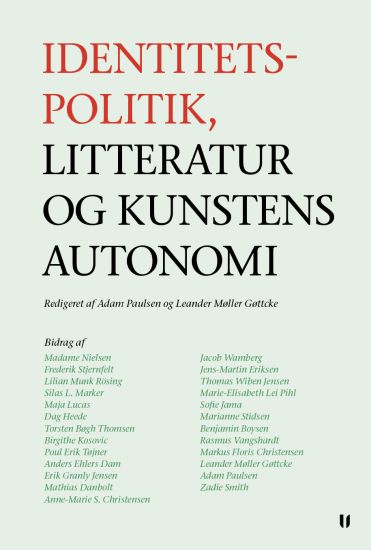
Identitetspolitik, litteratur og kunstens autonomi

Identitetspolitik, litteratur og kunstens autonomi

Frederik Stjernfelt; Adam Paulsen; Lilian Munk Rösing; Madame Nielsen; Maja Lucas; Dag Heede; Anne-Marie Søndergaard Christensen; Birgithe Kosovic; Poul Erik Tøjner; Anders Ehlers Dam; Erik Granly Jensen; Mathias Danbolt; Jacob Wamberg; Jens-Martin Eriksen; Thomas Wiben Jensen; Leander Møller Gøttcke; Sofie Jama; Zadie Smith mfl.

U Press
2022
nidottu
Hvad der kan siges, skrives og males, men også hvem der har lov til at gøre det, er under hastig forandring. Er det i orden, at en kvindelig hvid maler lader sig inspirere af sort lidelseshistorie i sin kunst? At en mandlig forfatter, der selv stammer fra den hvide, heteronormative middelklasse, skriver indlevende om seksuelle eller etniske minoriteters undertrykkelse, når det ligger uden for hans egen erfaringshorisont? Og hvad gør vi med kunst- og litteraturhistoriens mange kompromitterede skikkelser? Kan vi stadig med god samvittighed udgive og læse forfattere som Louis-Ferdinand Céline, der var notorisk antisemit? Skal vi tillade udstillinger af Emil Noldes værker, efter at det er kommet frem, at han ikke skyede noget middel for at indynde sig hos nazisterne? Det er nogle af de spørgsmål, der granskes her. Bidragene er skrevet af forfattere og forskere fra en lang række forskellige humanistiske fag og institutioner. De behandler de vigtigste emner i de seneste års diskussioner om identitetspolitik, litteratur og kunsten udfordrede frihed.
Sansning - mellem mennesket og verden

Sansning - mellem mennesket og verden

Hans-Jørgen Schanz; Jacob Wamberg; Jan Kyrre Berg Friis; Lars-Henrik Schmidt; Lilian Munk Rösing; Ole Thyssen; Peter Kjelstrup Axel Jensen; Simo Køppe; Søren Overgaard; Tine Damsholt; Martin Blok Johansen

Lindhardt og Ringhof
2020
nidottu
Fortællingen om sanserne handler ikke blot om, hvordan vi hver især opfatter verden, men også om, hvorfor verden er, som den er, og ser ud, som den gør. I denne bog giver 10 forskere et fascinerende et indblik i, hvordan sanser og sansning optræder og behandles inden for en række forskningsområder - fysiologi, evolution, kognition og idehistorie, fænomenologi, kultur, etnografi, æstetik, filosofi og teknologi. Sansning - mellem mennesket og verden henvender sig til studerende og forskere på uddannelser og fag, hvor sanser og sansning indgår i studiet, og hvor man ønsker en bredere forståelse af emnet. Men bogen kan læses af alle med interesse for den store fortælling om vores sanser.
Ljus på Ivan Aguéli & Andreas Eriksson

Ljus på Ivan Aguéli & Andreas Eriksson

Andreas Eriksson; Ivan Aguéli; Sara Arrhenius; Johanna Byström Sims; Sara Walker; Jacob Wamberg

Art & Theory Publishing
2026
Sidottu
Ivan Aguéli har under många år varit en återkommande samtalspartner i Andreas Erikssons måleri. Den här boken förlänger den dialogen och för deras verk nära varandra efter utställningen Ljus på ljus på Aguélimuseet 2024, och den kommande utställningen Soleil et Lune, Andreas Eriksson en dialogue avec Ivan Aguéli på Institut suédois i Paris. Boken innehåller sex texter och tjugotvå bilder, med utvalda verk av Aguéli återgivna i skala 1:1. Boken är producerad i samarbete med Aguélimuseet i Sala och skildrar ett pågående konstnärligt utbyte, över epoker. For many years, Ivan Aguéli has been a recurring conversation partner in Andreas Eriksson s painting. This book extends that dialogue, bringing their works into proximity following the exhibition Ljus på Ljus at the Aguélimuseet in Sala in 2024 and the forthcoming exhibition Soleil et Lune, Andreas Eriksson en dialogue avec Ivan Aguéli at Institut suédois in Paris. The book includes six texts and twenty-two images, with selected works by Aguéli reproduced at 1:1 scale. Produced in collaboration with the Aguélimuseet the book tracks an ongoing artistic exchange across eras.
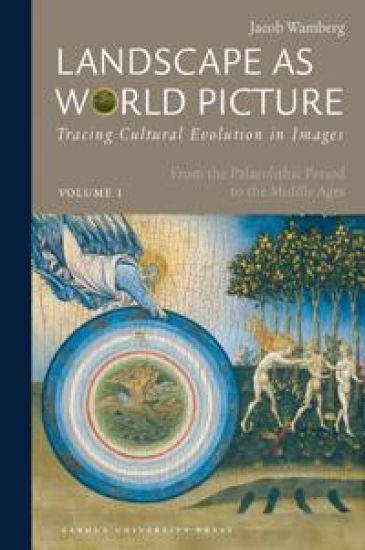
Landscape as World Picture: 2-Volume Set

Landscape as World Picture: 2-Volume Set

Jacob Wamberg

Aarhus University Press
2009
sidottu
These two volumes present a new and comprehensive theory concerning the manner in which landscapes in Western pictorial art may be interpreted in relation to the cultures that created them. Its point of departure is a hitherto unexplored developmental pattern that characterises landscape representation from Palaeolithic cave paintings through to 19th-century modernity. A structuralist comparison between this pattern and three additional fields of analysis -- self-consciousness, socially-determined perception of nature, and world picture -- reveals a fascinating insight into culture's macrohistorical organisation. Controversially, this book argues that culture at a certain level of observation is marked by directional evolution. In Volume I the author traces the pictorial depth of field from its Palaeolithic beginnings, in which only separate bodies are portrayed, and on to antiquity and the Middle Ages with their quasi-perspectival vistas. This gradual accentuation of a viewpoint is interpreted as a sign of how self-consciousness -- the notion of an T detached from nature -- develops. Similarly, the raw rocky terrain and vividly coloured skies that are introduced in ancient and medieval landscape images are taken as a testimony of how cosmos splits into a chaotic Mother Earth and an indestructible masculine heaven. Finally, Volume I demonstrates that the ancient landscape images' exclusion of traces of cultivation (e.g. fields, roads, hedges, fences) is the result of work-shyness, a longing for the Golden Age, among the powers-that-be. The topic of Volume II is the breakthrough of the modern landscape image and its new perspectival vistas, transient time and cultivated - or completely deserted - terrains. This post-medieval paradigm shift is construed as the mature stage in the evolution of self-consciousness, with an urban individual contemplating nature at an aesthetic distance. Apart from being structurally equivalent with the new Copernican cosmos and the colonial expansion of Western culture, the new territorial landscape image is shown to develop in close interaction with the early modern work ethic, republicanism and capitalism. It is also demonstrated that this landscape image is at odds with the idealising Italian Renaissance vision, a conflict condensed in the imagery of strangely artificial rock formations.
Landscape as World Picture

Landscape as World Picture

Jacob Wamberg

Aarhus University Press
2005
sidottu
This book presents a new and comprehensive bid concerning the manner in which landscapes in Western pictorial art may be interpreted in relation to the cultures that created them. Its point of departure is a hitherto unexplored development pattern that characterises landscape representation from Paleolithic cave paintings through to 19th century modernity. Through a structuralist comparison between this pattern and three additional fields of analysis - self consciousness, socially determined perception of nature, and world picture - a fascinating insight into culture's macro-historic organisation is extrapolated. Not least it is argued controversially that culture at a certain level of observation is marked by a directional evolution. The gradual accentuation of a viewpoint found in landscape images can, in this way, be read as a sign of how self consciousness - the notion of an 'I' detached from nature - develops. And, in the raw rocky terrain and vividly coloured skies that are introduced in ancient and medieval landscape images, there is testimony of how cosmos splits into a chaotic Mother Earth and an indestructible masculine sky. Finally, the book demonstrates that the landscape images' incorporation or exclusion of traces of cultivation (e.g. fields, roads, hedges), is dependent on what the powers-that-be think about physical work.