Kirjojen hintavertailu – 12 859 818 kirjaa ja 27 kauppaa

Kirjailija

Jacob Werksman

Kirjat ja teokset yhdessä paikassa: 4 kirjaa, julkaisuja vuosilta 1996–2025, suosituimpiin kuuluu Greening International Institutions. Vertaile teosten hintoja ja tarkista saatavuus suomalaisista kirjakaupoista.

4 kirjaa

Kirjojen julkaisuvuodet: 1996–2025.

Mastering Your G.A.P.

Mastering Your G.A.P.

Jacob Werksman

Forefront Books
2025
sidottu

Halvin toimitettuna 35,90 €

Unlock the magic formula for exceptional leadership and peak performance with Mastering Your G. A. P.: Unlocking the Leadership Power of Gravitas, Awareness, and Presence, the ultimate guide to transforming yourself, your team, and your organization. Mastering Your G. A. P. by Dr. Jacob Werksman, DBA, is a groundbreaking guide to unlocking peak performance in leadership and life. Drawing on years of academic research and scientific study, Dr. Werksman introduces readers to the transformative power of gravitas, awareness, and presence--three essential qualities that form the foundation for leading yourself, others, and organizations with confidence and success. Packed with actionable insights, this book doesn't just explain the what and why behind GAP; it shows you the how. Through exclusive interviews with world-class leaders--including Navy SEALs, Fortune 500 executives, high-impact entreprenuers, and Olympic athletes--Dr. Werksman distills their wisdom into compelling micro case studies. These real-world stories offer practical lessons and inspire readers to put GAP into action. At the heart of the book lies the GAP Enhancement Cycle(c), a step-by-step framework designed to help you elevate your gravitas, sharpen your awareness, and cultivate a commanding presence. Whether you're leading a team, pursuing personal growth, or striving to make a lasting impact, this tool will empower you to achieve greater results. Blending scientific research, hands-on strategies, and powerful case studies, Mastering Your G. A. P. is more than a book--it's a playbook for success. Start mastering your GAP today and take the next step toward becoming the leader you were meant to be.
Greening International Institutions

Greening International Institutions

Jacob Werksman

Routledge
2016
nidottu
First Published in 2009. This title contains a diverse collection of pieces from which the reader can draw an understanding of the shape and function of the institutions discussed within, the scope of their activities, and the niche they occupy in the larger system. Werksman reveals a pattern that organizations grow and contract erratically and organically in response to competing demands, concerns and resources. This volume aims to raise questions as to whether the demands of sustainable development require a more fundamental push against the inertia of institutional culture.
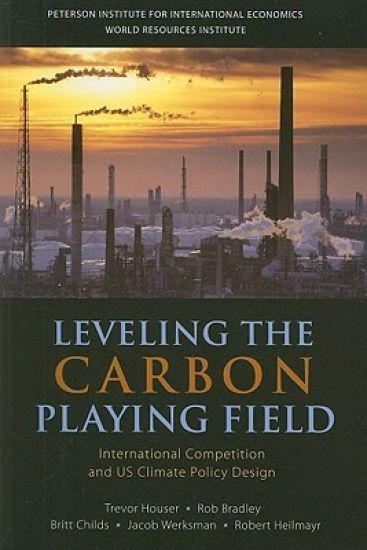
Leveling the Carbon Playing Field – International Competition and US Climate Policy Design

Leveling the Carbon Playing Field – International Competition and US Climate Policy Design

Trevor Houser; Rob Bradley; Britt Childs; Jacob Werksman; Robert Heilmayr

The Peterson Institute for International Economics
2008
nidottu
As political momentum surrounding climate change builds in the US, policymakers are taking a fresh look at national climate policy and American involvement in multilateral climate negotiations. And as in years past, the potential economic impact of any US effort to reduce greenhouse gas emissions stands as a central question in the Washington policy debate. Of particular concern is the effect climate policy would have on carbon-intensive US manufacturing. Many of these industries are already under pressure from foreign competition, particularly large emerging economies like China, India, and Brazil that are not bound to reduce emissions under the current international climate framework. As the Congress takes up domestic climate legislation and the Administration reengages in multilateral climate negotiations, policymakers are looking for ways to avoid putting US industry at a competitive disadvantage vis-a-vis countries without similar climate policy, lest a decline in industrial emissions at home is simply replaced by increases in emissions abroad. While this would be best achieved through harmonized international climate policy, the differences between countries in level of economic development, obligations stemming from historic emissions and responsibilities arising from future emissions, mean harmonization is still a long way off. The question then, in the design of domestic US climate policy today, is how to level the playing field for carbon-intensive industries during a period of transition, where trading partners are moving at different speeds and adopting a variety of policies to reduce emissions...and how to do so in a way that doesn't threaten the prospects of broader international agreement down the road. This book, a collaboration between the Peterson Institute for International Economics and the World Resources Institute, tackles these issues through an assessment of the economics and trade flows of key carbon-intensive industries. They evaluate a wide range of policy options, including those that would impose carbon costs on foreign-produced goods at the border (currently included in draft US legislation and under consideration in the EU) in terms of their effectiveness in reducing emissions and addressing competitiveness issues and their impact on health of multilateral trade and climate negotiations.
Greening International Institutions

Greening International Institutions

Jacob Werksman

Earthscan Ltd
1996
sidottu
First Published in 2009. This title contains a diverse collection of pieces from which the reader can draw an understanding of the shape and function of the institutions discussed within, the scope of their activities, and the niche they occupy in the larger system. Werksman reveals a pattern that organizations grow and contract erratically and organically in response to competing demands, concerns and resources. This volume aims to raise questions as to whether the demands of sustainable development require a more fundamental push against the inertia of institutional culture.