Kirjojen hintavertailu – 12 903 725 kirjaa ja 27 kauppaa

Kirjailija

Jacqueline Broad

Kirjat ja teokset yhdessä paikassa: 5 kirjaa, julkaisuja vuosilta 2003–2015, suosituimpiin kuuluu A History of Women's Political Thought in Europe, 1400–1700. Vertaile teosten hintoja ja tarkista saatavuus suomalaisista kirjakaupoista.

5 kirjaa

Kirjojen julkaisuvuodet: 2003–2015.

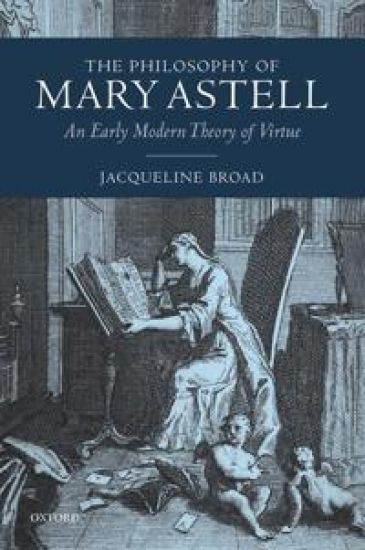
The Philosophy of Mary Astell

The Philosophy of Mary Astell

Jacqueline Broad

Oxford University Press
2015
sidottu
Mary Astell (1666-1731) is best known today as one of the earliest English feminists. She is also known as a Tory political pamphleteer, an Anglican apologist, an eloquent rhetorician, and an educational theorist. In this book, Jacqueline Broad interprets Astell first and foremost as a moral philosopher, or as someone committed to providing guidance on how best to live and how to attain happiness. The central claim of this work is that all the different strands of Astell's thought--her theory of knowledge, her metaphysics, her philosophy of the passions, her feminist vision, and her conservative political views--are best understood in light of her ethical objectives. To demonstrate this, Broad examines Astell's major writings and traces her programme to bring about a moral transformation of character in her fellow women. This programme draws on several key aspects of seventeenth-century philosophy, including Cartesian and Neoplatonist epistemologies, proofs for the existence of God, arguments for the immaterial soul, and theories about how to regulate the passions in accordance with reason. At the heart of Astell's philosophy, it is argued, lies a theory of virtue and guidelines on how to cultivate generosity of character, a benevolent disposition toward other people, and the virtue of moderation. This book will help readers to see Astell's feminist, political, and religious views in the context of her wider philosophical vision. It provides a rich and illuminating account of a unique female-centred contribution to the philosophy of the early modern period. It will appeal to students and scholars in philosophy, history of ideas, and gender studies.
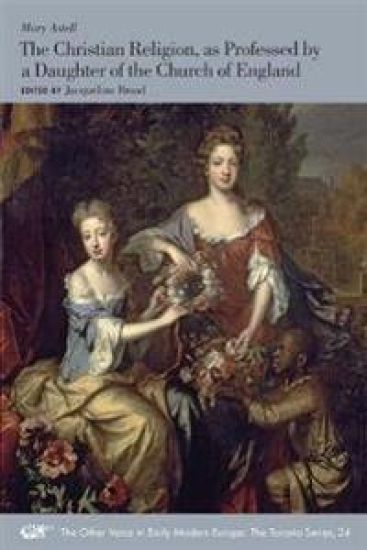
The Christian Religion, as Professed by a Daughter of the Church of England

The Christian Religion, as Professed by a Daughter of the Church of England

Mary Astell; Jacqueline Broad

University of Toronto Press
2013
nidottu
This book is the most mature and comprehensive statement of Mary Astell’s religious and philosophical views. It also represents the culmination of Astell’s feminist project to teach her fellow women how to lead useful lives of virtue and wisdom. The main purpose of this work is to instruct women about the ultimate nature of reality, the true source of happiness, their duties and obligations to God, and about “how best to live” and how to treat other people. This volume offers the first complete modern version of the 1717 second edition. It provides a fully modernized text, a scholarly introduction, biographical and bibliographical information, general historical-intellectual background, and definitions of obscure and archaic terms.
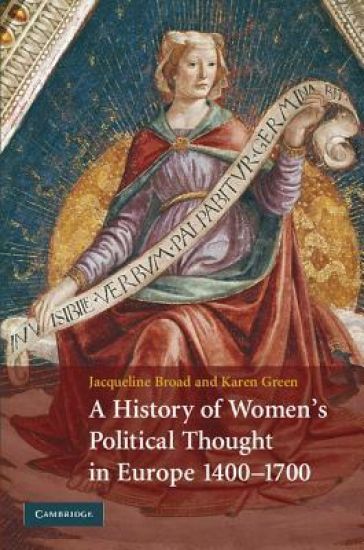
A History of Women's Political Thought in Europe, 1400–1700

A History of Women's Political Thought in Europe, 1400–1700

Jacqueline Broad; Karen Green

Cambridge University Press
2009
sidottu
This ground-breaking book surveys the history of women's political thought in Europe from the late medieval period to the early modern era. The authors examine women's ideas about topics such as the basis of political authority, the best form of political organisation, justifications of obedience and resistance, and concepts of liberty, toleration, sociability, equality, and self-preservation. Women's ideas concerning relations between the sexes are discussed in tandem with their broader political outlooks; and the authors demonstrate that the development of a distinctively sexual politics is reflected in women's critiques of marriage, the double standard, and women's exclusion from government. Women writers are also shown to be indebted to the ancient idea of political virtue, and to be acutely aware of being part of a long tradition of female political commentary. This work will be of tremendous interest to political philosophers, historians of ideas, and feminist scholars alike.
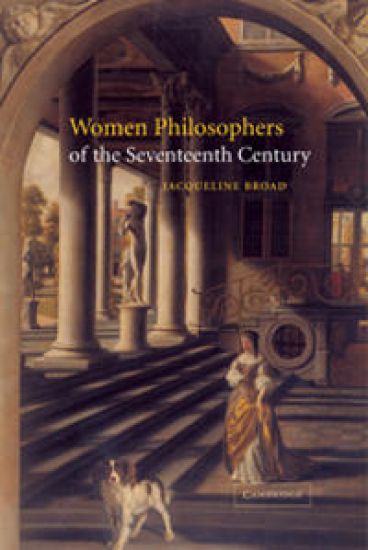
Women Philosophers of the Seventeenth Century

Women Philosophers of the Seventeenth Century

Jacqueline Broad

Cambridge University Press
2007
pokkari
In this rich and detailed study of early modern women's thought, Jacqueline Broad explores the complexity of women's responses to Cartesian philosophy and its intellectual legacy in England and Europe. She examines the work of thinkers such as Mary Astell, Elisabeth of Bohemia, Margaret Cavendish, Anne Conway and Damaris Masham, who were active participants in the intellectual life of their time and were also the respected colleagues of philosophers such as Descartes, Leibniz and Locke. She also illuminates the continuities between early modern women's thought and the anti-dualism of more recent feminist thinkers. The result is a more gender-balanced account of early modern thought than has hitherto been available. Broad's clear and accessible exploration of this still-unfamiliar area will have a strong appeal to both students and scholars in the history of philosophy, women's studies and the history of ideas.
Women Philosophers of the Seventeenth Century

Women Philosophers of the Seventeenth Century

Jacqueline Broad

Cambridge University Press
2003
sidottu
In this rich and detailed study of early modern women's thought, Jacqueline Broad explores the complexity of women's responses to Cartesian philosophy and its intellectual legacy in England and Europe. She examines the work of thinkers such as Mary Astell, Elisabeth of Bohemia, Margaret Cavendish, Anne Conway and Damaris Masham, who were active participants in the intellectual life of their time and were also the respected colleagues of philosophers such as Descartes, Leibniz and Locke. She also illuminates the continuities between early modern women's thought and the anti-dualism of more recent feminist thinkers. The result is a more gender-balanced account of early modern thought than has hitherto been available. Broad's clear and accessible exploration of this still-unfamiliar area will have a strong appeal to both students and scholars in the history of philosophy, women's studies and the history of ideas.