Kirjojen hintavertailu – 12 859 819 kirjaa ja 27 kauppaa
Kirjailija
Jacqueline Jones Royster
Kirjat ja teokset yhdessä paikassa: 10 kirjaa, julkaisuja vuosilta 2000–2026, suosituimpiin kuuluu We Do Language. Vertaile teosten hintoja ja tarkista saatavuus suomalaisista kirjakaupoista.
This book builds on the authors’ highly acclaimed first collaboration, Understanding English Language Variation in US Schools, and examines the need to integrate linguistically informed teaching into the secondary English classroom. It includes specific information about the language varieties students bring with them to school so that educators can better assist students in developing the literacy skills necessary for the Common Core State Standards. This resource features concrete strategies, models, and vignettes, as well as classroom materials developed by English educators for English educators.
This book builds on the authors’ highly acclaimed first collaboration, Understanding English Language Variation in US Schools, and examines the need to integrate linguistically informed teaching into the secondary English classroom. It includes specific information about the language varieties students bring with them to school so that educators can better assist students in developing the literacy skills necessary for the Common Core State Standards. This resource features concrete strategies, models, and vignettes, as well as classroom materials developed by English educators for English educators.
In Finding Sarah and Mary, Jacqueline Jones Royster combines memoir, family lore, DNA data, local history, and national history to create an ancestral history narrative. Surveying a forty-year journey of discovery, Jones Royster weaves and reweaves data and details corralled from multiple sources and anchors the narrative with two women: Sarah Ashe (c. 1740–1820), a maternal ancestor, and Mary Craddock Wilson (1825–1907), a paternal ancestor. With these two women as anchor points, the volume offers a view of the lives and legacies of ordinary folk in the making and shaping of an American story and demonstrates the necessity of broadening, deepening, and often upending the vision in order to see how our ancestors lived. Finding Sarah and Mary offers a clearer and more vibrant understanding of what it has meant for people of African descent to live and work in a nation that often ignores them or leaves them out of their own story.
In Finding Sarah and Mary, Jacqueline Jones Royster combines memoir, family lore, DNA data, local history, and national history to create an ancestral history narrative. Surveying a forty-year journey of discovery, Jones Royster weaves and reweaves data and details corralled from multiple sources and anchors the narrative with two women: Sarah Ashe (c. 1740–1820), a maternal ancestor, and Mary Craddock Wilson (1825–1907), a paternal ancestor. With these two women as anchor points, the volume offers a view of the lives and legacies of ordinary folk in the making and shaping of an American story and demonstrates the necessity of broadening, deepening, and often upending the vision in order to see how our ancestors lived. Finding Sarah and Mary offers a clearer and more vibrant understanding of what it has meant for people of African descent to live and work in a nation that often ignores them or leaves them out of their own story.
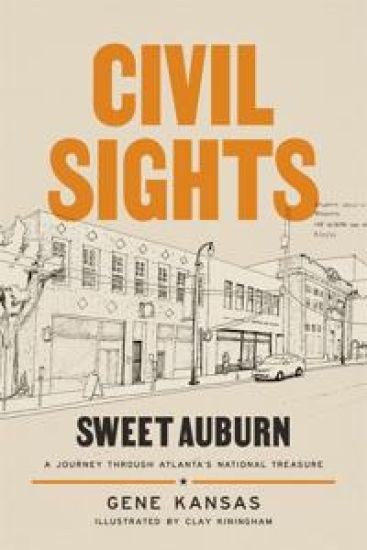
Once the wealthiest Black neighborhood in the world, the Sweet Auburn Historic District in Atlanta, Georgia, now occupies a distinct place, both historically and geographically. It is at once the globally significant birthplace of the civil rights movement; and it also lays in the wake of social, commercial, and urban challenges that have left some of its most important spaces and places in a state of peril—and even in danger of demolition—as Atlanta grows in, around, and over it. Now, for the first time, author, preservationist, and cultural developer Gene Kansas shines a spotlight on the district in Civil Sights. An illustrated and historic guidebook designed to educate visitors and inspire action, Civil Sights not only describes and depicts historically significant Sweet Auburn buildings and streets; it also tells the stories of people and places, then and now, that came together to move mountains before, during, and after the civil rights movement. These are the streets and buildings in which Dr. Martin Luther King Jr., Congressman John Lewis, Roslyn Pope, Alonzo Herndon, Ella Baker, John Wesley Dobbs, and countless others laid the groundwork for a social movement of equality that would sweep the country, change laws, and positively affect lives around the world. With accounts of such places as the first integrated fire station and the Butler Street YMCA that served as Atlanta’s “Black City Hall,” and of the churches, restaurants, and entertainment halls that have dotted the neighborhood, Kansas unspools a riveting history that also aims to illuminate a path to preservation. Most importantly, Civil Sights poses questions of historical accountability to us all: How are we educating, advocating, and investing in the causes that Sweet Auburn represents? This volume includes illustrations from Atlanta architect Clay Kiningham, a foreword from New York Times best-selling author and journalist Gary M. Pomerantz, and an afterword from former dean of Georgia Tech’s Ivan Allen College of Liberal Arts Jacqueline Jones Royster.
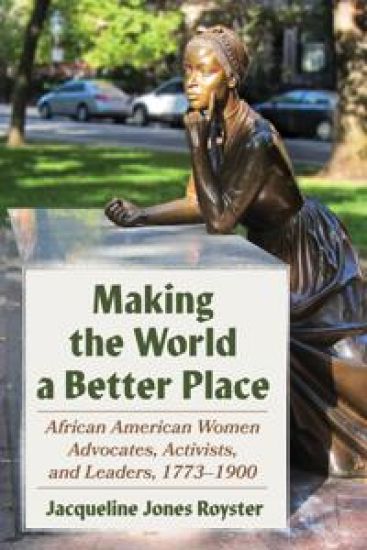
In Making the World a Better Place, Royster argues that African American women must be taken seriously as historical actors who were more consistently and more variously engaged in community - and nation-building than they have been given credit for. Their considerable rhetorical expertise becomes evident when looking carefully at their work in terms of identity, agency, authority, and expressiveness. Their writings constitute a substantial artifactual record of their levels of engagement, their excellence in sociopolitical work, and the legacies of leadership and action. The writing of African American women during the nineteenth century reflects their own perceptions of the ways and means of their lives. They deserve to be recognized as consequential contributors to the narratives of the nation, rather than marginalized as a group. To that end, Jacqueline Jones Royster offers a deeper understanding, often through their own words, of these women, their practices, and their achievements.
Winifred Bryan Horner Outstanding Book Award WinnerOccupying Our Space sheds new light on the contributions of Mexican women journalists and writers during the late nineteenth and early twentieth centuries, marked as the zenith of Mexican journalism. Journalists played a significant role in transforming Mexican social and political life before and after the Revolution (1910–1920), and women were a part of this movement as publishers, writers, public speakers, and political activists. However, their contributions to the broad historical changes associated with the Revolution, as well as the pre- and post-revolutionary eras, are often excluded or overlooked. This book fills a gap in feminine rhetorical history by providing an in-depth look at several important journalists who claimed rhetorical puestos, or public speaking spaces. The book closely examines the writings of Laureana Wright de Kleinhans (1842–1896), Juana BelÉn GutiÉrrez de Mendoza (1875–1942), the political group Las mujeres de ZitÁcuaro (1900), Hermila Galindo (1896–1954), and others. Grounded in the overarching theoretical lens of mestiza rhetoric, Occupying Our Space considers the ways in which Mexican women journalists negotiated shifting feminine identities and the emerging national politics of the late nineteenth and early twentieth centuries. With full-length Spanish primary documents along with their translations, this scholarship reframes the conversation about the rhetorical and intellectual role women played in the ever-changing political and identity culture in Mexico.
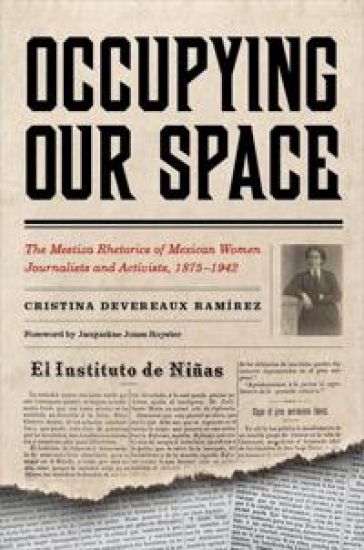
Occupying Our Space sheds new light on the contributions of Mexican women journalists and writers during the late nineteenth and early twentieth centuries, marked as the zenith of Mexican journalism. Journalists played a significant role in transforming Mexican social and political life before and after the Revolution (1910-1920), and women were a part of this movement as publishers, writers, public speakers, and political activists. However, their contributions to the broad historical changes associated with the Revolution, as well as the pre- and post-revolutionary eras, are often excluded or overlooked. Occupying our Space: The Mestiza Rhetorics of Mexican Women Journalists, 1875-1942, fills a gap in feminine rhetorical history by providing an in-depth look at several important journalists who claimed rhetorical puestos, or public speaking spaces. This book closely examines the writings of Laureana Wright de Kleinhans (1842-1896), Juana Belen Gutierrez de Mendoza (1875--1942), the political group Las mujeres de Zitacuaro (1900), Hermila Galindo (1896-1954), and others. Grounded in the overarching theoretical lens of mestiza rhetoric, Occupying Our Space considers the ways in which Mexican women journalists negotiated shifting feminine identities and the emerging national politics of the late nineteenth and early twentieth centuries. With full length Spanish primary documents along with their translations, this scholarship reframes the conversation about the rhetorical and intellectual role women played in the ever-changing political and identity culture in Mexico.
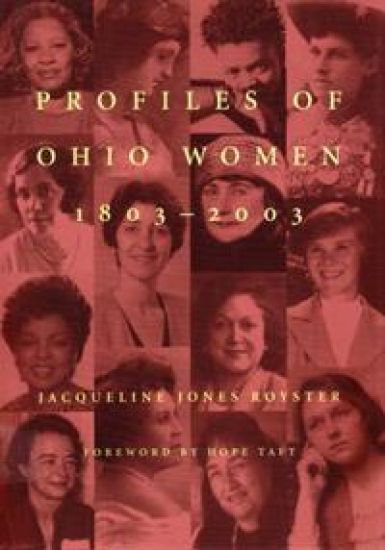
The state of Ohio has produced an impressive number of remarkable women, women who have moved to the forefront of their professions or have enriched their communities or have made a difference in myriad ways. Among the more recognizable names are Toni Morrison, Annie Oakley, Halle Berry, Maya Lin, and Judith Resnick, but there are others as well, less recognizable, perhaps—Florence Ellinwood Allen, Hallie Quinn Brown, and Mary Jobe Akeley—who have made unique and important contributions to our culture. Although women constitute at least half of the population, they are still largely overlooked or underrepresented in documented history. Profiles of Ohio Women, 1803-2003 makes a substantial step in providing a record of women’s achievement. Developed by the Ohio Bicentennial Commission’s Advisory Council on Women, this collection profiles a few of the many women who have left their imprint on the state, nation, world, and even outer space. It celebrates and documents the achievements of two hundred women of many races, religions, and regions, who have broken barriers and records, been “firsts,” and started movements and institutions. They are leaders and role models who will inspire all Ohioans to reach higher, dream deeper, and achieve what otherwise might seem beyond their possibilities. Professor Jacqueline Jones Royster presents the historical portraits of these fascinating and memorable women in an accessible and highly illustrated format. Profiles of Ohio Women, 1803-2003 will be a significant legacy of the Ohio Bicentennial and a valuable reference work for years to come.
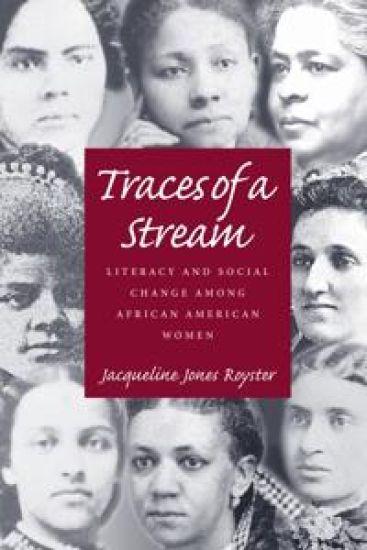
Traces of a Stream offers a unique scholarly perspective that merges interests in rhetorical and literacy studies, United States social and political theory, and African American women writers. Focusing on elite nineteenth-century African American women who formed a new class of women well positioned to use language with consequence, Royster uses interdisciplinary perspectives (literature, history, feminist studies, African American studies, psychology, art, sociology, economics) to present a well-textured rhetorical analysis of the literate practices of these women. With a shift in educational opportunity after the Civil War, African American women gained access to higher education and received formal training in rhetoric and writing. By the end of the nineteenth-century, significant numbers of African American women operated actively in many public arenas. In her study, Royster acknowledges the persistence of disempowering forces in the lives of African American women and their equal perseverance against these forces. Amid these conditions, Royster views the acquisition of literacy as a dynamic moment for African American women, not only in terms of their use of written language to satisfy their general needs for agency and authority, but also to fulfill socio-political purposes as well. Traces of a Stream is a showcase for nineteenth-century African American women, and particularly elite women, as a group of writers who are currently underrepresented in rhetorical scholarship. Royster has formulated both an analytical theory and an ideological perspective that are useful in gaining a more generative understanding of literate practices as a whole and the practices of African American women in particular. Royster tells a tale of rhetorical prowess, calling for alternative ways of seeing, reading, and rendering scholarship as she seeks to establish a more suitable place for the contributions and achievements of African American women writers.