
Kirjailija
Jacques Ellul
Kirjat ja teokset yhdessä paikassa: 49 kirjaa, julkaisuja vuosilta 1967–2026, suosituimpiin kuuluu Prophet of Reconciliation. Vertaile teosten hintoja ja tarkista saatavuus suomalaisista kirjakaupoista.
49 kirjaa
Kirjojen julkaisuvuodet: 1967–2026.
One of the most important and original thinkers of the twentieth century, Jacques Ellul (1912–1994) was a noted sociologist, historian, law professor, and self-described “Christian anarchist.” At the University of Bordeaux, Ellul taught and wrote extensively on the relationship between technology and contemporary culture, the tenets of the Christian faith, and the principles of human freedom and responsibility. On Freedom, Love, and Power is the transcription of a series of talks given by Ellul in 1974 in which he refines and clarifies some of his most controversial insights on the Jewish and Christian Bibles and their relevance to contemporary society. This expanded edition of Ellul’s talks features additional material, previously unavailable, that focuses on Christianity’s potential service to humanity as a community that exemplifies a society where people are reconciled with one another and with God.
One of the most original thinkers of the twentieth century, Jacques Ellul (1912–1994) was a French law professor, sociologist, lay theologian, and self-described “Christian anarchist.” Collecting Ellul’s lectures on the Bible, On Being Rich and Poor contains his prescient meditations on some of the most important theological questions of the modern age. In this volume, a follow-up to the Ellul lectures collected in On Freedom, Love, and Power, Ellul asks how it is that Christianity can justify abandoning the poorest, weakest, and most vulnerable members of society, depriving the next generation of a liveable future, and participating in an unprecedented wave of environmental destruction. In these talks, Ellul observes that some of the harshest language in the Jewish and Christian Bibles is reserved for those who are rich and powerful, and thus able to bend others to their will. Through his analysis of the prophetic vision of Amos and the epistle of James, Ellul exposes the gap between the principles of Christian life and the practices of the modern world. Critiquing a world that values domination over collaboration, he offers an alternative path. Transcribed from the original recordings and translated by Willem H. Vanderburg, a student and long-time colleague of Ellul’s, On Being Rich and Poor is an unprecedented look at how one of the twentieth century’s foremost thinkers grappled with some of today’s most challenging issues.
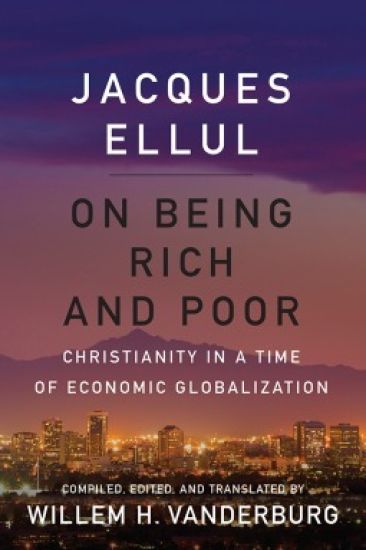
One of the most original thinkers of the twentieth century, Jacques Ellul (1912–1994) was a French law professor, sociologist, lay theologian, and self-described “Christian anarchist.” Collecting Ellul’s lectures on the Bible, On Being Rich and Poor contains his prescient meditations on some of the most important theological questions of the modern age. In this volume, a follow-up to the Ellul lectures collected in On Freedom, Love, and Power, Ellul asks how it is that Christianity can justify abandoning the poorest, weakest, and most vulnerable members of society, depriving the next generation of a liveable future, and participating in an unprecedented wave of environmental destruction. In these talks, Ellul observes that some of the harshest language in the Jewish and Christian Bibles is reserved for those who are rich and powerful, and thus able to bend others to their will. Through his analysis of the prophetic vision of Amos and the epistle of James, Ellul exposes the gap between the principles of Christian life and the practices of the modern world. Critiquing a world that values domination over collaboration, he offers an alternative path. Transcribed from the original recordings and translated by Willem H. Vanderburg, a student and long-time colleague of Ellul’s, On Being Rich and Poor is an unprecedented look at how one of the twentieth century’s foremost thinkers grappled with some of today’s most challenging issues.
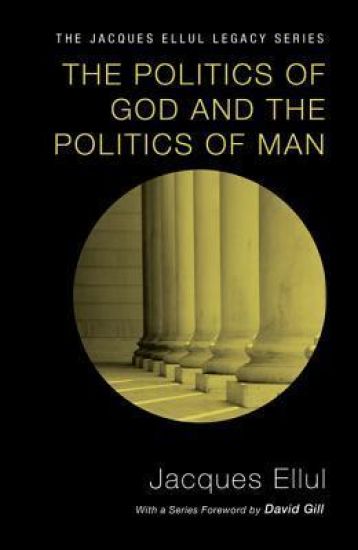
The Politics of God and the Politics of Man
Jacques Ellul
Wipf Stock Publishers
2012
nidottu
Halvin toimitettuna 28,20 €
Man's freedom--God's omnipotence: how can they be reconciled? That question is central to this penetrating study of political action and the prophetic function. Ellul's answer to that question, though based on events recorded in the Second Book of Kings, is immediately relevant to contemporary issues and to the church today. Emerging from these reflections is an eloquent testimony to the immense love of God--"which not only creates and saves, but which also in its incomprehensible humility wants to associate man with its work."
An Unjust God? A Christian Theology of Israel in Light of Romans 9-11
Jacques Ellul
Cascade Books
2012
pokkari
In this significant and very timely book, the author of The Technological Society, The Political Illusion, and Propaganda asks a tremendous question and shows that the answer we give it is decisive for the future of our society: Can we learn from history what revolution really is necessary for our survival? That is, can we distinguish between senseless, ineffectual revolt or rebellion and a genuine revolution that can alter fundamentals? In his basic, closely reasoned way, Jacques Ellul examines past and recent history in light of the current overwhelming preoccupation with revolution, which seems to have become the daily bread of Western man's thoughts and actions, the immediate explanation for every historical movement. Ellul insists on examining the possibility that today we are projecting onto past events a fairly recent and distorted image of revolution. The new image was created by Marx in the nineteenth century, and Ellul questions how long we can continue to live on his legacy. More important, he suggests that Marx may have brought about an abrupt deviation of the necessary revolutionary current and given a false meaning to the word revolution. Is all our talk about Marxian revolution talk about reality, or a way of filling a void with words? Finally, among so many social eddies and agitations, are we today caught up in a really revolutionary movement--or are we being led into blind combat by false lights that in reality are reflections in distorting mirrors? Are we capable of discerning the real Revolution, the needed Revolution? Ellul does not map out a route in detail: he clears paths into the future, making it possible for a route to be found. His masterly book should help to change our thinking, and therefore our future.
On an issue that has created considerable uncertainty and uneasiness among many Christians, Jacques Ellul brings to bear the bold analysis and the brilliant clarity of argument that are associated with his distinguished studies on contemporary social questions. After surveying historically the various approaches of Christians to violence, Ellul examines in depth current statements by Christians condoning or accepting violence. He then contrasts, with penetrating insight, the dynamics of violence and the clear demands of the Gospel. In a concluding chapter he eloquently sets forth the truly distinctive nature of Christian radicalism and the violence of love. Of comfort to neither Right nor Left as such, this Gospel-centered study of the complex issue of violence today--deftly translated by Cecilia Gaul Kings--is a forceful, original contribution to the ongoing discussion of the issue in church and society.
Jacques Ellul--much less solemn in mood than usual--here cracks open political and sociological commonplaces, destructively and wittily demonstrating how our unthinking acceptance of them encourages hypocrisy, smugness, and mental inertia. Among the stereotypes of thought and speech thus exploded are such phrases as ""You can't act without getting your hands dirty,"" ""Work is freedom,"" ""We must follow the current of history,"" and ""Women find their freedom (dignity) in work."" A certain number of these old saws preside over our daily life. They permit us to understand one another and to swim in the ordinary current of society. They are accepted as so certain that we almost never question them. They serve at once as sufficient explanations for everything and as ""clinchers"" in too many arguments. Ellul explores the ways in which such cliches mislead us and prevent us from having independent thoughts--and in fact keep us from facing the problems to which they are theoretically addressed. They are the ""new commonplaces."" Just as the nineteenth century brought forth many such commonplaces (they are enshrined in Leon Bloy's Exegese and Flaubert's Dictionnaire des idees recues), so our century has been busy creating its own. What Ellul has done is to stand still long enough to look at them carefully, attack them with cool reason, and leave them nakedly exposed. In this remarkable document, Ellul's caustic fearlessness is at the service of truths that often are cruel, but always are lucid and impassioned. He represents the voice of intelligence, and while doing so is often hilarious and always therapeutic about matters of first importance.
""The man of our time does not know how to pray,"" writes the French theologian Jacques Ellul, ""but much more than that, he has neither the desire nor the need to do so. He does not find the deep source of prayer within himself. I am acquainted with this man. I know him well. It is I, myself."" Out of this common experience, the prominent social critic and former resistance leader makes a searing analysis of man's alienation from God, and traces the reasons for praying or not praying. With razor-like statements, he cuts through the weaknesses of much traditional praying and, in the end, offers a strong and positive program for praying in today's troubled times.
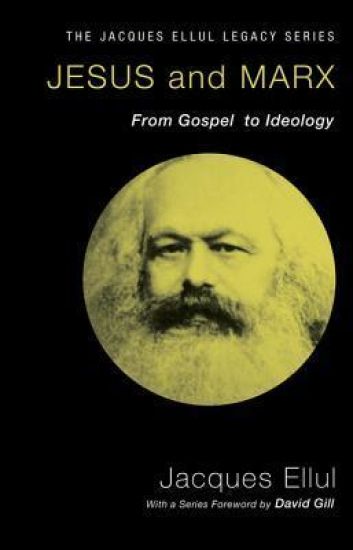
At what point does a theology become an ideology? How can a Christian distinguish the two? Jacques Ellul has always taken pains to differentiate them, but in this book he provides both a theoretical framework and important examples. Some popular theologies, particularly those that attempt to intertwine biblical theology with Marxist thought, fall into the trap of reaching ""theological"" conclusions by other means, Ellul believes, so that we cannot consider them as true theologies. From both a biblical-theological and sociopolitical perspective Ellul examines the attempt to relate Christianity to Marxist thought. By reviewing in detail several key Marxist-Christian books, Ellul exposes the weaknesses of so-called Marxist Christianity (which he says is neither Marxist nor Christian), and argues that the biblical perspective takes exception to all political power, leaving Christian anarchism as the realistic revolutionary option. The preface by translator Joyce Main Hanks provides an excellent introduction to the book, showing how it fits into Ellul's thought and how it relates to Ellul's previous work.
The Meaning of the City
Jacques Ellul; David W Gill
Wipf Stock Publishers
2011
pokkari
Halvin toimitettuna 31,20 €
The Judgment of Jonah
Jacques Ellul; Geoffrey W Bromiley; David W Gill
Wipf Stock Publishers
2011
pokkari
The Subversion of Christianity
Jacques Ellul
Wipf Stock Publishers
2011
nidottu
Halvin toimitettuna 30,30 €