
Kirjojen hintavertailu – 12 859 818 kirjaa ja 27 kauppaa

Kirjailija

?Jacqui ?Pearce

Kirjat ja teokset yhdessä paikassa: 2 kirjaa, julkaisuja vuosilta 2020–2025, suosituimpiin kuuluu ?A 17th-century burial ground of St Thomas’s Hospital, Southwark. Vertaile teosten hintoja ja tarkista saatavuus suomalaisista kirjakaupoista.

Nimi esiintyy myös muodoissa: Jacqui Pearce

2 kirjaa

Kirjojen julkaisuvuodet: 2020–2025.

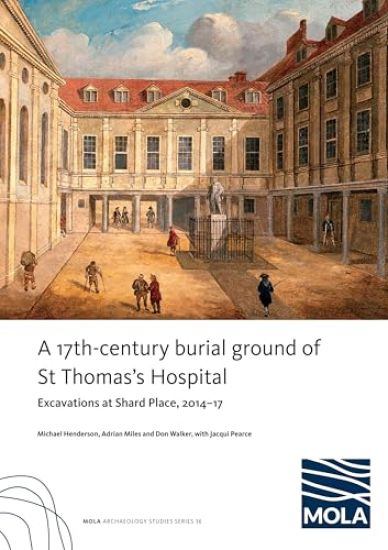
?A 17th-century burial ground of St Thomas’s Hospital, Southwark

?A 17th-century burial ground of St Thomas’s Hospital, Southwark

?Michael Henderson; ?Adrian ?Miles; ?Don ?Walker; ?Jacqui ?Pearce

MUSEUM OF LONDON ARCHAEOLOGY
2025
nidottu
? Archaeological excavations at Shard Place, Southwark, by Museum of London Archaeology (MOLA) revealed evidence of funerary activity associated with old St Thomas’s Hospital. The discovery of 811 inhumations, dating from the 17th to early 18th century exposed the intensive nature of burial activity in an area immediately to the south-east of the hospital buildings. This burial assemblage, together with dumps of hospital waste and evidence of structural remains associated with the 18th-century hospital rebuilding, enhances our knowledge of the early history of this London institution. The study of the skeletal remains of 794 individuals, the majority of whom must have been inmates at St Thomas’s Hospital, provides an insight into the health of the population and the diseases from which they suffered. The demographic structure of the burial sample reveals elevated vulnerability in adolescence and early adulthood, an indication of the health risks inherent within an increasingly crowded urban landscape. The City’s poor endured cramped living conditions and rising levels of pollution. Many migrated to London in search of jobs as labourers, or servants and apprentices. The burial ground revealed early evidence of hospital medical practice in the form of surgical limb amputation. Skeletal evidence of venereal syphilis was also identified, consistent with records of specialist ‘foul wards’ at St Thomas’s Hospital, provided for those suffering from this chronic condition.
London’s Waterfront 1100–1666: Excavations in Thames Street, London, 1974–84

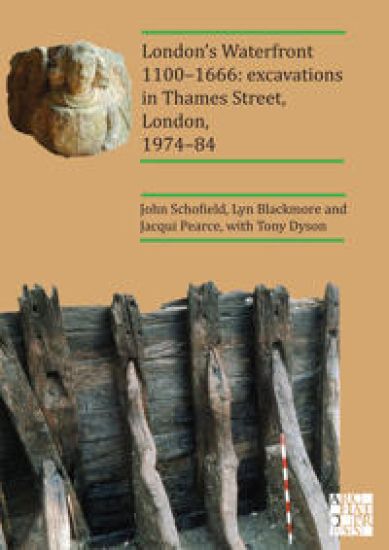
London’s Waterfront 1100–1666: Excavations in Thames Street, London, 1974–84

John Schofield; Lyn Blackmore; Jacqui Pearce

Archaeopress
2020
nidottu
London’s Waterfront 1100–1666: excavations in Thames Street, London, 1974–84 presents and celebrates the mile-long Thames Street in the City of London and the land south of it to the River Thames as an archaeological asset. The argument is based on the reporting of four excavations of 1974–84 by the Museum of London near the north end of London Bridge: Swan Lane, Seal House, New Fresh Wharf and Billingsgate Lorry Park. Here the findings of the period 1100–1666 are presented. Buildings and property development on sixteen properties south of Thames Street, on land reclaimed in many stages since the opening of the 12th century, include part of the parish church of St Botolph Billingsgate. The many units of land reclamation are dated by dendrochronology, coins and documents. They have produced thousands of artefacts and several hundred kilos of native and foreign pottery. Much of this artefactual material has been published, but in catalogue form (shoes, knives, horse fittings, dress accessories, textiles, household equipment). Now the context of these finds, their deposition in groups, is laid out for the first time. Highlights of the publication include the first academic analysis and assessment of a 13th- or 14th-century trumpet from Billingsgate, the earliest surviving straight trumpet in Europe; many pilgrim souvenirs; analysis of two drains of the 17th century from which suggestions can be made about use of rooms and spaces within documented buildings; and the proposal that one of the skeletons excavated from St Botolph’s church is John Reynewell, mayor of London in 1426–7 and a notable figure in London’s medieval history. The whole publication encourages students and other researchers of all kinds to conduct further research on any aspect of the sites and their very rich artefactual material, which is held at the Museum of London’s Archaeological Archive. This is a significantly large and varied dataset for the archaeology and history of London in the period 1100 to 1666 which can be continuously interrogated for generations to come.