Kirjojen hintavertailu – 12 859 829 kirjaa ja 27 kauppaa

Kirjailija

Jahid Siraz Chowdhury

Kirjat ja teokset yhdessä paikassa: 6 kirjaa, julkaisuja vuosilta 2022–2024, suosituimpiin kuuluu The Intersection of Faith, Culture, and Indigenous Community in Malaysia and Bangladesh. Vertaile teosten hintoja ja tarkista saatavuus suomalaisista kirjakaupoista.

6 kirjaa

Kirjojen julkaisuvuodet: 2022–2024.

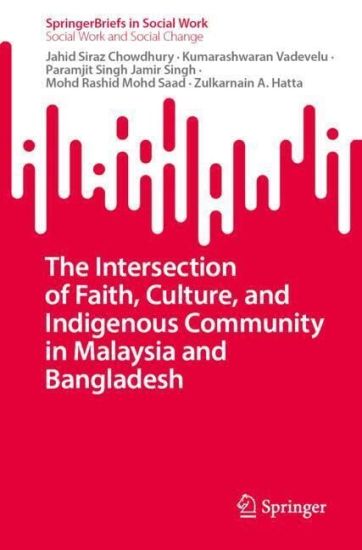
The Intersection of Faith, Culture, and Indigenous Community in Malaysia and Bangladesh

The Intersection of Faith, Culture, and Indigenous Community in Malaysia and Bangladesh

Jahid Siraz Chowdhury; Kumarashwaran Vadevelu; Paramjit Singh Jamir Singh; Mohd Rashid Mohd Saad; Zulkarnain A. Hatta

Springer International Publishing AG
2024
nidottu
This book is a comprehensive study of the intersection of religion, Indigenous culture, and community life, featuring an in-depth examination of the Orang Asli in Malaysia and the Santals in Bangladesh that aims for a socially inclusive, harmonious, and peaceful society. It dives into the impact of conversion on Indigenous identities, employing extensive ethnographic and phenomenological methodologies. The authors explore the conversion process attentively, revealing hidden isolation. This compact volume offers intriguing insights into Southeast and South Asia's rich tapestry, including nuance to discussions concerning religious pluralism, human rights, and the pursuit of social justice. Readers gain a better understanding of varied religious communities and Indigenous perspectives in order to promote a more inclusive and fair society. In the book, the authors provide real-life experiences, extensive analysis, and practical solutions for Indigenous populations in Malaysia and Bangladesh. They blend together thoughts and narratives, encompassing sociopolitical and historical themes. With visuals, case studies, and varied views, the volume builds respect for global variety while driving societal inclusion with the spirit of the sustainable development goals (SDGs). The Intersection of Faith, Culture, and Indigenous Community in Malaysia and Bangladesh addresses pressing social justice and human rights issues, pushing for rights-based society and diversity, while balancing academic rigor and accessibility. The book is intended for scholars and researchers interested in Indigenous peoples, religious conversion, social justice, and human rights. It offers detailed insights into the conversion experiences of Malaysian Orang Asli and Bangladeshi Santal groups, and provides commentary on civil freedoms following conversion and reveals complex views of these communities, making the volume useful for scholars researching intersectionality in religious conversions and the dynamics surrounding Indigenous populations. Policymakers in Malaysia, Bangladesh, and other Asian countries dealing with comparable concerns with converted Indigenous people might benefit from the book's evidence-based insights and challenges, promoting more inclusive and culturally sensitive policies and urging Malaysian and Bangladeshi governments to recognize conversion-related issues.

History and Educational Philosophy for Social Justice and Human Rights

History and Educational Philosophy for Social Justice and Human Rights

Jahid Siraz Chowdhury; Kumarashwaran Vadevelu; A.F.M. Zakaria; Abdullah Al-Mamun; Sajib Ahmed

Igi Global
2024
sidottu
In the complex landscape of educational philosophy and policy, a difficult challenge arises — the entwined issues of racism and other demographic differences, and evolving education policies. Traditional historical accounts fall short of addressing the broader historical patterns that underscore these challenges, particularly their colonial legacy. The need for a fresh perspective becomes evident, one that transcends chronology and delves into the intricate dynamics shaping contemporary educational thought. Differences in teaching philosophy have become a contentious focal point, revealing the deep-seated struggles within public institutions, particularly schools. Tensions and conflicts surrounding differences persist both in structuring these institutions and in civil society, necessitating an initiative-taking response. The prevailing skepticism and fatalism regarding the potential of democratic societies, public policies, and education itself are challenges that demand a comprehensive solution. History and Educational Philosophy for Social Justice and Human Rights contends that these tensions are not insurmountable obstacles; rather, they are the very crucibles from which civic-moral learning and an inclusive democracy can emerge. History and Educational Philosophy for Social Justice and Human Rights emerges as a groundbreaking solution to this conundrum. Through a broad developmental and historical lens, the book provides a fresh perspective on the role of differences as the core, content, and subject of education. It advocates for cultural resistance and a permanent political struggle by political-cultural minorities and social movements, while also challenging public institutions, especially schools, to actively embrace and utilize differences in their foundational work. By engaging with the tensions and struggles around differences, the book contends that institutions can transform, becoming agents of positive change, and contributing to the foundation of an inclusive and participatory democracy. This book invites scholars and educators to not only understand the challenges but to actively participate in shaping a future where differences are not merely acknowledged but celebrated within the realms of education and society at large.
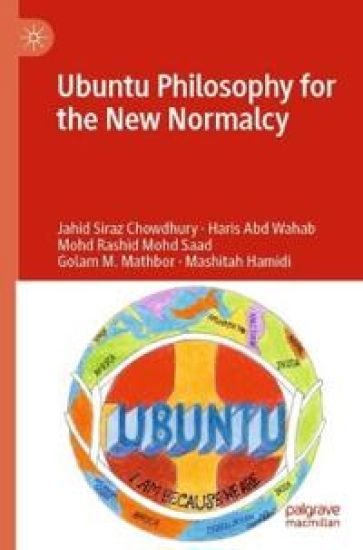
Ubuntu Philosophy for the New Normalcy

Ubuntu Philosophy for the New Normalcy

Jahid Siraz Chowdhury; Haris Abd Wahab; Mohd Rashid Mohd Saad; Golam M. Mathbor; Mashitah Hamidi

SPRINGER VERLAG, SINGAPORE
2024
nidottu
The book is about Ubuntu—loosely translated—I am because we are—or, our common humanity in Zulu, about Unity, and global solidarity. It proves again how alike and universal we are as societies across the globe despite this deadly pandemic. On a personal and social basis, each of the six chapters is a call to action to find commonality, and this is the third book of Jahid’s amelioration on Covid-19 Trilogy. And the Appendix is something special for the readership. Ubuntu tells us about the Indigenous healing keys: empathy, compromise, learning, non-violence, change, forgiveness, restorative justice, love, spirituality and hope. The book was written by a highly diverse team of contributors, both from the Global South and North, and is multidisciplinary in nature, and attempting of Commoning the Communities. The authors hail from the fields of social work, anthropology, and education, and have been working with local communities in the ongoing struggle to identify and address complicit oppression and inequalities. Offering a beacon of hope for today and tomorrow, the book will appeal to social science researchers, policy planners, and the general public alike
Ubuntu Philosophy for the New Normalcy

Ubuntu Philosophy for the New Normalcy

Jahid Siraz Chowdhury; Haris Abd Wahab; Mohd Rashid Mohd Saad; Golam M. Mathbor; Mashitah Hamidi

SPRINGER VERLAG, SINGAPORE
2023
sidottu
The book is about Ubuntu—loosely translated—I am because we are—or, our common humanity in Zulu, about Unity, and global solidarity. It proves again how alike and universal we are as societies across the globe despite this deadly pandemic. On a personal and social basis, each of the six chapters is a call to action to find commonality, and this is the third book of Jahid’s amelioration on Covid-19 Trilogy. And the Appendix is something special for the readership. Ubuntu tells us about the Indigenous healing keys: empathy, compromise, learning, non-violence, change, forgiveness, restorative justice, love, spirituality and hope. The book was written by a highly diverse team of contributors, both from the Global South and North, and is multidisciplinary in nature, and attempting of Commoning the Communities. The authors hail from the fields of social work, anthropology, and education, and have been working with local communities in the ongoing struggle to identify and address complicit oppression and inequalities. Offering a beacon of hope for today and tomorrow, the book will appeal to social science researchers, policy planners, and the general public alike
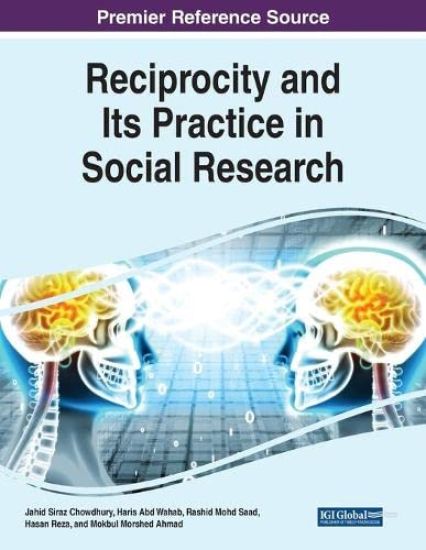
Reciprocity and Its Practice in Social Research

Reciprocity and Its Practice in Social Research

Jahid Siraz Chowdhury; Haris Abd Wahab; Rashid Mohd Saad; Hasan Reza; Mokbul Morshed Ahmad

Igi Global
2022
nidottu
Reciprocity has been critical in the philosophy and social sciences of the 20th century. Over the last seven decades, several countries settled by European powers have become autonomous, and returning has become a challenge. Consequently, writing on reciprocity as a central theme requires time and implies a deep dedication to the community. There is a need to explore the factors and policies behind the study agendas and secret philosophies before and after European involvement. Reciprocity and Its Practice in Social Research aims to open the controlled consciousness of self as a human being and then as a scholar to the community via the methodological lens. It analyzes reciprocity from the Greek tradition to Medeabale Arab to the early colonial or pre-colonial period. It specifically addresses the benefit of social research on the community and seeks ways to revolutionize and improve current research and academic processes. Covering topics such as the philosophy of science, indigenous science, and Western metaphysics, this book is an essential resource for anthropologists, philosophers, sociologists, university faculty and administration, students of higher education, librarians, researchers, and academicians.
Reciprocity and Its Practice in Social Research

Reciprocity and Its Practice in Social Research

Jahid Siraz Chowdhury; Pankaj Kumar Tyagi; Malini Singh; Priyanka Tyagi

Igi Global
2022
sidottu
Reciprocity has been critical in the philosophy and social sciences of the 20th century. Over the last seven decades, several countries settled by European powers have become autonomous, and returning has become a challenge. Consequently, writing on reciprocity as a central theme requires time and implies a deep dedication to the community. There is a need to explore the factors and policies behind the study agendas and secret philosophies before and after European involvement. Reciprocity and Its Practice in Social Research aims to open the controlled consciousness of self as a human being and then as a scholar to the community via the methodological lens. It analyzes reciprocity from the Greek tradition to Medeabale Arab to the early colonial or pre-colonial period. It specifically addresses the benefit of social research on the community and seeks ways to revolutionize and improve current research and academic processes. Covering topics such as the philosophy of science, indigenous science, and Western metaphysics, this book is an essential resource for anthropologists, philosophers, sociologists, university faculty and administration, students of higher education, librarians, researchers, and academicians.