
Kirjojen hintavertailu – 12 903 724 kirjaa ja 27 kauppaa

Kirjailija

Jaimie Hicks Masterson

Kirjat ja teokset yhdessä paikassa: 2 kirjaa, julkaisuja vuosilta 2014–2020, suosituimpiin kuuluu Planning for Community Resilience. Vertaile teosten hintoja ja tarkista saatavuus suomalaisista kirjakaupoista.

2 kirjaa

Kirjojen julkaisuvuodet: 2014–2020.

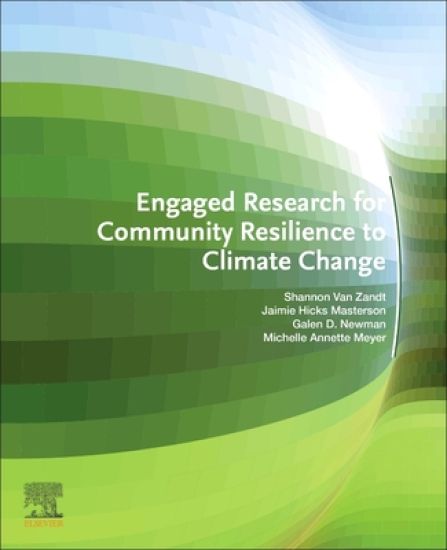
Engaged Research for Community Resilience to Climate Change

Engaged Research for Community Resilience to Climate Change

Shannon Van Zandt; Jaimie Hicks Masterson; Galen D. Newman; Michelle Annette Meyer

Elsevier Science Publishing Co Inc
2020
nidottu
Engaged Research for Community Resilience to Climate Change is a guide to successfully integrating science into urban, regional, and coastal planning activities to build truly sustainable communities that can withstand climate change. It calls for a shift in academic researchers’ traditional thinking by working across disciplines to solve complex societal and environmental problems, focusing on the real-world human impacts of climate change, and providing an overview of how science can be used to advocate for institutional change. Engaged Research for Community Resilience to Climate Change appeals to a wide variety of audiences, including university administrators looking to create and sustain interdisciplinary research groups, community and state officials, non-profit and community advocates, and community organizers seeking guidance for generating and growing meaningful, productive relationships with university researchers to support change in their communities.
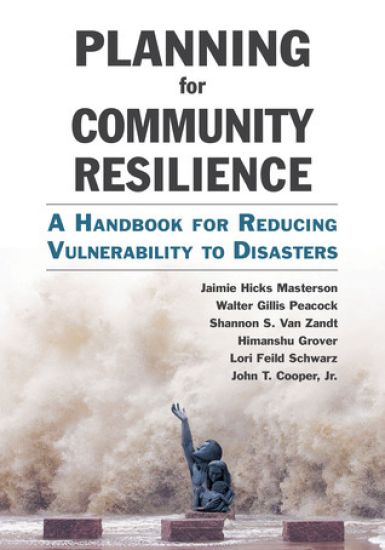
Planning for Community Resilience

Planning for Community Resilience

Jaimie Hicks Masterson; Walter Gillis Peacock; Shannon S. Van Zandt; Himanshu Grover; Lori Feild Schwarz; John T. Cooper

Island Press
2014
nidottu
This timely handbook brings together the fields of planning, disaster response, and hazards management to provide a field-tested process on how to make communities disaster-resilient. How can we plan and design stronger communities? Communities struck by natural disasters struggle to recover long after the first responders have left. Globally, the average annual number of natural disasters has more than doubled since 1980. These catastrophes are increasing in number as well as in magnitude, causing greater damage as we experience rising sea levels and other effects of climate change. Communities can reduce their vulnerability to disaster by becoming more resilient, to not only bounce back more readily from disasters but to grow stronger, more socially cohesive, and more environmentally responsible. To be truly resilient, disaster preparation and recovery must consider all populations in the community. By bringing together natural hazards planning and community planning to consider vulnerabilities, more resilient and equitable communities are achievable. In Planning for Community Resilience the authors describe an inclusive process for creating disaster-resilient communities. This handbook guides any community through the process of determining their level of hazard exposure, physical vulnerability, and social vulnerability with the goal of determining the best planning strategy. This will be an invaluable tool for professionals working to protect communities from disturbance.