Kirjojen hintavertailu – 12 859 829 kirjaa ja 27 kauppaa
Kirjailija
Jake B. Wilson
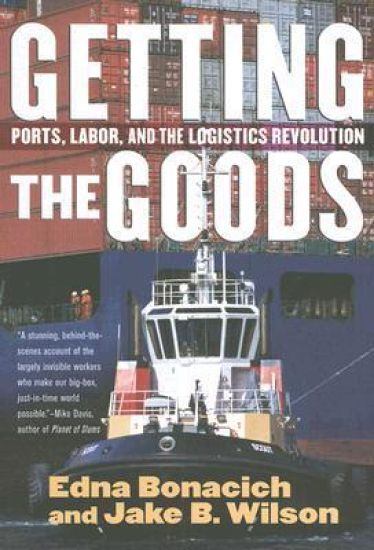
Kirjat ja teokset yhdessä paikassa: 4 kirjaa, julkaisuja vuosilta 2008–2011, suosituimpiin kuuluu Getting the Goods. Vertaile teosten hintoja ja tarkista saatavuus suomalaisista kirjakaupoista.
Bonacich and Wilson follow the flow of imports from Asian factories, exploring the roles of importers, container shipping companies, the ports, railroad and trucking companies, and warehouses and their impact on U. S. workers.
Bonacich and Wilson follow the flow of imports from Asian factories, exploring the roles of importers, container shipping companies, the ports, railroad and trucking companies, and warehouses and their impact on U. S. workers.
In Getting the Goods, Edna Bonacich and Jake B. Wilson focus on the Southern California ports of Los Angeles and Long Beach—which together receive 40 percent of the nearly $2 trillion worth of goods imported annually to the United States—to examine the impact of the logistics revolution on workers in transportation and distribution. Built around the invention of shipping containers and communications technology, the logistics revolution has enabled giant retailers like Walmart and Target to sell cheap consumer products made using low-wage labor in developing countries. The goods are shipped through an efficient, low-cost, intermodal freight system, in which containers are moved from factories in Asia to distribution centers across the United States without ever being opened. Bonacich and Wilson follow the flow of imports from Asian factories, exploring the roles of importers, container shipping companies, the ports, railroad and trucking companies, and warehouses. At each stage, Getting the Goods raises important questions about how the logistics revolution affects logistics workers. Drawing extensively on interviews with workers and managers at all levels of the supply chain, on industry reports, and on economic data, Bonacich and Wilson find that, in general, conditions have deteriorated for workers. But they also discover that changes in the system of production and distribution provide new strategic opportunities for labor to gain power. A much-needed corrective to both uncritical celebrations of containerization and the global economy and pessimistic predictions about the future of the U. S. labor movement, Getting the Goods will become required reading for scholars and students in sociology, political economy, and labor studies.
In Getting the Goods, Edna Bonacich and Jake B. Wilson focus on the Southern California ports of Los Angeles and Long Beach—which together receive 40 percent of the nearly $2 trillion worth of goods imported annually to the United States—to examine the impact of the logistics revolution on workers in transportation and distribution. Built around the invention of shipping containers and communications technology, the logistics revolution has enabled giant retailers like Walmart and Target to sell cheap consumer products made using low-wage labor in developing countries. The goods are shipped through an efficient, low-cost, intermodal freight system, in which containers are moved from factories in Asia to distribution centers across the United States without ever being opened. Bonacich and Wilson follow the flow of imports from Asian factories, exploring the roles of importers, container shipping companies, the ports, railroad and trucking companies, and warehouses. At each stage, Getting the Goods raises important questions about how the logistics revolution affects logistics workers. Drawing extensively on interviews with workers and managers at all levels of the supply chain, on industry reports, and on economic data, Bonacich and Wilson find that, in general, conditions have deteriorated for workers. But they also discover that changes in the system of production and distribution provide new strategic opportunities for labor to gain power. A much-needed corrective to both uncritical celebrations of containerization and the global economy and pessimistic predictions about the future of the U. S. labor movement, Getting the Goods will become required reading for scholars and students in sociology, political economy, and labor studies.