
Kirjojen hintavertailu – 12 903 725 kirjaa ja 27 kauppaa

Kirjailija

James A. Bourgeois

Kirjat ja teokset yhdessä paikassa: 4 kirjaa, julkaisuja vuosilta 2009–2023, suosituimpiin kuuluu Complexity in Health Care. Vertaile teosten hintoja ja tarkista saatavuus suomalaisista kirjakaupoista.

4 kirjaa

Kirjojen julkaisuvuodet: 2009–2023.

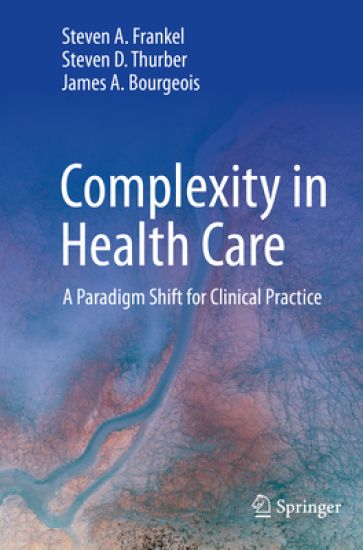
Complexity in Health Care

Complexity in Health Care

Steven A. Frankel; Steven D. Thurber; James A. Bourgeois

Springer International Publishing AG
2023
nidottu
This book addresses the principle that successful treatment incorporates a remarkably broad range of clinical variables. Clinicians must identify the extent to which each factor contributes to the success of the treatment process, and how to utilize this information strategically so that their combination enhances outcome. Complex clinical situations involve numerous macroscopic and microscopic components and their interactions. This book describes clinical practices and variables, that should be weighted according to their relevance for achieving treatment precision and improved results. The book is divided into sections, each containing topically organized chapters. Sections build from identifying discrete components of the clinical field to combined variables as they impact treatment progression. The clinical narratives that make up the latter part of the book elaborate on the course of care and the challenges involved in managing complex clinical situations. Cases range from primary care patients with systemic medical and psychiatric co-morbidity to more complex cases requiring the involvement of medical specialists, allied health professionals, and multiple health care systems. Scholarly, practical, and comprehensive, Complexity in Health Care enables clinicians to incorporate previously underappreciated health-related factors into their thinking and practice.
Geriatric Psychiatry Study Guide

Geriatric Psychiatry Study Guide

Ana Hategan; James A. Bourgeois; Tracy Cheng; Julie Young

Springer International Publishing AG
2018
nidottu
Trainees in subspecialty of geriatric psychiatry and general psychiatry need to master core competencies in geriatric psychiatry in order to practice. This book is designed to provide short-answer question-based learning centering around the core curriculum topics in geriatric psychiatry and is primarily ideal not only for medical students, residents, and fellows, but also for psychiatrists preparing for re-certification. This book features approximately 300 short-answer questions on geriatric psychiatry topics, each comprising the stem of a brief clinical scenario or concise question with expected number of answers. The book also features detailed teaching notes, graphics, and the respective source references. The format is consistently structured from chapter to chapter, practical and concise, and designed to enhance the reader’s diagnostic and management ability and clinical understanding. Each answer includes a concise discussion, pertinent illustrations, and source references. This text is a valuable reference and teaching tool that provides an opportunity for learning across a rapidly growing field. The material covered matches the existing postgraduate curricula in geriatric psychiatry and helps prepare candidates for their specialty and subspecialty certification examinations. The cases map well to both the American Geriatric Psychiatry Association and Canadian Academy of Geriatric Psychiatry as well as other international postgraduate curricula. The book covers main topics within geriatric psychiatry, some such as substance use disorders and sexuality and sexual dysfunction in later life. As the Baby Boomers age, this reference will continue to be a valuable staple in geriatric workforce training. Geriatric Psychiatry Study Guide is the ultimate resource for students, residents, fellows, psychiatrists, psychologists, family practitioners, nurses, social workers,and all clinicians rising to the challenges of the mental health segment of the geriatric workforce.
Comprehensive Care for Complex Patients

Comprehensive Care for Complex Patients

Steven A. Frankel; James A. Bourgeois; Philip Erdberg

Cambridge University Press
2012
sidottu
'Complex patients' are a sizeable population who generally require disproportionate attention for their management and respond poorly to treatment. Their systemic medical, psychiatric and personal needs have a tendency to drain or exceed the capabilities of those who treat them whilst overutilizing health care resources. As this patient population grows, we move ever closer to a crisis in health care delivery. This volume presents an innovative team-based approach for assessing and managing diagnostically complex and management intensive patients. The physician-led 'Medical-Psychiatric Coordinating Physician (MPCP)' model not only improves patient treatment, but also provides for the containment of costs by reducing redundancy and curbing excess in the use of services. Other benefits include improved diagnostic accuracy and decision making, as well as better communication among physicians and allied health professionals. This book is essential reading for psychiatrists, primary care physicians, and physicians, directors and administrators working in multidisciplinary specialty clinics.
Casebook of Psychosomatic Medicine

Casebook of Psychosomatic Medicine

James A. Bourgeois; Debra Kahn; Kemuel L. Philbrick; John M. Bostwick

American Psychiatric Association Publishing
2009
pokkari
The practice of medicine is both learned and advanced through the compilation and study of cases—vignettes that record the presentation, diagnosis, and treatment of individual patients and diseases. This is especially true of psychosomatic medicine (PSM), which depends on the "compelling case" to distill clinical knowledge and communicate it to students, residents, and clinicians. An invaluable contribution to the field, the Casebook of Psychosomatic Medicine describes the psychiatric symptoms and/or illnesses managed by the PSM psychiatrist in collaboration with other medical colleagues. The book presents a broad range of cases illustrating the medical, psychosocial, and intertwined situations psychiatrists are likely to encounter in an academic medical center setting. No other single volume offers a broader range of engaging, detailed, and nuanced PSM cases, or grounds them so firmly in a psychiatric, psychosocial, and spiritual context. Here are just a few of this patient-centered book's most impressive and useful features: • The relevant science underlying each case is addressed in discussion sections, allowing the book to be read as a stand-alone volume. Alternatively, the cases can be read as instructive and insightful illustrations by the reader who has already absorbed the fundamentals of PSM from standard textbooks in the field.• This user-friendly book is organized by the organ system or disease type of the presenting illness or symptom.• Content rare in volumes of this kind includes detailed coverage of the diagnosis and management of cognitive disorders; the management of drug toxicity states; determinations of decisional capacity for medical decision making; and "stress and adaptation", an issue the PSM psychiatrist encounters daily.• The authors strongly believe that one of the most crucial roles for the psychiatrist is in the medical center, and the book reflects that orientation. • The book addresses the importance of understanding the impact of patients' systemic illnesses on their psychiatric symptoms, and modifying interventions and care accordingly. These abilities are critical to sound PSM practice. Although PSM has a long and noble history, it is the newest of the psychiatric subspecialties, and as the literature expands, more and more clinicians will incorporate PSM treatment modalities into their practice. The Casebook of Psychosomatic Medicine is an essential contribution to that body of knowledge and establishes a new standard with which to face the future of this exciting field.