Kirjojen hintavertailu – 12 903 724 kirjaa ja 27 kauppaa

Kirjailija

James A. Duke

Kirjat ja teokset yhdessä paikassa: 16 kirjaa, julkaisuja vuosilta 1992–2020, suosituimpiin kuuluu Handbook of Phytochemical Constituents of GRAS Herbs and Other Economic Plants. Vertaile teosten hintoja ja tarkista saatavuus suomalaisista kirjakaupoista.

Nimi esiintyy myös muodoissa: James A Duke

16 kirjaa

Kirjojen julkaisuvuodet: 1992–2020.

Database of Biologically Active Phytochemicals & Their Activity
Database of Biologically Active Phytochemicals and Their Activities presents an alphabetical tabulation of some 3,000 biologically active phytochemicals (elements and compounds) from higher plants. The data includes at least one and in some cases as many as 25 biological activities for each phytochemical. The database also provides data on effective dose, inhibitory concentrations, and lethal and/or toxic doses. Entries after 1990 indicate the source of the data. Database of Biologically Active Phytochemicals and Their Activities makes it possible to locate the concentration of many compounds in plants and compare this data with dosage information to calculate how much of a given plant food it would take to cause lethality, antioxidant activity, hypoglycemic activity, or artemicidal activity. Using WordPerfect 5.1's search function, you can find compounds by entering a key word in their name (e.g., choline or salicyl-), locate all compounds with a given activity (e.g., hypotensive), or list all compounds for which ED50 data is entered or reported.
Handbook of Nuts

Handbook of Nuts

James A. Duke

CRC Press
2019
nidottu
Over one hundred of the world's most important species of nuts are systematically accounted for in this informative handbook. The text defines nuts and discusses their economic and nutritional value. For easy reference, there is an illustrated account of each nut by species, arranged alphabetically by scientific name. Each account includes the family name, several colloquial names, and paragraphs on uses, folk medicine, chemistry, germplasm, distribution, ecology, cultivation, harvesting, yields, energy, and biotic factors. Chapters Describe:Uses Folk medicine Chemistry Germplasm Distribution Ecology Cultivation Harvesting Yields and economics Energy Biotic factors
CRC Handbook of Nuts

CRC Handbook of Nuts

James A. Duke

CRC Press
2017
sidottu
Over one hundred of the world's most important species of nuts are systematically accounted in this informative handbook. The text defines nuts and discusses their economic and nutritional value. For easy reference; there is an illustrated account of each nut by species, arranged alphabetically by scientific name. Each account includes the family name, several colloquial names, and paragraphs on uses, folk medicine, chemistry, germplasm, distribution, ecol-ogy, cultivation, harvesting, yields, energy, and biotic factors. Chapters Describe:Uses Folk medicine Chemistry Germplasm Distribution Ecology Cultivation Harvesting Yields and economics Energy Biotic factors
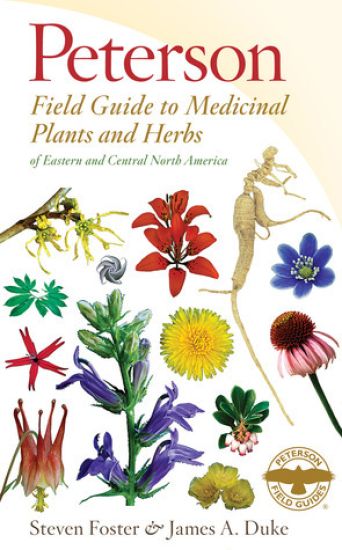
Peterson Field Guide to Medicinal Plants & Herbs of Eastern & Central N. America: Third Edition

Peterson Field Guide to Medicinal Plants & Herbs of Eastern & Central N. America: Third Edition

Steven Foster; James A. Duke

Mariner Books
2014
nidottu

Halvin toimitettuna 26,40 €

Peterson The best-selling field guides of all timeMedicinal plants are increasingly well regarded as supplements and sometimes as alternatives for prescription drugs. Steven Foster and James A. Duke have used recent advances in the study of medicinal plants and their combined experience of over 100 years to completely update the Peterson Field Guide to Medicinal Plants. The clear and concise text identifies the key traits, habitats, uses, and warnings for more than 530 of the most significant medicinal plants in the eastern and central United States and Canada including both native and alien species. Seven hundred plus images, the organization-by-color system, and simplified warnings make identifying medicinal plants fast and easy. Sponsored by the National Audubon Society, the National Wildlife Federation, and the Roger Tory Peterson Institute
The Green Pharmacy Guide to Healing Foods
Upon its publication more than a decade ago, Dr. James Duke's "The Green Pharmacy" quickly set the standard for consumer herb references. A favorite of laypeople and professionals alike, the book sold more than a million copies and solidified the author's reputation as one of the world's foremost authorities on medicinal plants. In his new book, Dr. Duke turns to the broader and even more popular subject of food as medicine, drawing on more than thirty years of research to identify the most powerful healing foods on earth. Whether he is revealing how to beat high cholesterol with blueberries, combat hot flashes with black beans, bash blood sugar spikes with almonds, or help relieve agonizing back pain with pineapple, Dr. Duke's food remedies help treat and prevent the whole gamut of health concerns, from minor (such as sunburn and the common cold) to more serious (like arthritis and diabetes). Dr. Duke has assigned a rating to each remedy, according to his evaluation of the available scientific studies and anecdotal reports. Many of the healing foods recommended here are proving so effective that they may outperform popular pharmaceuticals - minus the risk.
Duke's Handbook of Medicinal Plants of Latin America
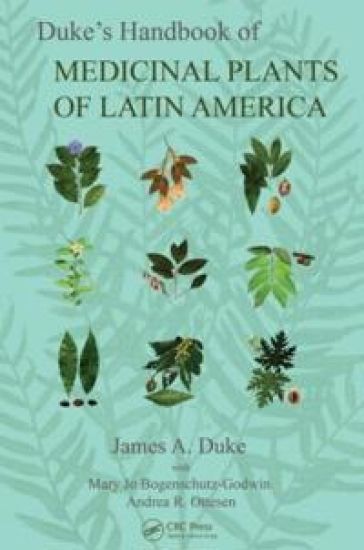
Finalist for 2009 The Council on Botanical & Horticultural Libraries Literature Award! A Comprehensive Guide Addressing Safety, Efficacy, and Suitability About a quarter of all the medicines we use come from rainforest plants and more than 1,400 varieties of tropical plants are being investigated as potential cures for cancer. Curare comes from a tropical vine and quinine from the cinchona tree. A comprehensive guide to safety, efficacy, and suitability, Duke’s Handbook of Medicinal Plants of Latin America responds to continuing interest in medicinal plants and the potential remedies they contain. Determine Which Species Can Be Used for Specific Targets The author of Green Pharmacy Herbal Handbook and CRC Handbook of Medicinal Herbs, James A. Duke covers roughly 500 of the more important Native Latin American medicinal plants in a highly organized format. After a brief introduction, each entry contains scientific and colloquial names, synonyms, reference to illustrations, notes, biological activities, medicinal indications, dosages, potential hazards, extracts, and references. This format supplies a starting point for determining which species can be used for specific targets. Better Data Helps You Focus Your Search Year-round moderate temperatures, abundant rainfall, and rich soils make tropical Latin America home to nearly 100,000 of the world’s 300,000 known species of plants, and therefore home to untold numbers of potential cures. Focusing on 500 of the most well-known and well-studied plants, this book helps you focus your search for ammunition against constantly evolving pathogens and newly emerging diseases.
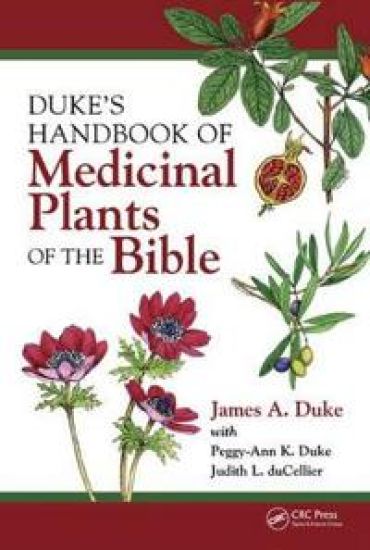
Duke's Handbook of Medicinal Plants of the Bible
Known for their ease of use, artful presentation of scientific information, and evidence-based approach, James Duke’s comprehensive handbooks are the cornerstone in the library of almost every alternative and complementary medicine practitioner and ethnobotanist. Using the successful format of these bestselling handbooks, Duke’s Handbook of Medicinal Plants of the Bible covers 150 herbs that scholars speculate, based on citations, were used in Biblical times.
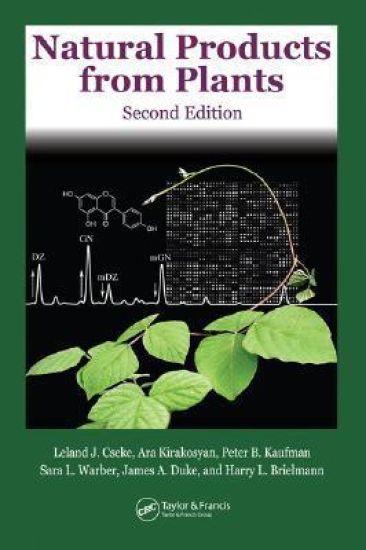
Natural Products from Plants

Natural Products from Plants

Leland J. Cseke; Ara Kirakosyan; Peter B. Kaufman; Sara Warber; James A. Duke; Harry L. Brielmann

CRC Press Inc
2006
sidottu
2008 NOMINEEThe Council on Botanical and Horticultural Libraries Annual Award for a Significant Work in Botanical or Horticultural Literature From medicinal, industrial, and culinary uses to cutting-edge laboratory techniques in modern research and plant conservation strategies, Natural Products from Plants, Second Edition reveals a vastly expanded understanding of the natural products that plants produce. In a single volume, this bookoffers a thorough inventory of the various types of plant-derived compounds. It covers their chemical composition, structure, and properties alongside the most effective ways to identify, extract, analyze, and characterize new plant-derived compounds. The authors examine new information on the chemical mechanisms plants use to deter predators and pathogens, attract symbiotic organisms, and defend themselves against environmental stress—insights which are key for adapting such mechanisms to human health. Along with updated and revised information from the highly acclaimed first edition, the second edition presents seven new chapters and features more than 50% new material relating to plant constituents, natural product biochemistry, and molecular biology. The book incorporates in-depth treatment of natural product biosynthesis with new collection and extraction protocols, advanced separation and analytical techniques, up-to-date bioassays, as well as modern molecular biology and plant biotechnology for the production of natural products. Unique in its breadth and coverage, Natural Products from Plants, Second Edition belongs on the shelf of interested researchers, policymakers, and consumers— particularly those involved in disease prevention, treatment, and pharmaceutical applications—who need a complete guide to the properties, uses, and study of plant natural products.
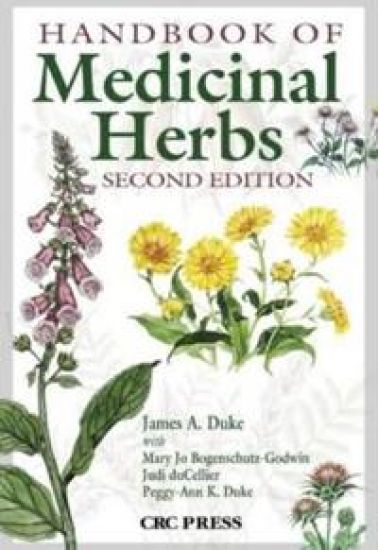
Handbook of Medicinal Herbs

Handbook of Medicinal Herbs

James A. Duke

CRC Press Inc
2002
sidottu
Still considered the definitive work on medicinal herbs and their uses after two decades, the Handbook of Medicinal Herbs has undergone a long-anticipated revision. In the second edition, world-renowned ethnobotanist James A. Duke provides up-to-date data on over 800 of the world’s most important medicinal plant species. The book contains more species, phytochemicals, proven indications, folk indications, and dosage data than the first edition in a new easier to use format. The in-depth content, the addition of color plates and over 200 black and white illustrations makes this book the most comprehensive resource on medicinal herbs available. NEW IN THE SECOND EDITION: · Over 100 color plates, 4 color maps · Over 200 black and white illustrations · Over 800 medicinal plants — more than twice as many as the previous edition organized alphabetically by common name · More herbs from the African, Ayurvedic, Chinese, and Jamu traditions EASY ACCESS TO INFORMATION YOU NEED Designed to give you fast access to the information you need on a regular basis, this new edition is organized more systematically than any other medicinal herb publication. The entries are now arranged alphabetically by common name with the scientific name in parenthesis. Major synonyms are also provided. · It has become increasingly clear that there are hundreds of biologically active compounds, often additive or synergistic, in all our plants, foods, spices, herbs, medicinal, and poisonous plants. The debate continues on how these plants work and how they should be used. Blending scientific fact with folk uses and the author’s personal experience, Handbook of Medicinal Herbs, Second Edition provides the most well rounded discussions of safety, efficacy, toxicity, and rational use found in any herbal reference.
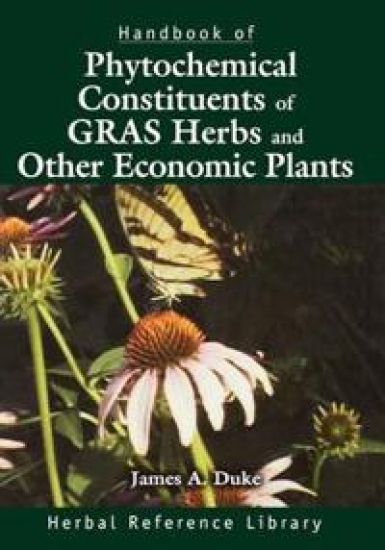
Handbook of Phytochemical Constituents of GRAS Herbs and Other Economic Plants
CRC Handbook of Phytochemical Constituents of GRAS Herbs and Other Economic Plants is a unique catalog that includes more than 15,000 phytochemical constituents from over 1,000 higher plant species. This volume covers all of the generally-recognized-as-safe (GRAS) herbs and at least 250 important food and medicinal plants. Each entry features the scientific name, one or more common names, a listing of phytochemical constituents, a single datum or range of quantitative data (wet-weight to dry-weight in parts per million), two-letter abbreviation identifying the plant part, and three-letter abbreviation(s) indicating the source(s) of the data. The extraordinary amount of data compiled into an easy-to-use tabular format makes the CRC Handbook of Phytochemical Constituents of GRAS Herbs and Other Economic Plants a volume useful to all pharmacologists, toxicologists, nutritionists, pharmacognicists, and food scientists.
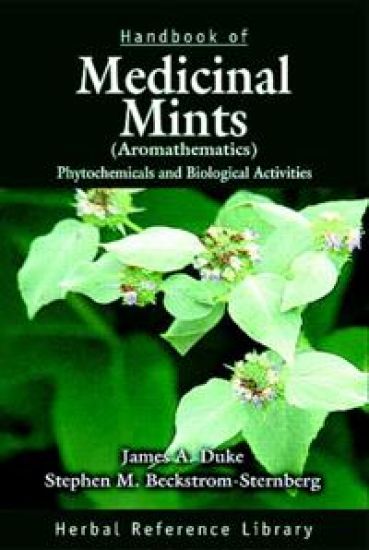
Handbook of Medicinal Mints ( Aromathematics)

Handbook of Medicinal Mints ( Aromathematics)

James A. Duke; Stephen M Beckstrom-Sternberg

CRC Press Inc
2000
sidottu
This handbook provides the most complete collection of chemical data available on aromatic mints (Lamiaceae). The authors thoroughly introduce the field of aromathematics. Handbook of Medicinal Mints (Aromatics): Phytochemicals and Biological Activities contains a wealth of quantitative data, including more than 500 references on 10,839 chemicals from 251 assays of 205 unique taxa, combined with 3,324 biological activities and 256 recommended daily allowances and lethal doses. An exhaustive guide, the handbook is the ultimate resource for assessing the potential medicinal value of a particular species.
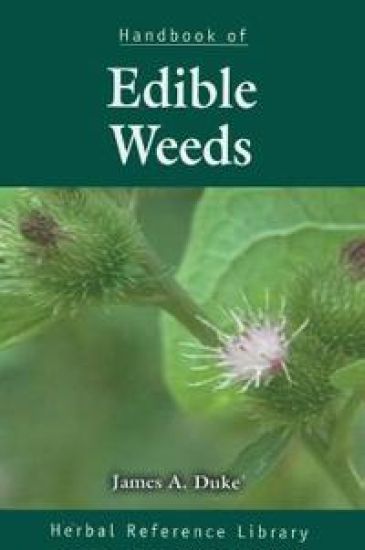
Handbook of Edible Weeds

Handbook of Edible Weeds

James A. Duke

CRC Press Inc
2000
sidottu
Handbook of Edible Weeds contains detailed descriptions and illustrations of 100 edible weeds, representing 100 genera of higher plant species. Some of the species are strictly American, but many are cosmopolitan weeds. Each account includes common names recognized by the Weed Science Society of America, standard Latin scientific names, uses, and distribution (geographic and ecological). Cautionary notes are included regarding the potential allergenic or other harmful properties of many of the weeds.
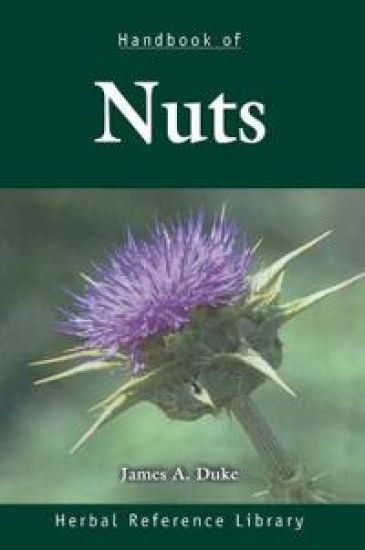
Handbook of Nuts

Handbook of Nuts

James A. Duke

CRC Press Inc
2000
sidottu
Over one hundred of the world's most important species of nuts are systematically accounted for in this informative handbook. The text defines nuts and discusses their economic and nutritional value. For easy reference, there is an illustrated account of each nut by species, arranged alphabetically by scientific name. Each account includes the family name, several colloquial names, and paragraphs on uses, folk medicine, chemistry, germplasm, distribution, ecology, cultivation, harvesting, yields, energy, and biotic factors. Chapters Describe:Uses Folk medicine Chemistry Germplasm Distribution Ecology Cultivation Harvesting Yields and economics Energy Biotic factors
The Green Pharmacy

The Green Pharmacy

James A Duke

St Martin's Press
1998
pokkari
With A-to-Z entries that include over 120 health conditions, James Duke's The Green Pharmacy is an authoritative, readable guide to the world of herbal healing. From traditional folk remedies to groundbreaking laboratory studies, Dr. Duke provides up-to-date information and age-old folk wisdom about nature's most potent plants. You'll find scores of natural remedies that can replace or enhance costly pharmaceuticals, including: Relief for aches and pains ranging from arthritis, angina and back pain to menstrual cramps and sciatica. Remedies for gastrointestinal problems from constipation and flatulence to inflammatory bowel disease and ulcers. Herbs that can reduce your risk of cancer, heart attack, high blood pressure and osteoporosis. Cures for infections ranging from colds and flu to sore throat and yeast infections. Herbal drinks that reduce fever. And much more. The Green Pharmacy includes easy "how-to" instructions for preparing herbal compresses, teas and infusions. Plus, Dr. Duke provides an easy rating system to quickly identify the most effective herbal remedies for each condition.
Database of Biologically Active Phytochemicals & Their Activity
Database of Biologically Active Phytochemicals and Their Activities presents an alphabetical tabulation of some 3,000 biologically active phytochemicals (elements and compounds) from higher plants. The data includes at least one and in some cases as many as 25 biological activities for each phytochemical. The database also provides data on effective dose, inhibitory concentrations, and lethal and/or toxic doses. Entries after 1990 indicate the source of the data. Database of Biologically Active Phytochemicals and Their Activities makes it possible to locate the concentration of many compounds in plants and compare this data with dosage information to calculate how much of a given plant food it would take to cause lethality, antioxidant activity, hypoglycemic activity, or artemicidal activity. Using WordPerfect™ 5.1's search function, you can find compounds by entering a key word in their name (e.g., choline or salicyl-), locate all compounds with a given activity (e.g., hypotensive), or list all compounds for which ED50 data is entered or reported.