Kirjojen hintavertailu – 12 903 725 kirjaa ja 27 kauppaa

Kirjailija

James A Sanders

Kirjat ja teokset yhdessä paikassa: 13 kirjaa, julkaisuja vuosilta 2000–2019, suosituimpiin kuuluu Canon and Community: A Guide to Canonical Criticism. Vertaile teosten hintoja ja tarkista saatavuus suomalaisista kirjakaupoista.

Nimi esiintyy myös muodoissa: James A. Sanders

13 kirjaa

Kirjojen julkaisuvuodet: 2000–2019.

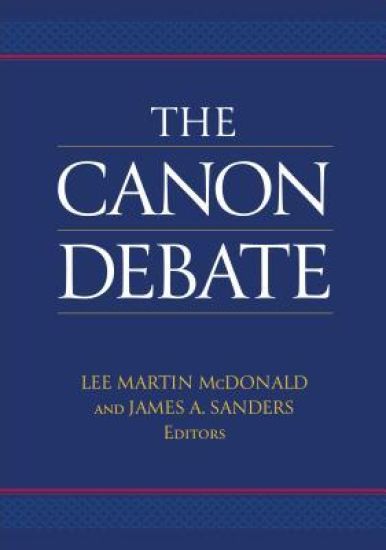
The Canon Debate

The Canon Debate

Lee Martin Mcdonald; James A. Sanders

Baker Academic, Div of Baker Publishing Group
2019
nidottu
What does it mean to speak of a "canon" of scripture? How, when, and where did the canon of the Hebrew Bible come into existence? Why does it have three divisions? What canon was in use among the Jews of the Hellenistic diaspora? At Qumran? In Roman Palestine? Among the rabbis? What Bible did Jesus and his disciples know and use? How was the New Testament canon formed and closed? What role was played by Marcion? By gnostics? By the church fathers? What did the early church make of the apocrypha and pseudepigrapha? By what criteria have questions of canonicity been decided? Are these past decisions still meaningful faith communities today? Are they open to revision? These and other debated questions are addressed by an international roster of outstanding experts on early Judaism and early Christianity, writing from diverse affiliations and perspectives, who present the history of discussion and offer their own assessments of the current status. ContributorsWilliam Adler, Peter Balla, John Barton, Joseph Blenkinsopp, François Bovon, Kent D. Clarke, Philip R. Davies, James D. G. Dunn, Eldon Jay Epp, Craig A. Evans, William R. Farmer, Everett Ferguson, Robert W. Funk, Harry Y. Gamble, Geoffrey M. Hahneman, Daniel J. Harrington, Everett R. Kalin, Robert A. Kraft, Jack P. Lewis, Jack N. Lightstone, Steve Mason, Lee M. McDonald, Pheme Perkins, James A. Sanders, Daryl D. Schmidt, Albert C. Sundberg Jr., Emanuel Tov, Julio Trebolle-Barrera, Eugene Ulrich, James C. VanderKam, Robert W. Wall.
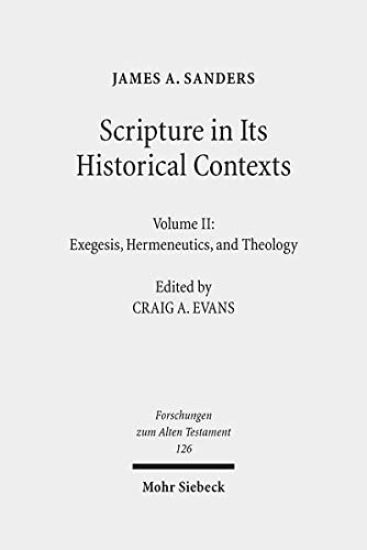
Scripture in Its Historical Contexts

Scripture in Its Historical Contexts

James A. Sanders

Mohr Siebeck
2019
sidottu
James A. Sanders has been at the forefront of the study of canon formation, history of interpretation, and textual criticism, specializing in the Dead Sea Scrolls and the use of the Old Testament in the New. Like no one else, he is able to bring together exegetical detail with hermeneutical and theological insight. He moves deftly from exegetical, critical detail to hermeneutical options and overarching theological implications. In this important collection of essays we have the mature fruit of decades of research, including careful engagement with ancient texts and fair-minded ecumenical discourse with the greatest minds in the field. These studies laid the foundation on which today's scholarly discussion is focused.
Trusting Yhwh

Trusting Yhwh

Lorne E Weaver; James a Sanders

Resource Publications (CA)
2019
sidottu
To open the Book of Psalms is to enter the world of God. To read the Psalms is to read the words of God and hear the words of these ancient people in response to this God who has graciously drawn them into an eternal covenant. The Book of Psalms is one continuous conversation that ranges over many centuries--perhaps nearly a millennium--between the God of Israel and the people of Israel; or more accurately, the God of glory and this particular people who have been called to live life on the edge of glory as the people of God. There is no mystery to this conversation. It is all an embroidery of grace. Modern day readers may find themselves caught in the nexus between personal experience and the desire to live a life of faith on the other. These will find a voice in the Psalms. Ancient Israel strove to put their trust in the One God of All--in the face of myriad challenges throughout her long history. What we find here is a bold witness to their hard-won faith and confidence in the sheltering presence of the One God of All. This is a message that is especially timely for people who may desire the deeper dimensions of life and faith amid the inescapable incongruities and anxieties of postmodern life. ""Weaver finds in the Psalms amazing affirmations of trust in God in the midst of personal disasters that today drive many people away from the Church. While Weaver bases his readings on scholarship of the Book of Psalms he nonetheless pierces through the many conjectures about their forms, origins and provenances and finds what the lay person today faces who often lives on the boundaries of modern existence, the soul who quietly endures the worst that life can throw at a person. This book speaks to those who often quietly suffer pain and doubt to the point of despair. This is the book that speaks to those who ask the desperate question, ""Why did God let this happen?"" --from the foreword by James A. Sanders Lorne E. Weaver is a retired priest and rector in the Episcopal Diocese of Los Angeles. He is a graduate of Gordon College, Gordon-Conwell Theological Seminary, Fuller Theological Seminary, and did post-graduate work at The Claremont School of Theology in Claremont, California. He lives in Upland, California. This is his first book.
Trusting Yhwh

Trusting Yhwh

Lorne E Weaver; James a Sanders

Resource Publications (CA)
2019
pokkari
To open the Book of Psalms is to enter the world of God. To read the Psalms is to read the words of God and hear the words of these ancient people in response to this God who has graciously drawn them into an eternal covenant. The Book of Psalms is one continuous conversation that ranges over many centuries--perhaps nearly a millennium--between the God of Israel and the people of Israel; or more accurately, the God of glory and this particular people who have been called to live life on the edge of glory as the people of God. There is no mystery to this conversation. It is all an embroidery of grace. Modern day readers may find themselves caught in the nexus between personal experience and the desire to live a life of faith on the other. These will find a voice in the Psalms. Ancient Israel strove to put their trust in the One God of All--in the face of myriad challenges throughout her long history. What we find here is a bold witness to their hard-won faith and confidence in the sheltering presence of the One God of All. This is a message that is especially timely for people who may desire the deeper dimensions of life and faith amid the inescapable incongruities and anxieties of postmodern life. ""Weaver finds in the Psalms amazing affirmations of trust in God in the midst of personal disasters that today drive many people away from the Church. While Weaver bases his readings on scholarship of the Book of Psalms he nonetheless pierces through the many conjectures about their forms, origins and provenances and finds what the lay person today faces who often lives on the boundaries of modern existence, the soul who quietly endures the worst that life can throw at a person. This book speaks to those who often quietly suffer pain and doubt to the point of despair. This is the book that speaks to those who ask the desperate question, ""Why did God let this happen?"" --from the foreword by James A. Sanders Lorne E. Weaver is a retired priest and rector in the Episcopal Diocese of Los Angeles. He is a graduate of Gordon College, Gordon-Conwell Theological Seminary, Fuller Theological Seminary, and did post-graduate work at The Claremont School of Theology in Claremont, California. He lives in Upland, California. This is his first book.
Scripture in Its Historical Contexts

Scripture in Its Historical Contexts

James A. Sanders

Mohr Siebeck
2018
sidottu
In this important collection of essays James A. Sanders offers his most significant work on the text and canon of the Hebrew Bible, along with his seminal studies of the Qumran Scrolls. He has been at the forefront of the study of canon formation, history of interpretation, and textual criticism, with specialty in the Dead Sea Scrolls and the use of the Old Testament in the New. These studies document the variety of textual traditions, as well as the diversity and unsettled, incipient state of the collection of sacred literature that was regarded as authoritative or canonical in the late Second Temple period. They laid the foundation on which today's scholarly discussion is focused.