Kirjojen hintavertailu – 12 903 725 kirjaa ja 27 kauppaa

Kirjailija

James B. Griffin

Kirjat ja teokset yhdessä paikassa: 5 kirjaa, julkaisuja vuosilta 1958–2003, suosituimpiin kuuluu Archaeological Survey in the Lower Mississippi Alluvial Valley, 1940-1947. Vertaile teosten hintoja ja tarkista saatavuus suomalaisista kirjakaupoista.

5 kirjaa

Kirjojen julkaisuvuodet: 1958–2003.

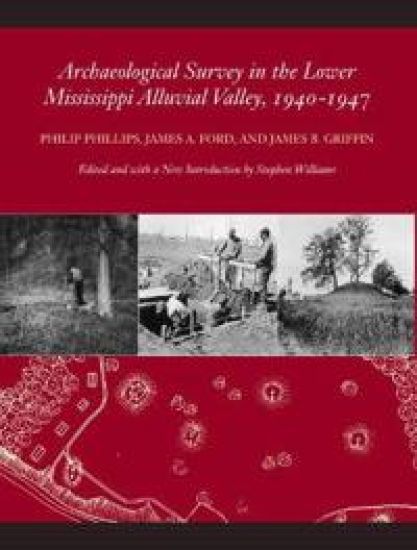
Archaeological Survey in the Lower Mississippi Alluvial Valley, 1940-1947

Archaeological Survey in the Lower Mississippi Alluvial Valley, 1940-1947

Philip Phillips; James A. Ford; James B. Griffin

The University of Alabama Press
2003
muu
The Lower Mississippi Survey was initiated in 1939 as a joint undertaking of three institutions: the School of Geology at Louisiana State University, the Museum of Anthropology at the University of Michigan, and the Peabody Museum at Harvard. Fieldwork began in 1940 but was halted during the war years. When fieldwork resumed in 1946, James Ford had joined the American Museum of Natural History, which assumed cosponsorship from LSU. The purpose of the Lower Mississippi Survey (LMS) - a term used to identify both the fieldwork and the resultant volume - was to investigate the northern two-thirds of the alluvial valley of the lower Mississippi River, roughly from the mouth of the Ohio River to Vicksburg. This area covers about 350 miles and had been long regarded as one of the principal hot spots in eastern North American archaeology. Phillips, Ford, and Griffin surveyed over 12,000 square miles, identified 382 archaeological sites, and analyzed over 350,000 potsherds in order to define ceramic typologies and establish a number of cultural periods. The commitment of these scholars to developing a coherent understanding of the archaeology of the area, as well as their mutual respect for one another, enabled the publication of what is now commonly considered the bible of southeastern archaeology. Originally published in 1951 as volume 25 of the Papers of the Peabody Museum of American Archaeology and Ethnology, this work has been long out of print. Because Stephen Williams served for 35 years as director of the LMS at Harvard, succeeding Phillips, and was closely associated with the authors during their lifetimes, his new introduction offers a broad overview of the work's influence and value, placing it in a contemporary context.
The Snyders Mounds and Five Other Mound Groups in Calhoun County, Illinois

The Snyders Mounds and Five Other Mound Groups in Calhoun County, Illinois

David P. Braun; James B. Griffin; Paul F. Titterington

The University of Michigan Press
1982
nidottu
In the 1940s, Paul F. Titterington, a doctor and avocational archaeologist, excavated several prehistoric burial mounds in Calhoun County, Illinois. He did not publish the results of his research, but he did donate his notebooks, photographs, and artifact collection to the University of Michigan in 1955. In this report, David Braun and James Griffin present Titterington’s research.
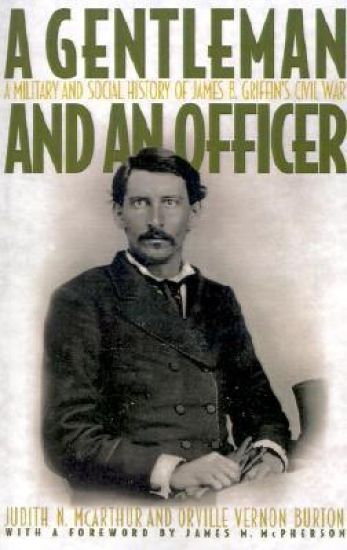
A Gentleman and an Officer

A Gentleman and an Officer

James B. Griffin

Oxford University Press Inc
1998
nidottu
In 1861, James B. Griffin left Edgefield, South Carolina and rode off to Virginia to take up duty with the Confederate Army in a style that befitted a Southern gentleman: on a fine-blooded horse, with two slaves to wait on him, two trunks, and his favorite hunting dog. He was thirty-five years old, a wealthy planter, and the owner of sixty-one slaves when he joined Wade Hampton's elite Legion as a major of cavalry. He left behind seven children, the eldest only twelve, and a wife who was eight and a half months pregnant. As a field officer in a prestigious unit, the opportunities for fame and glory seemed limitless. Griffin, however, performed no daring acts, nor did he inspire great loyalty in his men. Instead, he unknowingly provided a unique and invaluable portrait of the Confederate officers who formed the core of Southern political, military, and business leadership. In A Gentleman and an Officer, Judith N. McArthur and Orville Vernon Burton have collected eighty of Griffin's letters written at the Virginia front, and during later postings on the South Carolina coast, to his wife Leila Burt Griffin. Extraordinary in their breadth and volume, the letters encompass Griffin's entire Civil War service, detailing living conditions and military maneuvers, the jockeying for position among officers, and the different ways officers and enlisted men interacted during the Civil War. Unlike the reminiscences and biographies of high-ranking, well-known Confederate officers or studies and edited collections of letters of members of the rank and file, this collection sheds light on the life of a middle officer--a life turned upside down by extreme military hardship and complicated further by the continuing need for reassurance about personal valor and status common to men of the southern gentry. In these letters, Griffin describes secret troop movements in various military actions such as the Hampton Legion's role in the Peninsula Campaign (details that would certainly have been censored in more recent wars). Here he relates the march from Manassas to Fredricksburg, the siege of Yorktown and the retreat to Richmond, and the fighting at Eltham's landing and Seven Pines, where Griffin commanded the legion after Hampton was wounded. Throughout, as Griffin recounts these most extraordinary of times, he illuminates the most ordinary of day-to-day issues. One might expect to find a Confederate officer meditating on slavery, emancipation, or Lincoln. Instead, we are confronted by simple humanity and simple concerns, from the weather to gossip. Monumental historical events intruded on Griffin's life and sent him off to war, but his heartfelt considerations were about his family, his community, and his own personal pride. Ultimately, Griffin's letters present the Civil War as the refinery, the ordeal by fire, that tested and verified--or modified--Southern upperclass values. With a fascinating combination of military and social history, A Gentleman and an Officer moves from the beginning of the Civil War at Fort Sumter through the end of the war and Reconstruction, vividly illustrating how the issues of the Civil War were at once devastatingly national and revealingly local.
The Snodgrass Site of the Powers Phase of Southeast Missouri

The Snodgrass Site of the Powers Phase of Southeast Missouri

James E. Price; James B. Griffin

The University of Michigan Press
1979
nidottu
In this volume, the authors report on the complete excavation of the Snodgrass site, a prehistoric Mississippian village in southeast Missouri. More than 30 structures were completely excavated over seven years of fieldwork. Price and Griffin present descriptions and analyses of the structures, artifacts (primarily lithics and ceramics), and burials found at the site. Their work provides a look at the social complexity and patterned lifeways that existed within a prehistoric village population.