Kirjojen hintavertailu – 12 903 733 kirjaa ja 27 kauppaa

Kirjailija

James B. Kelly

Kirjat ja teokset yhdessä paikassa: 7 kirjaa, julkaisuja vuosilta 2005–2024, suosituimpiin kuuluu Parliamentary Bills of Rights. Vertaile teosten hintoja ja tarkista saatavuus suomalaisista kirjakaupoista.

Nimi esiintyy myös muodoissa: James B Kelly

7 kirjaa

Kirjojen julkaisuvuodet: 2005–2024.

Parliamentary Bills of Rights

Parliamentary Bills of Rights

Janet L. Hiebert; James B. Kelly

Cambridge University Press
2015
pokkari
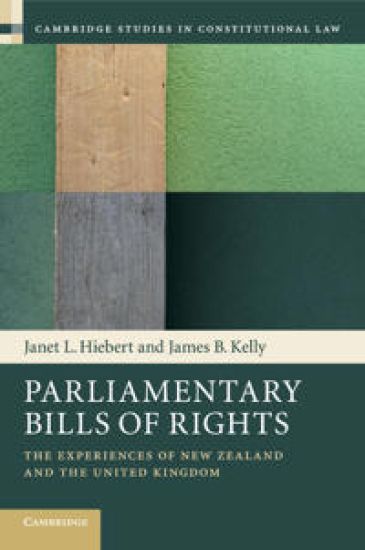
Both New Zealand and the United Kingdom challenge assumptions about how a bill of rights functions. Their parliamentary bills of rights constrain judicial review and also look to parliament to play a rights-protecting role. This arises from the requirement to inform parliament if legislative bills are not compatible with rights. But are these bills of rights operating in this proactive manner? Are governments encountering significantly stronger pressures to ensure legislation complies with rights? Are these bills of rights resulting in more reasoned deliberations in parliament about the justification of legislation from a rights perspective? Through extensive interviews with public officials and analysis of parliamentary debates where questions of compliance with rights arise (prisoner voting, parole and sentencing policy, counter-terrorism legislation, and same-sex marriage), this book argues that a serious gap exists between the promise of these bills of rights and the institutional variables that influence how these parliaments function.
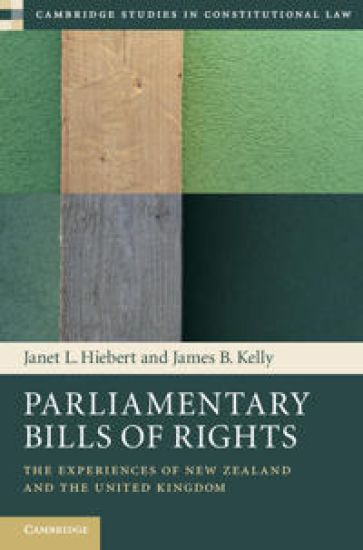
Parliamentary Bills of Rights

Parliamentary Bills of Rights

Janet L. Hiebert; James B. Kelly

Cambridge University Press
2015
sidottu
Both New Zealand and the United Kingdom challenge assumptions about how a bill of rights functions. Their parliamentary bills of rights constrain judicial review and also look to parliament to play a rights-protecting role. This arises from the requirement to inform parliament if legislative bills are not compatible with rights. But are these bills of rights operating in this proactive manner? Are governments encountering significantly stronger pressures to ensure legislation complies with rights? Are these bills of rights resulting in more reasoned deliberations in parliament about the justification of legislation from a rights perspective? Through extensive interviews with public officials and analysis of parliamentary debates where questions of compliance with rights arise (prisoner voting, parole and sentencing policy, counter-terrorism legislation, and same-sex marriage), this book argues that a serious gap exists between the promise of these bills of rights and the institutional variables that influence how these parliaments function.
Constraining the Court

Constraining the Court

James B. Kelly

University of British Columbia Press
2024
pokkari
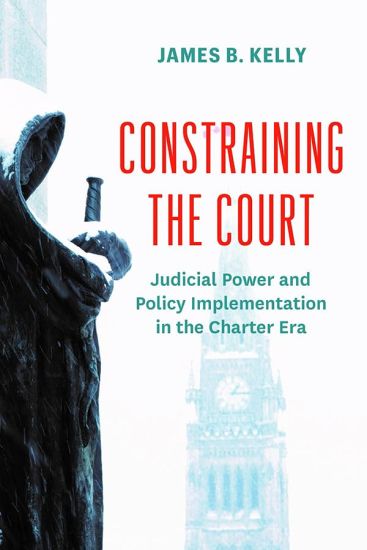
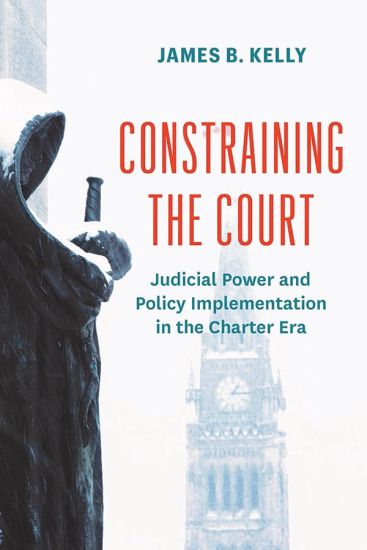
When the Supreme Court of Canada makes a decision that invalidates a statute, it creates a constitutional moment. But does that have a direct and observable impact on public policy? Constraining the Court explores what happens when a statute involving a significant public policy issue – French language rights in Quebec, supervised consumption sites, abortion, or medical assistance in dying – is declared unconstitutional. James B. Kelly examines the conditions under which Parliament or provincial/territorial legislatures attempt to contain the policy impact of judicial invalidation and engage in non-compliance without invoking the notwithstanding clause. He considers the importance of the issue, the unpopularity of a judicial decision, the limited reach of a negative rights instrument such as the Charter, the context of federalism, and the mixture of public and private action behind any legislative response. While the Supreme Court's importance cannot be denied, this rigorous analysis convincingly concludes that a judicial decision does not necessarily determine a policy outcome.
Constraining the Court

Constraining the Court

James B. Kelly

University of British Columbia Press
2024
sidottu
When the Supreme Court of Canada makes a decision that invalidates a statute, it creates a constitutional moment. But does that have a direct and observable impact on public policy? Constraining the Court explores what happens when a statute involving a significant public policy issue – French language rights in Quebec, supervised consumption sites, abortion, or medical assistance in dying – is declared unconstitutional. James B. Kelly examines the conditions under which Parliament or provincial/territorial legislatures attempt to contain the policy impact of judicial invalidation and engage in non-compliance without invoking the notwithstanding clause. He considers the importance of the issue, the unpopularity of a judicial decision, the limited reach of a negative rights instrument such as the Charter, the context of federalism, and the mixture of public and private action behind any legislative response. While the Supreme Court's importance cannot be denied, this rigorous analysis convincingly concludes that a judicial decision does not necessarily determine a policy outcome.
Governing with the Charter

Governing with the Charter

James B. Kelly

University of British Columbia Press
2006
pokkari
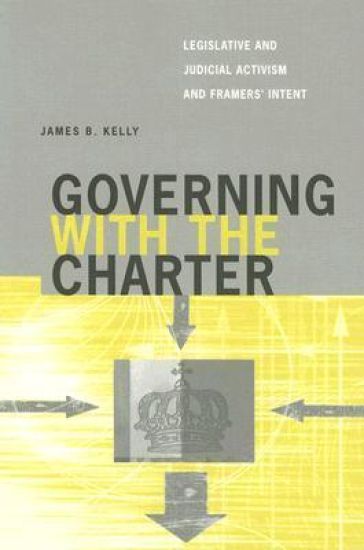
Since the introduction of the Canadian Charter of Rights and Freedoms in 1982, the question of judicial power and its relationship to parliamentary democracy has been an important one in Canadian politics. Some critics, suspicious of what they perceive as the "activism" of "unelected and unaccountable" judges, view the increased power of the Supreme Court as a direct challenge to parliament. But has parliamentary democracy been weakened by judicial responses to the Charter? In Governing with the Charter, James Kelly clearly demonstrates that our current democratic deficit is not the result of the Supreme Court's judicial activism. On the contrary, an activist framers' intent surrounds the Charter, and the Supreme Court has simply, and appropriately, responded to this new constitutional environment. While the Supreme Court is admittedly a political actor, it is not the sole interpreter of the Charter, as the court, the cabinet, and bureaucracy all respond to the document, which has ensured the proper functioning of constitutional supremacy in Canada. Kelly analyzes the parliamentary hearings on the Charter and also draws from interviews with public servants, senators, and members of parliament actively involved in appraising legislation to ensure that it is consistent with the Charter. He concludes that the principal institutional outcome of the Charter has been a marginalization of Parliament and that this is due to the Prime Minister's decision on how to govern with the Charter. A significant contribution to law and society studies, Governing with the Charter will be widely read by political scientists, legal scholars, parliamentarians, public servants, and students of the machinery of government.
Governing with the Charter

Governing with the Charter

James B. Kelly

University of British Columbia Press
2005
sidottu
Since the introduction of the Canadian Charter of Rights and Freedoms in 1982, the question of judicial power and its relationship to parliamentary democracy has been an important one in Canadian politics. Some critics, suspicious of what they perceive as the "activism" of "unelected and unaccountable" judges, view the increased power of the Supreme Court as a direct challenge to parliament. But has parliamentary democracy been weakened by judicial responses to the Charter? In Governing with the Charter, James Kelly clearly demonstrates that our current democratic deficit is not the result of the Supreme Court's judicial activism. On the contrary, an activist framers' intent surrounds the Charter, and the Supreme Court has simply, and appropriately, responded to this new constitutional environment. While the Supreme Court is admittedly a political actor, it is not the sole interpreter of the Charter, as the court, the cabinet, and bureaucracy all respond to the document, which has ensured the proper functioning of constitutional supremacy in Canada. Kelly analyzes the parliamentary hearings on the Charter and also draws from interviews with public servants, senators, and members of parliament actively involved in appraising legislation to ensure that it is consistent with the Charter. He concludes that the principal institutional outcome of the Charter has been a marginalization of Parliament and that this is due to the Prime Minister's decision on how to govern with the Charter. A significant contribution to law and society studies, Governing with the Charter will be widely read by political scientists, legal scholars, parliamentarians, public servants, and students of the machinery of government.