Kirjojen hintavertailu – 12 903 725 kirjaa ja 27 kauppaa

Kirjailija

James Barber

Kirjat ja teokset yhdessä paikassa: 27 kirjaa, julkaisuja vuosilta 1990–2026, suosituimpiin kuuluu Tom King's Or The Paphian Grove, With The Humors Of Covent Garden, The Theatre, Gaming Table, Etc.. Vertaile teosten hintoja ja tarkista saatavuus suomalaisista kirjakaupoista.

27 kirjaa

Kirjojen julkaisuvuodet: 1990–2026.

Life And Scientific Legacy Of George Porter, The

Life And Scientific Legacy Of George Porter, The

David Phillips; James Barber

Imperial College Press
2006
nidottu
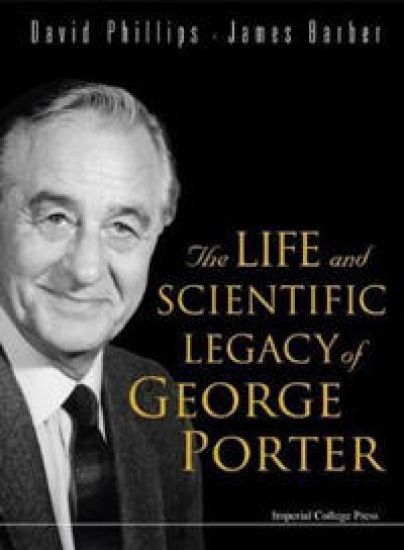
Sir George Porter (Lord Porter of Luddenham) was one of the most highly regarded and well known scientists in Britain. He was appointed Director of the Royal Institution in 1966, awarded a Nobel Prize in Chemistry in 1967, and was the only Director of the Royal Institution to later become President of the Royal Society (1985-1990). Porter had a marvellous gift for communicating his infectious enthusiasm for science, and as President of the Royal Society, he worked hard to improve the status of science, and employed his communication skills ably in the defence of British science under attack from inadequate government funding, of which he was fiercely critical. It was for his work on flash photolysis in Cambridge that ultimately led him to win the Nobel Prize. Together with Ronald Norrish and Manfred Eigen, he shared the 1967 Nobel Prize for Chemistry, for their work on techniques for observing and studying extremely fast chemical reactions during the processes of combustion, explosion and chain reaction. In this volume, his peers, former colleagues, students and friends — themselves highly regarded and well known scientists in their own right — come together to honour and celebrate the enormous contributions of this man. They comment on their respective personal and working relationships with Porter and on his work. The contributors include Mary Archer (University of Cambridge, UK), James Barber (Imperial College London, UK), Godfrey Beddard (University of Leeds, UK), Graham Fleming (University California, Berkeley, USA), Michael George (University of Nottingham, UK), Anthony Harriman (University of Newcastle Upon Tyne, UK), David Klug (Imperial College London, UK), Harry Kroto (University of Sussex, UK), Edward Land (Keele University, UK), A J MacRobert (University of College London, UK), David Phillips (Imperial College London, UK), Martyn Poliakoff (University of Nottingham, UK), F Sherwood Rowland (University of California, Irvine, USA), Brian Thrush (University of Cambridge, UK), George Truscott (Keele University, UK), James Turner (University of Nottingham, UK), Barry Ward (UK), Frank Wilkinson (Loughborough University of Technology, UK), Keitaro Yoshihara (Japan Advanced Institute of Science and Technology, Japan), and Ahmed Zewail (California Institute of Technology, USA).
Life And Scientific Legacy Of George Porter, The

Life And Scientific Legacy Of George Porter, The

David Phillips; James Barber

Imperial College Press
2006
sidottu
Sir George Porter (Lord Porter of Luddenham) was one of the most highly regarded and well known scientists in Britain. He was appointed Director of the Royal Institution in 1966, awarded a Nobel Prize in Chemistry in 1967, and was the only Director of the Royal Institution to later become President of the Royal Society (1985-1990). Porter had a marvellous gift for communicating his infectious enthusiasm for science, and as President of the Royal Society, he worked hard to improve the status of science, and employed his communication skills ably in the defence of British science under attack from inadequate government funding, of which he was fiercely critical. It was for his work on flash photolysis in Cambridge that ultimately led him to win the Nobel Prize. Together with Ronald Norrish and Manfred Eigen, he shared the 1967 Nobel Prize for Chemistry, for their work on techniques for observing and studying extremely fast chemical reactions during the processes of combustion, explosion and chain reaction. In this volume, his peers, former colleagues, students and friends — themselves highly regarded and well known scientists in their own right — come together to honour and celebrate the enormous contributions of this man. They comment on their respective personal and working relationships with Porter and on his work. The contributors include Mary Archer (University of Cambridge, UK), James Barber (Imperial College London, UK), Godfrey Beddard (University of Leeds, UK), Graham Fleming (University California, Berkeley, USA), Michael George (University of Nottingham, UK), Anthony Harriman (University of Newcastle Upon Tyne, UK), David Klug (Imperial College London, UK), Harry Kroto (University of Sussex, UK), Edward Land (Keele University, UK), A J MacRobert (University of College London, UK), David Phillips (Imperial College London, UK), Martyn Poliakoff (University of Nottingham, UK), F Sherwood Rowland (University of California, Irvine, USA), Brian Thrush (University of Cambridge, UK), George Truscott (Keele University, UK), James Turner (University of Nottingham, UK), Barry Ward (UK), Frank Wilkinson (Loughborough University of Technology, UK), Keitaro Yoshihara (Japan Advanced Institute of Science and Technology, Japan), and Ahmed Zewail (California Institute of Technology, USA).
Mandela's World

Mandela's World

James Barber

Ohio University Press
2004
pokkari
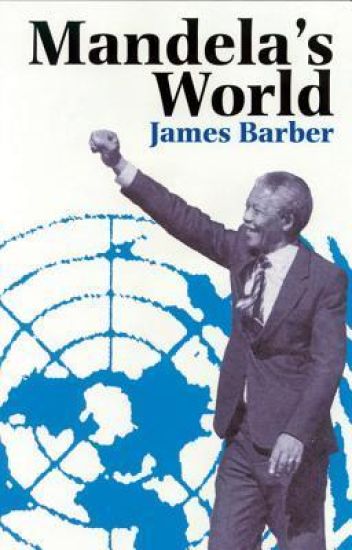
The demise of apartheid, the release of Nelson Mandela, and a new constitution leading to a democratic government elevated South Africa's status during the 1990s. Mandela's World describes and analyzes South Africa's international development during this momentous decade in which Nelson Mandela stamped his personality on his nation and on the international stage. Despite upheavals and political mistakes, the new South Africa succeeded in making a positive contribution both in Africa and in the global community. Focusing on the international relations of a society undergoing fundamental transformation at home, author James Barber sheds light on one of the most profound events in modern history.
Children in Foster Care

Children in Foster Care

James Barber; Paul Delfabbro; Robyn Gilbertson

Routledge
2003
sidottu
Researchers, practitioners, journalists and politicians increasingly recognise that foster care throughout the world is in a state of crisis. There are more and more children needing care and, as residential alternatives dry up, more of these children are being assigned to foster families. This book reports the major findings of a two-year longitudinal study of 235 such children who entered the foster care system in Southern Australia between 1998 and 1999. As well as examining the changing policy context of children's services, the book documents the psychosocial outcomes for these children, their feedback on their experiences of care, and the views of their social workers and carers. In the process, the book examines some cherished beliefs about foster care policy and sheds new light on them. The research reveals that while most children do quite well in foster care up to the two-year point, there is a worrying amount of placement instability at a time when the concentration of emotionally troubled children in care is increasing throughout the western world. Although, surprisingly, placement instability does not appear to produce psychosocial impairment for a period of up to eight months in care, it has an extreme effect on children who are moved from placement to placement because no carer will tolerate their behaviour. These children are consigned to a life of distribution and emotional upheaval because of the lack of alternative forms of care. Another unexpected finding of the research is that increasing the rate of parental contact achieves little or nothing in relation to the likelihood of family reunification. As child welfare increasingly enters a world of research-based practice, Children in Foster Care provides some much needed hard evidence of how foster care policy and practice can be improved.
The Prime Minister Since 1945

The Prime Minister Since 1945

James Barber

Blackwell Publishers
1991
nidottu
Since 1945 there have been nine Prime Ministers of Britain. This book outlines and analyzes the way the office has developed in the past 45 years. It considers the social backgrounds, image, relations with cabinets, role in policy making, and power of the men and woman who have occupied this office.
South Africa's Foreign Policy

South Africa's Foreign Policy

James Barber; John Barratt

Cambridge University Press
1990
pokkari
This book was originally published in 1990, as part of the Cambridge Studies in International Relations series, a joint initiative of Cambridge University Press and the British International Studies Association (BISA). In a far-reaching and fascinating study of foreign policy in South Africa, Barber and Barratt begin by looking at the post-war challenges faced by the government of South Africa, and the effect that the establishment of apartheid also had on foreign policy. Their study then goes on to explore the effects that Sharpeville, and the repercussions of various periods of success and upheaval, had on South African international relations up until the late 1980s. This exceptionally thorough study of South African foreign policy and the factors influencing its formation will be of interest to scholars of South Africa in particular, and international relations and policy making in general.