
Kirjailija
James Branch Cabell
Kirjat ja teokset yhdessä paikassa: 271 kirjaa, julkaisuja vuosilta 1919–2026, suosituimpiin kuuluu Jurgen. Vertaile teosten hintoja ja tarkista saatavuus suomalaisista kirjakaupoista.
Nimi esiintyy myös muodoissa: James Branch Cabell
271 kirjaa
Kirjojen julkaisuvuodet: 1919–2026.



James Branch Cabell (1879-1958) wrote many of the Twentieth Century's finest fantasies, including the controversial Jurgen, which was famously banned by the New York Society for the Suppression of Vice. It was only after the furor died down that readers and critics were fully able to appreciate this was no mere sensationalist, but a literary artist of very high caliber. Cabell was above all else, an elegant stylist, whose gently caustic, beautifully fantasic comedies struck a chord in the Jazz Age and still resonate today. He was an important influence on subsequent writers as diverse as Fritz Leiber and Neil Gaiman.

James Branch Cabell (1879-1958) wrote many of the Twentieth Century's finest fantasies, including the controversial Jurgen, which was famously banned by the New York Society for the Suppression of Vice. It was only after the furor died down that readers and critics were fully able to appreciate this was no mere sensationalist, but a literary artist of very high caliber. Cabell was above all else, an elegant stylist, whose gently caustic, beautifully fantasic comedies struck a chord in the Jazz Age and still resonate today. He was an important influence on subsequent writers as diverse as Fritz Leiber and Neil Gaiman.

A collection of letters from James Branch Cabell, covering a period of years and spanning a wide variety of subjects. A fascinating look at the man behind the work, and a glimpse at the personal thoughts of one of the 20th Century's greatest fantasists.

James Branch Cabell (1879-1958) wrote many of the Twentieth Century's finest fantasies, including the controversial Jurgen, which was famously banned by the New York Society for the Suppression of Vice. It was only after the furor died down that readers and critics were fully able to appreciate this was mo mere sensationalist, but a literary artists of very high calibre. Cabell was above all else, an elegant stylist, whose gently caustic, beautifully fantasic comedies struck a chord in the Jazz Age and still resonate today. He was an important influence on subsequent writers as diverse as Fritz Leiber and Neil Gaiman.
James Branch Cabell (1879-1958) wrote many of the Twentieth Century's finest fantasies, including the controversial Jurgen, which was famously banned by the New York Society for the Suppression of Vice. It was only after the furor died down that readers and critics were fully able to appreciate this was mo mere sensationalist, but a literary artists of very high calibre. Cabell was above all else, an elegant stylist, whose gently caustic, beautifully fantasic comedies struck a chord in the Jazz Age and still resonate today. He was an important influence on subsequent writers as diverse as Fritz Leiber and Neil Gaiman.
"[Cabell's] most substantial post-Biography fantasy was "The Nightmare Has Triplets," a sequence comprising Smirt: An Urban Nightmare, Smith: A Sylvan Interlude, and Smire: An Acceptance in the Third Person. This explicitly emulates the logic and geography of dreams . . . successfully mistly and dreamlike . . ." --The Encyclopedia of Fantasy

"[Cabell's] most substantial post-Biography fantasy was "The Nightmare Has Triplets," a sequence comprising Smirt: An Urban Nightmare, Smith: A Sylvan Interlude, and Smire: An Acceptance in the Third Person. This explicitly emulates the logic and geography of dreams . . . successfully mistly and dreamlike . . ." --The Encyclopedia of Fantasy
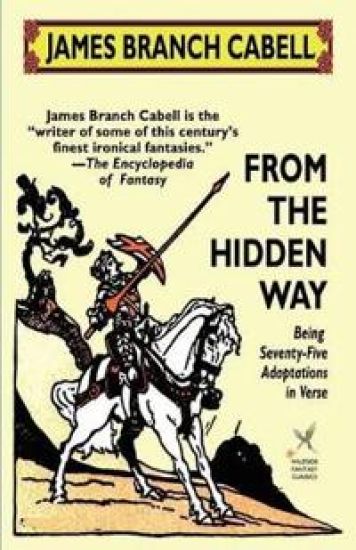
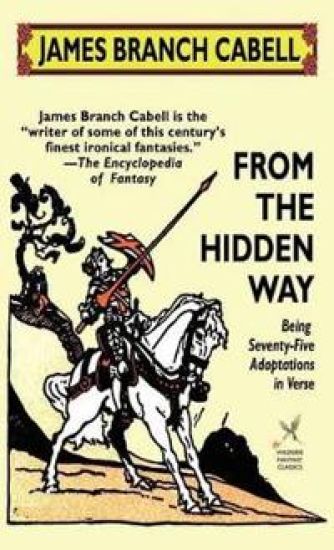
Ladies and Gentlemen is a volume of essays, in the most elegant Cabell manner, in the form of imaginary letters to real, legendary, and imaginary persons, discussing a wide range of literary and philosophical matters. It is not only essential to the appreciation of the range of this important author's imagination and concerns, but a very entertaining collection of midnight conversations with, among others, King Tut, Solomon, Julius Caesar, Ananias, Sir Galahad, Hamlet, Tamerlane, Falstaff, Dr. Faustus, George Washintgon, Edgar Allan Poe, John Wilkes Booth, and Cabell's own Jurgen of Poictesme.
Ladies and Gentlemen is a volume of essays, in the most elegant Cabell manner, in the form of imaginary letters to real, legendary, and imaginary persons, discussing a wide range of literary and philosophical matters. It is not only essential to the appreciation of the range of this important author's imagination and concerns, but a very entertaining collection of midnight conversations with, among others, King Tut, Solomon, Julius Caesar, Ananias, Sir Galahad, Hamlet, Tamerlane, Falstaff, Dr. Faustus, George Washintgon, Edgar Allan Poe, John Wilkes Booth, and Cabell's own Jurgen of Poictesme.
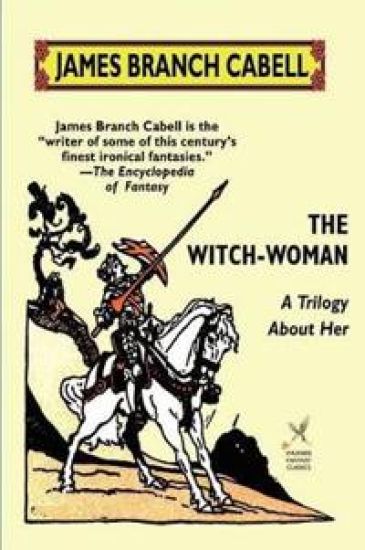
_The Witch Woman_ collects three fantastic novellas set in Poictesme, the imaginary medieval land featured in such Cabell classics as _Jurgen_ and _Figures of Earth, _ all dealing with the most central of Cabell themes, the elusive feminine ideal, here personified in the seductive Ettarre la Beale, the third daughter of Dom Manuel the Redeemer. Here we read how a poet, a king, and a bishop (who also happens to be a werewolf) sought the unattainable Ettarre, and what became of them.
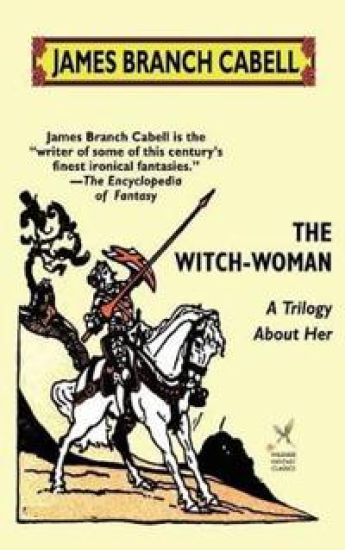
_The Witch Woman_ collects three fantastic novellas set in Poictesme, the imaginary medieval land featured in such Cabell classics as _Jurgen_ and _Figures of Earth, _ all dealing with the most central of Cabell themes, the elusive feminine ideal, here personified in the seductive Ettarre la Beale, the third daughter of Dom Manuel the Redeemer. Here we read how a poet, a king, and a bishop (who also happens to be a werewolf) sought the unattainable Ettarre, and what became of them.