Kirjojen hintavertailu – 12 876 342 kirjaa ja 26 kauppaa

Kirjailija

James Burke

Kirjat ja teokset yhdessä paikassa: 30 kirjaa, julkaisuja vuosilta 1997–2026, suosituimpiin kuuluu Building Fireproof Teens. Vertaile teosten hintoja ja tarkista saatavuus suomalaisista kirjakaupoista.

30 kirjaa

Kirjojen julkaisuvuodet: 1997–2026.

Personal Insolvency Law

Personal Insolvency Law

James Burke; Amanda-Jayne Comyn

Bloomsbury Professional
2014
nidottu
This new title covers a very important area of law in the current economic climate. Currently, the personal insolvency legislation is being reformed in Ireland. The area has not seen such a change in decades, the last significant piece of legislation being the Bankruptcy Act 1988. The Personal Insolvency Act 2012 radically changed the law relating to personal insolvency and bankruptcy in Ireland. The main impact of the Act is that it introduces the establishment of a State-run Insolvency Service to operate the new non-judicial insolvency arrangements. This very timely title covers all the elements of the new legislation, the EU and cross-border aspects. Contents: Introduction to Personal Insolvency: Overview and Recent Developments Types of Personal Insolvency: Creditor's Petition; Debtor's Petition; Compositions and Arrangements; E. U. Position and Insolvency Regulations: Recognition of foreign bankruptcies; Registration of foreign bankruptcies; Effect of registration; All documents required to be Appendixed; Process of Bankruptcy: In depth analysis of the process including Appendices of all documents required etc.; Step-by-step guideline to process; How do I make myself a Bankrupt?: Background to why this should be considered; Process involved; Implications; UK v Ireland: Difference between treatment in Ireland and UK; Trustee in Bankruptcy: process and rights over Irish situate assets of person adjudged bankrupt in the UK; COMI and benefits of changing same; Creditor's Position: Process open to Creditor; Recourse to Creditor; Protection to Creditor; Secured v's unsecured Creditor; Practical Implications of bankruptcy: Spouse/relatives of bankrupt; Other creditors; Bankrupt themselves; Salary of bankrupt; Assets of bankrupt; Pension of bankrupt; Interaction with family law proceedings: Family home; Special provisions in Bankruptcy Act; Rights of Spouse; Process; Court's Attitude; Official Assignee: Role of OA; Restrictions of OA; Discharge of Bankrupt: Process; Restrictions; Implications for future activities; Alternatives to Bankruptcy: Scheme of Arrangements.
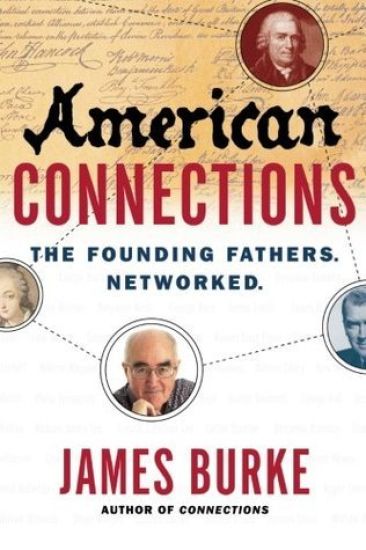
American Connections

American Connections

James Burke

Simon Schuster
2007
pokkari
The Signers of the Declaration of Independence are like stuffed birds, museum exhibits from a moment in America's glorious past. They signed what might well have turned out to be their death warrant. And then, in almost every case, they faded from the scene. Who, for instance, remembers Button Gwinnett or Light-horse Harry Lee? AMERICAN CONNECTIONS brings the signers back to life. Each of the fifty-six chapters begins with a brief, humorous, thumbnail character sketch, in most cases revealing such hidden qualities as feet of clay, a dysfunctional family, a secret lover, financial shenanigans, or political back-stabbing, and so on. One of these connections triggers a series of linked events which, in the end, leads to the modern world, where the signer's name unexpectedly reappears. Some instances: - Josiah Bartlett reappears as the character carrying his name in the television show, 'The West Wing.' - William Whipple is a modern-world agronomist. - The modern-day Matthew Thornton is a NASA consultant. - Today's Robert Treat Paine is an oceanographer. - 20th century Samuel Adams set up the Food and Drugs Act. The storylines also introduce the reader to over 1,000 historical characters, ranging from kings and statesmen to spies, assassins, royal mistresses, astronomers, submariners, infanticides, con-men, actors, explorers, musicians, artists, inventors, transvestites, heroes, counterfeiters, conspirators, bomb-throwers, pill-makers and a host of others. The Signers of the Declaration of Independence will never seem the same again.
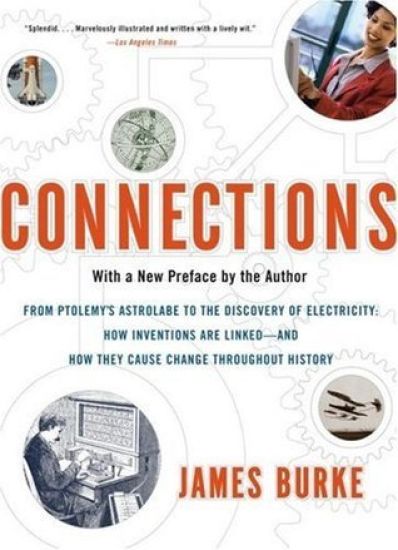
Connections

Connections

James Burke

SIMON SCHUSTER
2007
nidottu
How did the popularity of underwear in the twelfth century lead to the invention of the printing press? How did the waterwheel evolve into the computer? How did the arrival of the cannon lead eventually to the development of movies? In this highly acclaimed and bestselling book, James Burke brilliantly examines the ideas, inventions, and coincidences that have culminated in the major technological advances of today. With dazzling insight, he untangles the pattern of interconnecting events: the accidents of time, circumstance, and place that gave rise to the major inventions of the world. Says Burke, "My purpose is to acquaint the reader with some of the forces that have caused change in the past, looking in particular at eight innovations -- the computer, the production line, telecommunications, the airplane, the atomic bomb, plastics, the guided rocket, and television -- which may be most influential in structuring our own futures.... Each one of these is part of a family of similar devices, and is the result of a sequence of closely connected events extending from the ancient world until the present day. Each has enormous potential for humankind's benefit -- or destruction." Based on a popular TV documentary series, Connections is a fascinating scientific detective story of the inventions that changed history -- and the surprising links that connect them.
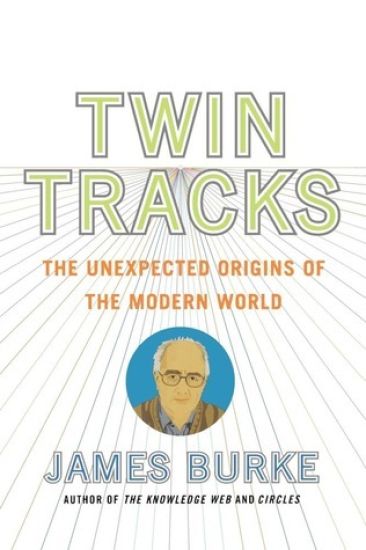
Twin Tracks

Twin Tracks

James Burke

Simon Schuster
2005
pokkari
How did Mozart's Marriage of Figaro influence the development of stealth aircraft used in the Gulf War? In TWIN TRACKS, James Burke reveals the surprising answer - and presents twenty-four other 'twin tracks' that start in the past and end in utterly unexpected modern-day inventions. Each tale begins with an event - such as the U. S. bombing of Tripoli in 1864, or the discovery of a German stone-age child in 1724. From each event, two people emerge, and each sets in motion a storyline shaped by love, war, accident, treachery, genius, discovery - the myriad ways in which people make history. Each twin track leads to an innovation, and these innovations come together in the final paragraph, generating an element of modern life. Burke's engaging premise is bolstered by his superbly accessible and witty style - no scientific expertise is needed to revel in these unlikely connections and serendipitous quirks of fate. Hailed as 'one of the most intriguing minds in the Western world' (THE WASHINGTON POST), Burke effects an unexpected outcome of his own - providing readers with a truly fresh way of looking at the world.
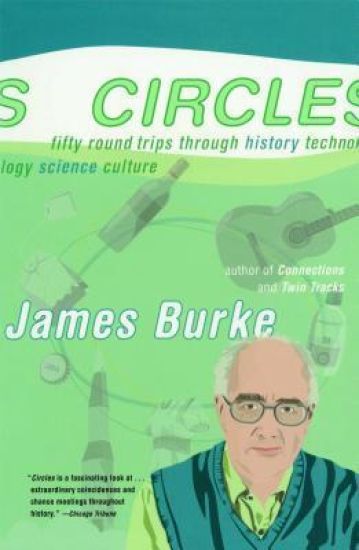
Circles

Circles

James Burke

Simon Schuster
2003
pokkari
From the bestselling author of The Knowledge Web come fifty mesmerizing journeys into the history of technology, each following a chain of consequential events that ends precisely where it began. Whether exploring electromagnetic fields, the origin of hot chocolate, or DNA fingerprinting, these essays all illustrate the surprisingly circular nature of change. In "Room with (Half) a View," for instance, Burke muses about the partly obscured railway bridge outside his home on the Thames, a musing which sets off a chain of thought that leads from the bridge's engineer to Samuel Morse, to firearms inventor Sam Colt, and finally to a trombonist named Gustav Holst, who once lived in the very house that blocks Burke's view. So it goes with Burke's entertaining and informative essays as each one highlights the interconnectedness of seemingly unrelated events and innovations. Romantic poetry leads to brandy distillation; tonic water connects through Leibniz to the first explorers to reach the North Pole. This unique collection is sure to stimulate and delight history buffs, technophiles, and anyone else with a healthy intellectual curiosity.
The Knowledge Web

The Knowledge Web

James Burke

Simon Schuster
2001
pokkari
What do the Hubble Telescope, Buffalo Bill, and the Spanish Inquisition have in common, and how is the answer found in a certain fast food chain? How do margarine's strange origins tie in to plankton shells, receding stars, hot chocolate, and the first solo Atlantic flight? Continuing the fascinating journey he began in THE PINBALL EFFECT, James Burke shows how seemingly unrelated ideas and innovations bounce off each other, spinning a vast web of knowledge. Burke explains how the Internet is responsible for bringing these connections to light and claims this new awareness of our interdependence, with each other and with the past, will change our lives. Taking Burke's webbed approach to knowledge is one way that we can manage our information overload as we approach the ever-more-complex world that awaits us in the Twenty-First Century. Only by understanding the interrelated nature of the modern world can we hope to identify complex patterns of change and direct the process of innovation to the common good.