Kirjojen hintavertailu – 12 903 725 kirjaa ja 27 kauppaa
Kirjailija
James C. Robertson
Kirjat ja teokset yhdessä paikassa: 23 kirjaa, julkaisuja vuosilta 1993–2025, suosituimpiin kuuluu The Atlas of Global Conservation. Vertaile teosten hintoja ja tarkista saatavuus suomalaisista kirjakaupoista.
Jonathan Hoekstra; Jennifer L. Molnar; Michael Jennings; Carmen Revenga; Mark D. Spalding; Timothy M. Boucher; James C. Robertson; Thomas J. Heibel; Katherine Ellison
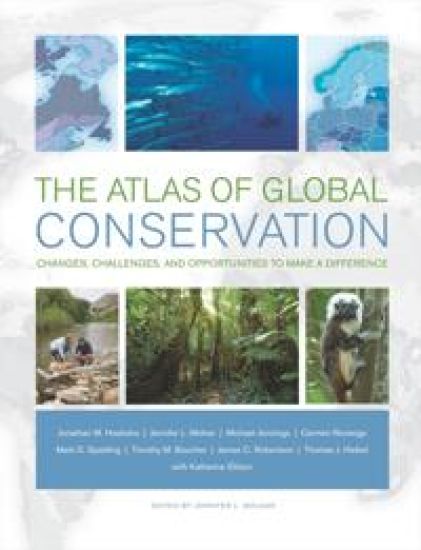
Visually rich, up-to-date, and authoritative, "The Atlas of Global Conservation" is a premier resource for everyone concerned about the natural world. Drawing from the best data available, it is an unprecedented guide to the state of the planet and our most pressing resource and environmental issues. Top scientists at The Nature Conservancy, the leading conservation organization working around the world to protect ecologically important lands and water, have joined forces to create this extraordinary reference. It features 79 richly-detailed, full-color maps and other graphics paired with an informative, inviting discussion of major trends across the world's terrestrial, marine, and freshwater environments. Interspersed throughout, essays by noted international authorities point the way forward in confronting some of our greatest conservation challenges. The most comprehensive single volume on global environmental conservation and future sustainability, this title includes the latest data on environmental threats, such as climate change, water use, habitat protection, deforestation and overfishing. There are full-color maps and graphics that are designed to facilitate side-by-side comparisons, empowering readers to draw their own conclusions. This title brings together information that has been widely dispersed across myriad publications and databases in a format that invites evaluation and application. Supporting data is available on an accompanying website.

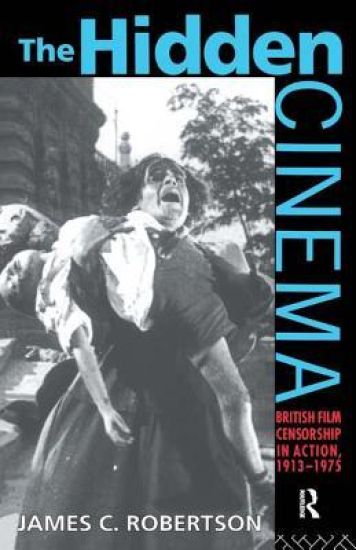
How does film censorship work in Britain? Jim Robertson's new paperback edition of The Hidden Cinema argues that censorship has had a far greater influence on British film history than is often apparent, creating the `hidden cinema' of the title. Robertson charts the role of the British Board of Film Censors, established in 1913, and the histories of a variety of noteworthy films including Battleship Potemkin and No Orchids for Miss Blandish and revealing how censorship continues to exert a marked influence on many important films - like the controversial A Clockwork Orange - some of which have now vanished from British screens altogether. This edition includes a brand new section on Bernardo Bertolucci's Last Tango in Paris, immediately engulfed in censorship wrangles on its release in 1972.
The secrecy in which the British Board of Film Censors enveloped itself until 1948 resulted in a glaring vacuum in British cinematic history. Originally published in 1985, this book filled this important gap, drawing on the detailed registers of films passed, cut and banned since 1913. The book opens by tracing the events which led up to the creation of the BBFC and goes on to cover the Board’s theoretical censorship principles concerning such matters as crime, religion and sex and to discuss how these principles were applied in practice to silent films. The advent of the talkies in the late 1920s caused a minor revolution in the Board’s work during the 1930s and 1940s, when the cinema rose to the peak of its popularity. This era of the Board’s history is examined in detail, with extensive use of the Board’s surviving records and a whole chapter devoted to the special circumstances of the Second World War. The final chapter delves into the Board’s work up to 1950, and investigates the connection between film censorship in Britain and the USA. Also discussing the political and social background, this is an essential history of film censorship in Britain in general and the BBFC in particular.