Kirjailija
James C. Taylor
Kirjat ja teokset yhdessä paikassa: 19 kirjaa, julkaisuja vuosilta 2003–2025, suosituimpiin kuuluu Building Sermons to Meet People's Needs. Vertaile teosten hintoja ja tarkista saatavuus suomalaisista kirjakaupoista.
Nimi esiintyy myös muodoissa: James C Taylor
19 kirjaa
Kirjojen julkaisuvuodet: 2003–2025.
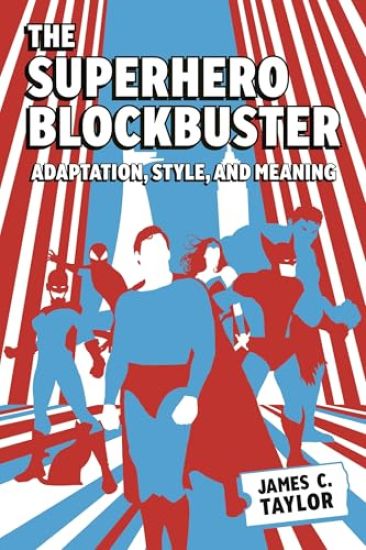
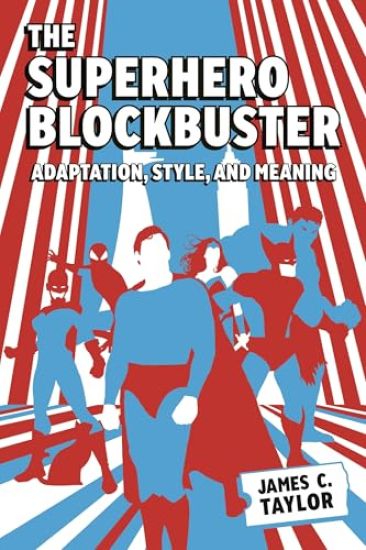
The Superhero Blockbuster: Adaptation, Style, and Meaning builds an innovative framework for analyzing one of the most prominent genres in twenty-first-century Hollywood. In combining theories of adaptation with close textual analysis, James C. Taylor provides a set of analytical tools with which to undertake nuanced exploration of superhero blockbusters’ meanings. This deep understanding of the films attends to historical, sociopolitical, and industrial contexts and also illuminates key ways in which the superhero genre has contributed to the development of the Hollywood blockbuster. Each chapter focuses on a different superhero or superhero team, covering some of the most popular superhero blockbusters based on DC and Marvel superheroes. The chapters cover different aspects of the films’ adaptive practices, exploring the adaptation of stylistic strategies, narrative models, and modes of seriality from superhero comic books, while being attentive to the ways in which the films engage with the wider networks of texts in various media that comprise a given superhero franchise. Chapter one looks back to the first superhero blockbuster, 1978’s Superman: The Movie, examining its cinematic re-envisioning of the quintessential superhero and role in establishing Hollywood’s emerging model of blockbuster filmmaking. Subsequent chapters analyze the twenty-first-century boom in superhero blockbusters and examine digital imaging and nostalgia in Spider-Man films, Marvel Studios’ adaptation of a shared universe model of seriality in the Marvel Cinematic Universe, and the use of alternate timeline narratives in X-Men films. The book concludes by turning its analytical toolkit to analysis of DC Studios’ cinematic universe, the DC Extended Universe.

This analogy fits the formation of this book. James C. Taylor resembles the description of the river which existed longer. He has been a pastor, a navy chaplain, and a seminary professor. He has taught preachers to build sermons for over three decades.
Applied Human Factors in Aviation Maintenance
Manoj S. Patankar; James C. Taylor
Routledge
2017
nidottu
Considering the global awareness of human performance issues affecting maintenance personnel, there is enough evidence in the US ASRS reports to establish that systemic problems such as impractical maintenance procedures, inadequate training, and the safety versus profit challenge continue to contribute toward latent failures. Manoj S. Patankar and James C. Taylor strongly believe in incorporating the human factors principles in aviation maintenance. In this, their second of two volumes, they place particular emphasis on applying human factors principles in a book intended to serve as a practical guide, as well as an academic text. Features include: - A real 'how to' approach that serves as a companion to the previous volume: 'Risk Management and Error Reduction in Aviation Maintenance'. - Self-reports of maintenance errors used throughout to illustrate the systemic susceptibility for errors as well as to discuss corresponding solutions. - Two tools - a pre-task scorecard and a post-task scorecard - introduced as means to measure individual as well as organizational safety performance. - Interpersonal trust and professionalism explored in detail. - Ethical and procedural issues associated with collection and analysis of both qualitative as well as quantitative safety data discussed. The intended readership includes aviation maintenance personnel, e.g. FAA-type aircraft mechanics, CAA-type aircraft maintenance engineers, maintenance managers, regulators, and aviation students.
Risk Management and Error Reduction in Aviation Maintenance
Manoj S. Patankar; James C. Taylor
Routledge
2016
nidottu
Although several U. S. and European airlines have started providing human factors training to their maintenance personnel, the academic community (some 300 academic programs in the United States and several others in Europe and Asia) has not yet started offering formal human factors education to maintenance students. The highly respected authors strongly believe in incorporating the human factors principles in aviation maintenance. This is the first of two volumes providing effective behavioural guidance on risk management in aviation maintenance for both the novice and the experienced maintenance personnel. Its practical guidelines assist both student and practising aviation maintenance personnel to develop sustainable safety culture. For the maintenance community it provides some theoretical discussion about the "Why?" for risk management and then focus on the 'How?' to implement a successful error reduction program. To help the maintenance community in making a strong case to their financial managers, the authors also discuss the return on investment for risk management programs. The issue of risk management is taken at two levels. First, it provides a basic awareness information to those who have little or no knowledge of maintenance human factors. Second, it provides a set of practical tools for the more experienced people so that they can be more effective in risk management and error recovery in their jobs. This invaluable book serves as a practical guide as well as an academic textbook. The book covers fundamental human factors principles from a risk management perspective. Upon reading this informative book, the audience will be able to apply the basic principles of risk management to aviation maintenance environment, and they will be able to use low-risk behaviours in their daily work.
The Gospel - the Good News that a Savior came to earth to reconcile mankind to God - has basically been preached in all the world. But too many times, it has been changed from what was first presented to that world into a "watered down," diluted, and polluted version of the original Great Truth. This book discusses most - if not all - of the important doctrines of Christianity, including such things as the virgin birth of Jesus, the resurrection, sin, forgiveness, and what could be two opposites of God: God's Grace and God's Wrath. It is not the purpose of the author - nor is it the purpose of this book - to create more division within the Christian Church on earth (God knows there is enough of that) - but to aid in the thoughtful, responsible discussion of what we, as Christians, believe and why we believe what we do.
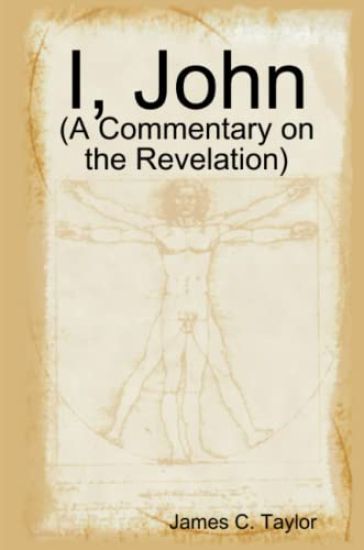
This is a verse-by-verse commentary on the Book of Revelation presented from a Post-tribulation Rapture point-of-view. It includes discussion of who John was that received the Revelation, the probable time in which it was received and written, a look at possible interpretations of the meaning and purpose of the Revelation, and other issues related to this magnificent, symbolic work. In this presentation, the main body of the Revelation is shown as a series of Seven Visions - each with its own story to tell, and each ending with the Return of the Lord or an event heralding that Return - Seven Visions all rolled into one great, glorious truth given on the Isle of Patmos to John by Jesus Christ.
This book takes a look at the Kingdom of God - what it meant to the Jewish people of Jesus' time and earlier - and what it meant to the early Christian Church and later. The differences between the Kingdom and the Church; and the similarities between the two are pointed out and discussed. It should be no surprise to anyone who claims to be a Christian that the present-day Church is in trouble; and that God is calling out for it to return to Him - to return to that place called the Kingdom of God. In this book, we consider what the Church once was, what it is today; and what it must become before the Return of the Lord. As Paul the apostle said, It must be a "glorious church, not having spot, or wrinkle, or any such thing;" and we, as the Church, must prepare to meet our God.
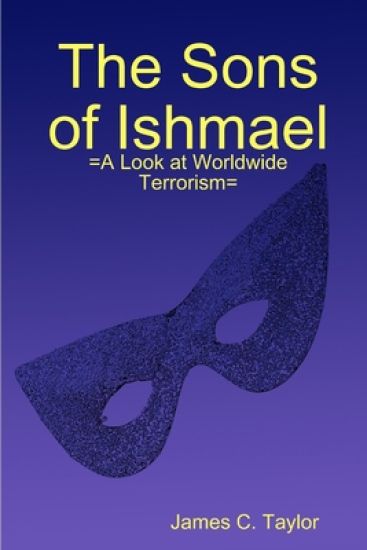
This book is a must for anyone concerned about worldwide terrorism. Many people in America and Europe think of the Arabs - the Sons of Ishmael as spoken of in the Bible - and the religion of Islam as a threat to their Western way of life. In this book, we investigate that belief by looking at those Sons of Ishmael: their beginning, their secular and biblical history, the beginning and development of the religion of Islam - and their possible connection to worldwide terrorism. We also look at the history of terrorism - along with the history and current activities of some specific terrorist groups including Hamas, Al Qaeda and Isis. We then pursue the causes of terrorism, some possible solutions to the problem - and finally, we take a look at the probable future of terrorism - including the issue of current and growing cyber-terrorism in the world around us.
In the Hebrew language, the word "feasts" literally means "appointed times." God appointed Seven Feasts for the Hebrew people to celebrate and to remember until the end of time. Through those Seven Feasts, God not only spoke directly of his plan for mankind, but he also gave us some beautiful historical - and future - pictures of his plan of redemption and provision embedded within the precepts of the ancient Mosaic Law. As we look at each of these Seven Feasts, we should not only be amazed and astonished at God's consistency and perfection in all that he does; but we should also realize that each event prophesied in the Seven Feasts has, thus far, unfolded perfectly and will continue to do so in the time to come. The first Four Feasts were fulfilled in the days of Christ and the Early Church; but the last three await God's perfect timing for their fulfillment in the End Time.
This is a fictionalized, but reverent, story of the Christ. And it is the story of James, the brother of the Lord. It is based on the life of the two men, and those around them, as recorded in the Holy Bible. It contains a blending of the history, geography, religion, politics and culture that surrounded and influenced the lives of Jesus, James and others. The beliefs and customs of the Jewish people and the teaching of Jesus are set against a backdrop of the politics of the time.
If we allow it, the Bible speaks to us - just as God speaks to us; for it is the voice of God to those who know their God and know the ways of their God. As the voice of our God - the one who brought us into this world - and the one who will take us out of this world; can we leave unturned any pebble of knowledge or wisdom that voice may offer to us? Or, are we to be open to all that God may put before us - in plain speech - and in the deeper, fuller speech of symbolism in his Holy Word?
A storm is coming! A political, economic and religious storm of such proportions as never seen before. Out of the storm, a man will rise to power, establish the Mark of the Beast, and persecute the Church. The time to prepare for a storm is before it arrives! Have you ever asked yourself, "What is God's Plan for the Church?" "How will I know the Mark of the Beast when it comes?" "What can I do to prepare?" Are you ready for the storm? What will be your response? Will you be ready; or will you wait until it's too late? This book is meant to be of help to those who are alert and want to prepare for what lies ahead. It offers such chapters as The Rapture of the Church, The Spirit of Antichrist, The Antichrist, The Mark of the Beast, Response of the Church, and God's Plan for the Church.
On the Wings of the Wind: A Journey to Faith
Patricia Eytcheson Taylor; James C. Taylor
Catch-A-Winner Publishing, LLC
2007
nidottu
Applied Human Factors in Aviation Maintenance
Manoj S. Patankar; James C. Taylor
Ashgate Publishing Limited
2004
sidottu
Considering the global awareness of human performance issues affecting maintenance personnel, there is enough evidence in the US ASRS reports to establish that systemic problems such as impractical maintenance procedures, inadequate training, and the safety versus profit challenge continue to contribute toward latent failures. Manoj S. Patankar and James C. Taylor strongly believe in incorporating the human factors principles in aviation maintenance. In this, their second of two volumes, they place particular emphasis on applying human factors principles in a book intended to serve as a practical guide, as well as an academic text. Features include: - A real 'how to' approach that serves as a companion to the previous volume: 'Risk Management and Error Reduction in Aviation Maintenance'. - Self-reports of maintenance errors used throughout to illustrate the systemic susceptibility for errors as well as to discuss corresponding solutions. - Two tools - a pre-task scorecard and a post-task scorecard - introduced as means to measure individual as well as organizational safety performance. - Interpersonal trust and professionalism explored in detail. - Ethical and procedural issues associated with collection and analysis of both qualitative as well as quantitative safety data discussed. The intended readership includes aviation maintenance personnel, e.g. FAA-type aircraft mechanics, CAA-type aircraft maintenance engineers, maintenance managers, regulators, and aviation students.
Risk Management and Error Reduction in Aviation Maintenance
Manoj S. Patankar; James C. Taylor
Ashgate Publishing Limited
2003
sidottu
Although several U. S. and European airlines have started providing human factors training to their maintenance personnel, the academic community (some 300 academic programs in the United States and several others in Europe and Asia) has not yet started offering formal human factors education to maintenance students. The highly respected authors strongly believe in incorporating the human factors principles in aviation maintenance. This is the first of two volumes providing effective behavioural guidance on risk management in aviation maintenance for both the novice and the experienced maintenance personnel. Its practical guidelines assist both student and practising aviation maintenance personnel to develop sustainable safety culture. For the maintenance community it provides some theoretical discussion about the "Why?" for risk management and then focus on the 'How?' to implement a successful error reduction program. To help the maintenance community in making a strong case to their financial managers, the authors also discuss the return on investment for risk management programs. The issue of risk management is taken at two levels. First, it provides a basic awareness information to those who have little or no knowledge of maintenance human factors. Second, it provides a set of practical tools for the more experienced people so that they can be more effective in risk management and error recovery in their jobs. This invaluable book serves as a practical guide as well as an academic textbook. The book covers fundamental human factors principles from a risk management perspective. Upon reading this informative book, the audience will be able to apply the basic principles of risk management to aviation maintenance environment, and they will be able to use low-risk behaviours in their daily work.