Kirjojen hintavertailu – 12 903 724 kirjaa ja 27 kauppaa

Kirjailija

James Campbell

Kirjat ja teokset yhdessä paikassa: 96 kirjaa, julkaisuja vuosilta 1979–2026, suosituimpiin kuuluu NB by J. C.: A Walk Through the Times Literary Supplement. Vertaile teosten hintoja ja tarkista saatavuus suomalaisista kirjakaupoista.

96 kirjaa

Kirjojen julkaisuvuodet: 1979–2026.

A Thoughtful Profession

A Thoughtful Profession

James Campbell

Open Court Publishing Co ,U.S.
2006
pokkari
"Chronicles the activities of the American philosophical associations founded at the beginning of the twentieth century that merged into the present American Philosophical Assocation in 1927. The field of philosophy's development as a profession, its relation to domestic and international politics, and the evolution of its ideas and ideals are discussed"--Provided by publisher.
The Final Frontiersman

The Final Frontiersman

James Campbell

Atria Books
2005
pokkari

Halvin toimitettuna 22,20 €

Hundreds of hardy people have tried to carve out a living in the Alaskan bush, but few have succeeded as consistently as Heimo Korth. In The Final Frontiersman, Heimo's cousin James Campbell chronicles Korth's amazing life and adventures, creating a powerful, real-life epic of triumph and tragedy. Campbell spent two years witnessing firsthand the Korth family: Heimo, his wife Edna and their teenage daughters Rhonda and Krin. With impressive detail, the author recounts an everyday existence shaped by a harsh and unforgiving country. In their efforts to preserve the ecology of the land, the Korths lead a nomadic life, waiting patiently for the odd small plane to bring supplies and cultivating hard-earned hunting skills that are all that stand between them and lingering death. By turns inspiring and downright jolting, THE FINAL FRONTIERSMAN reads like a rustic version of the American Dream, in which the physical barriers of a stunning wilderness are no obstacle to forging a life outside of the mainstream.
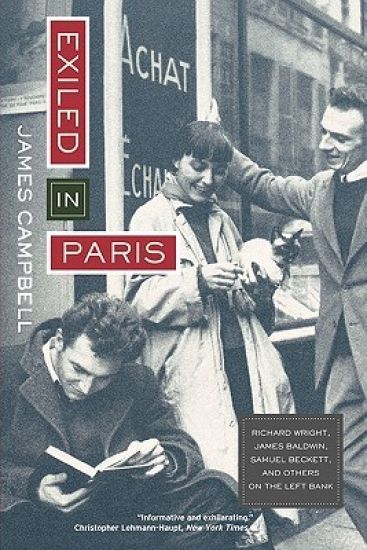
Exiled in Paris

Exiled in Paris

James Campbell

University of California Press
2003
pokkari
Exiled in Paris provides a compelling look at the personalities who fueled the literary and philosophical dramas of postwar Paris: James Baldwin, Alexander Trocchi, Boris Vian, Maurice Girodias, and many others. James Campbell provides a fresh look at Samuel Beckett's early career; reveals the facts behind the publication of the scandalous best-seller The Story of O; and tells the poignant story of Richard Wright's years in exile. He captures the sense of deliverance that Wright, so accustomed to daily humiliations in his own country, experienced during his sojourn on the Left Bank, where, for the first time in his life, he was treated as a great man of letters. Here, too, are all the circumstances surrounding Wright's mysterious death, which many close to him regarded as suspicious.
Talking at the Gates: A Life of James Baldwin

Talking at the Gates: A Life of James Baldwin

James Campbell

University of California Press
2002
nidottu
James Baldwin was one of America's finest and most influential writers. By the time he died in 1987, his books, such as The Fire Next Time, Go Tell It on the Mountain, and Giovanni's Room, had become modern classics. James Campbell knew Baldwin for ten years before Baldwin's death. For this book, he interviewed many of Baldwin's friends, and examined several hundred pages of correspondence. He quotes from the vast and disturbing file that the FBI compiled on Baldwin, and he discusses Baldwin's sometimes turbulent relationships with Norman Mailer, Richard Wright, and Marlon Brando, as well as his friendship with Martin Luther King Jr. Elegantly written, candid, and original, Talking at the Gates is a comprehensive account of the life and work of a writer who believed that "the unexamined life is not worth living."
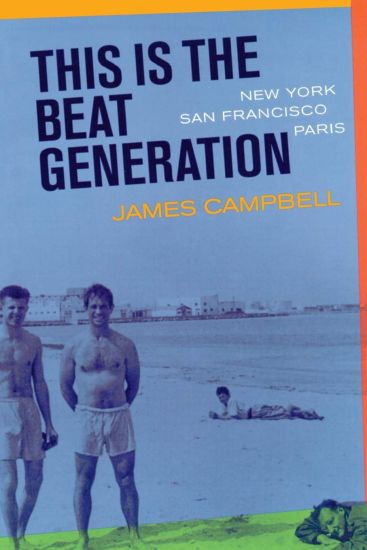
This Is the Beat Generation

This Is the Beat Generation

James Campbell

University of California Press
2001
pokkari
Beginning in New York in 1944, James Campbell finds the leading members of what was to become the Beat Generation in the shadows of madness and criminality. Jack Kerouac, Allen Ginsberg, and William Burroughs had each seen the insides of a mental hospital and a prison by the age of thirty. A few months after they met, another member of their circle committed a murder that involved Kerouac and Burroughs as material witnesses. This book charts the transformation of these experiences into literature, and a literary movement that spread across the globe. From "The First Cut-Up"--the murder in New York in 1944--we end up in Paris in 1960 with William Burroughs at the Beat Hotel, experimenting with the technique that made him notorious, what Campbell calls "The Final Cut-Up." In between, we move to San Francisco, where Ginsberg gave the first public reading of Howl. We discover Burroughs in Mexico City and Tangiers; the French background to the Beats; the Buddhist influence on Kerouac, Gary Snyder, and others; the "Muses" Herbert Huncke and Neal Cassady; the tortuous history of On the Road; and the black ancestry of the white hipster.
Catholicism at the Millennium

Catholicism at the Millennium

Gerald L. Miller; James Campbell; Wilburn T. Stancil

Fordham University Press
2001
pokkari
Catholicism at the Millennium is a book that grew out of a series of weekly lectures to students and the public at large on the state of the Catholic Church at the millennium. The book looks at the Catholic Church from the perspective of such diverse areas as theology, philosophy, biology, economics, sociology, music, history, and literature. Each chapter, by looking back and looking forward, explores what it means for the Catholic Church to be both a Church of tradition but also a Church in transition. Because the book began as a series of lectures, the book is especially useful as a text on Catholicism for students and interested laity. The book provides readers with a solid grounding in the traditions of the Church. It also challenges them to think about Catholicism in new ways. As a snapshot of the Catholic Church at this point in its history, Catholicism at the Millennium engages the reader in the ongoing debates today involving academy, Church, and culture.
Catholicism at the Millennium

Catholicism at the Millennium

Gerald L. Miller; James Campbell; Wilburn T. Stancil

Fordham University Press
2001
sidottu
Catholicism at the Millennium is a book that grew out of a series of weekly lectures to students and the public at large on the state of the Catholic Church at the millennium. The book looks at the Catholic Church from the perspective of such diverse areas as theology, philosophy, biology, economics, sociology, music, history, and literature. Each chapter, by looking back and looking forward, explores what it means for the Catholic Church to be both a Church of tradition but also a Church in transition. Because the book began as a series of lectures, the book is especially useful as a text on Catholicism for students and interested laity. The book provides readers with a solid grounding in the traditions of the Church. It also challenges them to think about Catholicism in new ways. As a snapshot of the Catholic Church at this point in its history, Catholicism at the Millennium engages the reader in the ongoing debates today involving academy, Church, and culture.
Understanding John Dewey

Understanding John Dewey

James Campbell

Open Court Publishing Co ,U.S.
1999
pokkari
John Dewey was one of America's most celebrated and influential social thinkers. This text places Dewey in the context of American social and intellectual history, and then examines his general philosophical perspective, before giving an account of his social vision.
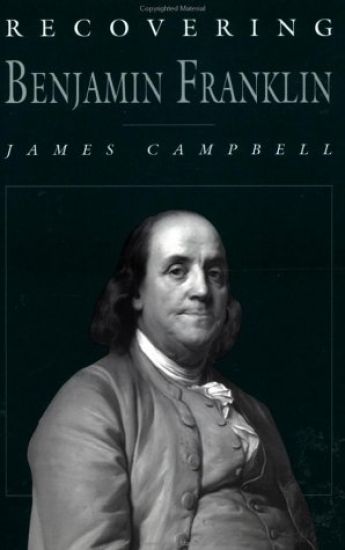
Recovering Benjamin Franklin

Recovering Benjamin Franklin

James Campbell

Open Court Publishing Co ,U.S.
1999
sidottu
Is Benjamin Franklin, the familiar cultural icon whose face appears on coins, currency, and postage stamps, in addition to being an affable inventor, printer, and humorist also an important American philosopher? In Recovering Benjamin Franklin, James Campbell attempts to "recover" Benjamin Franklin's role as philosopher. In the broad eighteenth-century understanding of the term "philosopher", most people would say that Franklin clearly qualifies as one. But since the beginning of the twentieth century, the meaning of the term has narrowed. What should be said about Franklin as philosopher in the current sense of the word? Part of the problem is that Franklin's thought is difficult to classify. Franklin is not a composer of lengthy, systematic treatises. Instead, we know him as the author of letters and essays, primarily short and often fragmentary, that were intended for diverse audiences. Was Franklin a thinker whose interests were nearly universal, or was he a dabbler who flew from topic to topic? Was he a minor intellectual who was incapable of sustained theoretical work, or was he a thinker who recognized that thought must function in the world? In answering these questions, Campbell provides a survey of the events in Franklin's rich life and explores his extraordinary place in American history, along the way challenging a series of popular misconceptions that are based upon narrow interpretations of Franklin's work. To foster a more adequate understanding, the author lays out in detail Franklin's ideas in four areas: science, religion, morality, and politics.

Recovering Benjamin Franklin

Recovering Benjamin Franklin

James Campbell

Open Court Publishing Co ,U.S.
1999
pokkari
In this work, the author attempts to define Benjamin Franklin's role as a philosopher. The book lays out in detail Franklin's ideas in four areas: science, religion, morality and politics; ultimately concluding that Franklin should be considered an early figure in the Pragmatist movement.
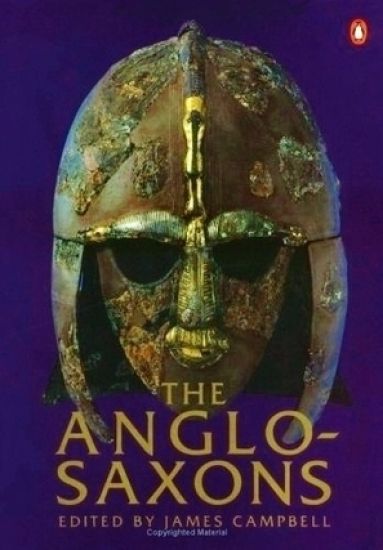
The Anglo-Saxons

The Anglo-Saxons

James Campbell

Penguin Books Ltd
1991
nidottu

Halvin toimitettuna 33,90 €

This survey, an introduction to the history of Anglo-Saxon England looks at political history, and religious, cultural, social, legal and economic themes are woven in. Throughout the book the authors make use of original sources such as chronicles, charters, manuscripts and coins, works of art, archaelogical remains and surviving buildings. The nature of power and kingship, role of wealth, rewards, conquest and blood-feud in the perennial struggle for power, structure of society, the development of Christianity and the relations between church and secular authority are discussed at length, while particular topics are explored in 19 "picture essays".
Untersuchung des Schichtverzuges am Beispiel der Hochleistungsemulsion KODAK 103-F
In der wissenschaftlichen Photographie stellt das photographische Bild einen Informationstrager auBerordentlich hoher Speicherdichte dar. Gleichzeitig besteht eine feste geometrische Beziehung der in der photographischen Schicht materialisierten Bildpunkte. Die Sta- bilitat dieser Beziehung wird wesentlich durch die Beschaffenheit des Schichttragers bestimmt: Glasplatten weisen hier im Vergleich zu Filmen eine erheblich hohere Festigkeit auf. Hochste Anforderungen an die geometrische Bildtreue werden sowohl in der Astronomie (Astrometrie und Spektroskopie) als auch in der Photogrammetrie (GroBmaBstabige Vermessungen, Aerotriangulation) gestellt. Wahrend allerdings in der Photogrammetrie aus GrUnden der Wirtschaftlichkeit und der einfacheren Handhabung meist den Filmen der Vorzug gegeben wird, verwendet man in der Astronomie noch durch- weg Glasplatten als Schichttrager. Eine erhebliche Bedeutung erlang- ten photographische Platten ebenfalls bei der ballistischen Flug- bahnvermessung und der daraus entwickelten photographischen Methode der Satellitengeodasie (SCHMID 1972). Bekanntlich hangt die Lagegenauigkeit der auf der Platte abgebilde- ten Objektpunkte nicht nur von der Genauigkeit der Ausmessung am Komparator, sondern auch von zahlreichen anderen Faktoren im Abbil- dungs- und EntwicklungsprozeB abo Die Erfassung derartiger Fehler- einflusse durch geeignete Modelle in der Auswertung hat bislang immer nur Teilerfolge erbracht, wie die Unterschiede zwischen der MeBgenauigkeit am Komparator und der Genauigkeit der Endresultate deutlich machen (BROKOF 1975, SCHMID 1972).