Kirjojen hintavertailu – 12 903 724 kirjaa ja 27 kauppaa

Kirjailija

James Clerk Maxwell

Kirjat ja teokset yhdessä paikassa: 97 kirjaa, julkaisuja vuosilta 1967–2026, suosituimpiin kuuluu The Scientific Papers of James Clerk Maxwell 2 Volume Paperback Set. Vertaile teosten hintoja ja tarkista saatavuus suomalaisista kirjakaupoista.

97 kirjaa

Kirjojen julkaisuvuodet: 1967–2026.

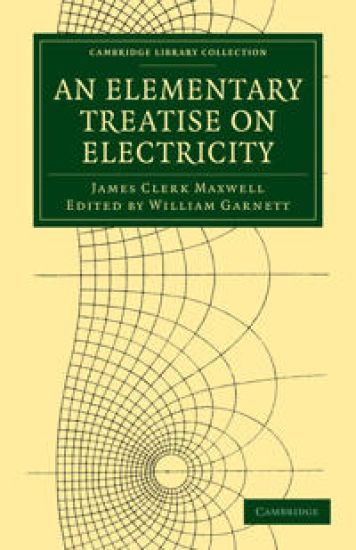
An Elementary Treatise on Electricity

An Elementary Treatise on Electricity

James Clerk Maxwell

Cambridge University Press
2011
pokkari
James Clerk Maxwell (1831–1879), first Cavendish Professor of Physics at Cambridge, made major contributions to many areas of theoretical physics and mathematics, not least his discoveries in the fields of electromagnetism and of the kinetic theory of gases, which have been regarded as laying the foundations of all modern physics. This work of 1881 was edited from Maxwell's notes by a colleague, William Garnett, and had formed the basis of his lectures. Several of the articles included in the present work were also included in his two-volume Treatise on Electricity and Magnetism (1873), also reissued in this series. The preface indicates that the two works were aimed at somewhat different audiences, the larger work assuming a greater knowledge of higher mathematics. Maxwell had also modified some of his methodology, and hoped to encourage the reader to develop an understanding of concepts relating to electricity.
Theory of Heat

Theory of Heat

James Clerk Maxwell

Cambridge University Press
2011
pokkari
Best known for his theory of electromagnetism, James Clerk Maxwell (1831–79) was Cambridge University's first Cavendish Professor of Experimental Physics. Albert Einstein described his work as 'the most profound and the most fruitful that physics has experienced since the time of Newton'. He carried out brilliant work in thermodynamics and statistical mechanics, laying the foundation for the kinetic theory of gases. This book, published originally in 1871, summarises his work in this field. It includes the 'Maxwell relations' that still feature in every standard text on thermodynamics. It also outlines his famous thought experiment, later named Maxwell's 'demon'. This idea, which appeared to contradict the second law of thermodynamics, would inspire scientific debate well into the twentieth century. More recently, it has sparked developments in the new sciences of nanotechnology and quantum computing.
The Scientific Papers of James Clerk Maxwell 2 Volume Paperback Set
The publication in 1890 of the two-volume Scientific Papers of James Clerk Maxwell, edited by W. D. Niven, was one of the two objects of a committee formed 'for the purpose of securing a fitting memorial of him' (the other object being the commissioning of a marble bust for the Cavendish Laboratory). Before his death in 1879 at the age of 48, Clerk Maxwell had made major contributions to many areas of theoretical physics and mathematics, not least his discoveries in the fields of electromagnetism and of the kinetic theory of gases, which have been regarded as laying the foundations of all modern physics. He is generally considered the third most important physicist of all time, after Newton and Einstein. These collected shorter works, beginning with a paper written at the age of 15, show the wide range of Clerk Maxwell's interests across mathematics, physics and chemistry.
The Scientific Papers of James Clerk Maxwell: Volume 2

The Scientific Papers of James Clerk Maxwell: Volume 2

James Clerk Maxwell

Cambridge University Press
2011
pokkari
The publication in 1890 of the two-volume Scientific Papers of James Clerk Maxwell, edited by W. D. Niven, was one of the two objects of a committee formed 'for the purpose of securing a fitting memorial of him' (the other object being the commissioning of a marble bust for the Cavendish Laboratory). Before his death in 1879 at the age of 48, Clerk Maxwell had made major contributions to many areas of theoretical physics and mathematics, not least his discoveries in the fields of electromagnetism and of the kinetic theory of gases, which have been regarded as laying the foundations of all modern physics. He is generally considered the third most important physicist of all time, after Newton and Einstein. These collected shorter works, beginning with a paper written at the age of 15, show the wide range of Clerk Maxwell's interests across mathematics, physics and chemistry.
The Scientific Papers of James Clerk Maxwell

The Scientific Papers of James Clerk Maxwell

James Clerk Maxwell

Cambridge University Press
2011
pokkari
The publication in 1890 of the two-volume Scientific Papers of James Clerk Maxwell, edited by W. D. Niven, was one of the two objects of a committee formed 'for the purpose of securing a fitting memorial of him' (the other object being the commissioning of a marble bust for the Cavendish Laboratory). Before his death in 1879 at the age of 48, Clerk Maxwell had made major contributions to many areas of theoretical physics and mathematics, not least his discoveries in the fields of electromagnetism and of the kinetic theory of gases, which have been regarded as laying the foundations of all modern physics. He is generally considered the third most important physicist of all time, after Newton and Einstein. These collected shorter works, beginning with a paper written at the age of 15, show the wide range of Clerk Maxwell's interests across mathematics, physics and chemistry.
A Treatise on Electricity and Magnetism

A Treatise on Electricity and Magnetism

James Clerk Maxwell

Cambridge University Press
2010
pokkari
Arguably the most influential nineteenth-century scientist for twentieth-century physics, James Clerk Maxwell (1831–1879) demonstrated that electricity, magnetism and light are all manifestations of the same phenomenon: the electromagnetic field. A fellow of Trinity College Cambridge, Maxwell became, in 1871, the first Cavendish Professor of Physics at Cambridge. His famous equations - a set of four partial differential equations that relate the electric and magnetic fields to their sources, charge density and current density - first appeared in fully developed form in his 1873 Treatise on Electricity and Magnetism. This two-volume textbook brought together all the experimental and theoretical advances in the field of electricity and magnetism known at the time, and provided a methodical and graduated introduction to electromagnetism. Volume 1 covers the first elements of Maxwell's electromagnetic theory: electrostatics, and electrokinematics, including detailed analyses of electrolysis, conduction in three dimensions, and conduction through heterogeneous media.

A Treatise on Electricity and Magnetism

A Treatise on Electricity and Magnetism

James Clerk Maxwell

Cambridge University Press
2010
pokkari
Arguably the most influential nineteenth-century scientist for twentieth-century physics, James Clerk Maxwell (1831–1879) demonstrated that electricity, magnetism and light are all manifestations of the same phenomenon: the electromagnetic field. A fellow of Trinity College Cambridge, Maxwell became, in 1871, the first Cavendish Professor of Physics at Cambridge. His famous equations - a set of four partial differential equations that relate the electric and magnetic fields to their sources, charge density and current density - first appeared in fully developed form in his 1873 Treatise on Electricity and Magnetism. This two-volume textbook brought together all the experimental and theoretical advances in the field of electricity and magnetism known at the time, and provided a methodical and graduated introduction to electromagnetic theory. Volume 2 covers magnetism and electromagnetism, including the electromagnetic theory of light, the theory of magnetic action on light, and the electric theory of magnetism.
Matter and Motion

Matter and Motion

James Clerk Maxwell

Cambridge University Press
2010
pokkari
Published posthumously in 1888, this treatise by the first Cavendish Professor of Physics at Cambridge explores and explains the fundamental principles and laws that are the basis of elementary physics. Maxwell was at the forefront of physics and mathematics during the nineteenth century and his pioneering work brought together existing ideas to give 'a dynamical theory of the electromagnetic field'. This work inspired not only the applications of electromagnetic waves like fibre optics but also Einstein's theory of relativity. The text explains many of Newton's laws and the unifying concepts that govern a body and its motion. The increment in the complexity of topics allows one to build a solid understanding of the accepted laws of mathematical physics that explain topics like force, work, energy and the centre mass point of a material system. This logical guide and instruction is as timeless as the laws of physics that it explains.
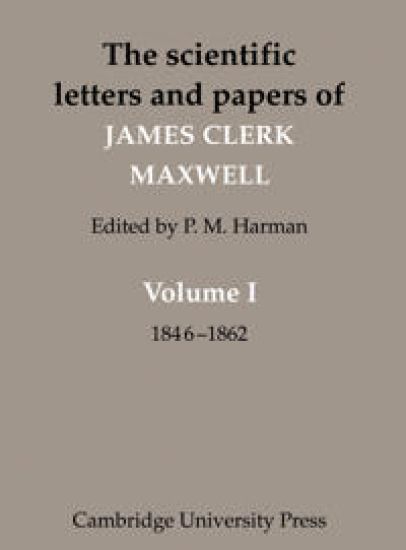
The Scientific Letters and Papers of James Clerk Maxwell: Volume 1, 1846–1862
This is a comprehensive edition of Maxwell's manuscript papers published virtually complete and largely for the first time. Maxwell's work was of central importance in establishing and developing the major themes of the physics of the nineteenth century: his theory of the electromagnetic field and the electromagnetic theory of light and his special place in the history of physics. His fecundity of imagination and the sophistication of his examination of the foundations of physics give particular interest and importance to his writings. Volume I: 1846–1862 documents Maxwell's education and early scientific work and his major period of scientific innovation - his first formulation of field theory, the electromagnetic theory of light and the statistical theory of gases. Important letters and manuscript drafts illuminate this fundamental early work and the volume includes his letters to friends and family, general essays and lectures and juvenilia.