Kirjojen hintavertailu – 12 903 725 kirjaa ja 27 kauppaa
Kirjailija
James Crawford
Kirjat ja teokset yhdessä paikassa: 49 kirjaa, julkaisuja vuosilta 1996–2026, suosituimpiin kuuluu Nolan: Leech Book 3. Vertaile teosten hintoja ja tarkista saatavuus suomalaisista kirjakaupoista.
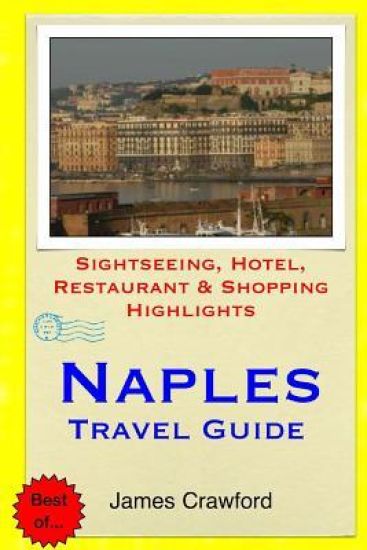
From the streets of the Vomero to the alleyways of the Spanish Quarter, from the surreal atmosphere of San Gregorio Armeno to the romantic Mergellina, Naples in southern Italy has a little of everything. The city will sometimes infuriate but it will surely impress you in the end. This congested city defies interpretation and it's quite fascinating. Introduction to Naples - Overview - Culture - Location & Orientation - Climate & When To Visit - Sightseeing Highlights - Spaccanapoli - Duomo - Museo Archeologico Nazionale - Piazza del Plebiscito - Centro Storico - Teatro di San Carlo - Catacombe di San Gennaro - Certosa e Museo di San Marino - Pompeii - Herculaneum - Recommendations for the Budget Traveler - Places To Stay - Chiaja Hotel de Charme - Decumani Hotel de Charme - Grand Hotel Capodimonte - Hotel Toledo - Ranch Palace Hotel - Places To Eat & Drink - L'Antica Pizzeria da Michele - Caffe' Gambrinus - Cantina del Gallo - Antico Forno delle Sfogliarelle - Il Miracolo dei Pesci - Places To Shop - Patrizio Cappelli - Yes Shop - Singolare Abbigliamento - Limon - Fratelli Capuano
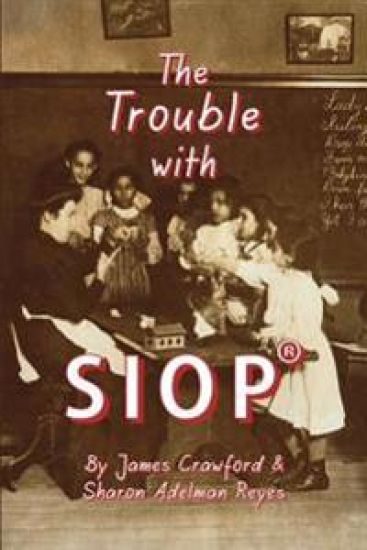
Among all the commercial "learning systems" on the market today, how many are advertised as "research-based?" Perhaps it would be easier to count those that are not. Such claims are so widespread that they are seldom taken seriously by experienced educators. At times, however, marketing becomes clever enough to cut through the skepticism. The more extravagant the promises, it seems, the more credible the product becomes. This book tells the story of one such case: the Sheltered Instruction Observation Protocol, or SIOP.(R) Imagine a program developed by an obscure research center. SIOP starts out as a modest tool for evaluating the effectiveness of instruction for children whose English is limited, but soon morphs into something much more ambitious. It now purports to be a detailed "lesson planning and delivery approach" for grades K-12, aligned with state standards and tests. Simultaneously, it outlines a comprehensive design for teacher training and evaluation. Acquired by a major publisher, SIOP is advertised as "field tested ... scientifically validated ... a proven pedagogical approach to teaching both content knowledge and language skills that] has helped to instruct millions of students." The program's market is expanded far beyond the classrooms of English language learners. It is promoted as an effective model for English-proficient students as well, appropriate not only for K-12 but also for early childhood education, foreign language instruction, GED and adult English programs, and even two-way bilingual education. There are old-time patent medicines that made fewer claims. Is SIOP a truly miraculous pedagogy - good for whatever ails you? Or is it a classic example of "research-based" hype? The Trouble with SIOP(R) was inspired by a chorus of complaints from teachers, who are increasingly required to apply the model by top-down directives. Recognizing that SIOP has thus far faced limited critical scrutiny, authors James Crawford and Sharon Adelman Reyes set out to determine: First, is this rigid approach, which requires teachers to incorporate "30 features and eight components" into every lesson, necessary to foster English acquisition and academic achievement? Or does SIOP, as a classic transmission model, impose a straitjacket on creative teaching and learning? Are there better ways to "shelter" and "scaffold" instruction? Second, does this heterogeneous mixture of methodologies and strategies reflect a coherent educational philosophy, consistent with research on second language acquisition? Or is SIOP essentially a grab-bag of "best practices," with a heavy emphasis on behaviorist methods? Finally, does research on this program support the lavish claims made on its behalf? Or is the What Works Clearinghouse at the U. S. Department of Education correct in concluding that none of the studies conducted thus far have demonstrated SIOP's effectiveness? The answers provided by The Trouble with SIOP(R) should interest those concerned not only with the education of English language learners, but also with the pernicious impact of commercial pedagogies in American classrooms.
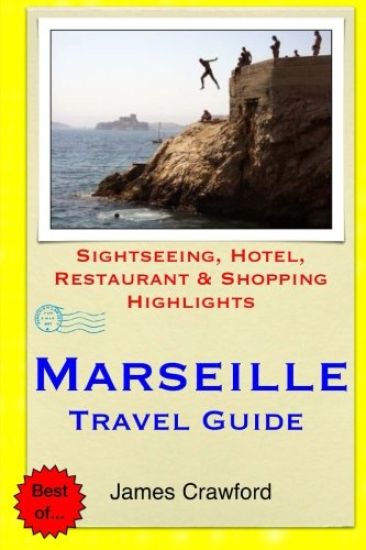
Marseille is the second most populous city in France and has the largest port on the Mediterranean. Located close to the tourist resorts of the French Riviera, Marseille is the economic centre of the Provence/Alps/C te d'Azur region. Introducing Marseille - Overview - Culture - Location & Orientation - Climate & When to Visit - Sightseeing Highlights - Unit d'Habitation - La Place Castellane - Calanque de Morgiou - Le Cours Julien - Museum of Mediterranean Archaeology (Musee d'Archeologie Mediterraneenne) - Notre Dame de la Garde - Le Vieux Port (Old Port) - Ch teau d'If - Panier - Parc Balneaire du Prado - Petit Train Marseille - Ferry Boat Ride - Palais et Parc Longchamp - L'Estaque - Recommendations for the Budget Traveler - Places to Stay - Music Hotel - Hotel Lutia - Ibis Marseille Gare Saint Charles - Places to Eat & Drink - Four des Navettes - L'Escapade Marseillaise - Le Julien - The Cup of Tea - La Broc liande - Places to Shop - Le Centre Commercial les Puces - The Market at Noailles (Le March de Noailles) - Prado Market - La Chocolati re du Panier - Centre Bourse
The third book in a series showcasing Scotland's National Collection of Aerial Photography. Features some of the most recent high quality photography of the nation, divided into four chapters that capture the essence and uniqueness of Scotland's landscapes: Islands, Highlands, Lowlands and Coastlines.
Aerofilms Ltd was born on 9 May 1919. An unprecedented business venture, it hoped to marry the still fledgling technology of powered flight to the discipline of photography. Its founders were Claude Grahame-White, an internationally-famous English aviation pioneer, and Francis Lewis Wills, a trained architect who had flown as an observer for the Royal Naval Air Service during the First World War. Together they embarked on a distinctively British tale of derring-do. From developing photographic glass plates in a hotel bathroom at the London Flying Club in Hendon, to producing many thousands of aerial images every year, they took a tool which had first been used for military intelligence, and repackaged it for the mass market. As a result, Aerofilms lived through and recorded one of the most tumultuous periods in British history. After surviving the worldwide economic crash of the Great Depression in the 1930s, and serving their country at the request of Winston Churchill during the Second World War, they were still on hand to help shape the Britain of the future, capturing the major reconstruction projects of the 1940s and 50s. Aerofilms: A History of Britain From Above draws on thousands of images, including many that are rare or previously unseen, to present a vivid picture of the nation in the first half of the twentieth century. Following the company’s enigmatic founders, daredevil pilots, skilled photographers and innovative advertisers, it explores how they manufactured and sold a potent sense of place and identity to the British people. The story of Aerofilms – the men and women behind the company and the photographs that they produced – is a story of innovation, entrepreneurial spirit, war, marketing and the making of ‘Brand Britain’.
Annexed to GA Resolution 56/83 of 2001, the International Law Commission's Articles on Responsibility for Internationally Wrongful Acts put the international law of responsibility on a sound footing. As Special Rapporteur for the second reading, James Crawford helped steer it to a successful conclusion. With this book, he provides a detailed analysis of the general law of international responsibility and the place of state responsibility in particular within that framework. It serves as a companion to The International Law Commission's Articles on State Responsibility: Introduction, Text and Commentaries (Cambridge, 2002) and is essential reading for scholars and practitioners concerned with issues of international responsibility, whether they arise in interstate relations, in the context of arbitration or litigation, or in bringing international claims.
Every High School has their social outcasts. The band nerds, the math geeks, the chess club, the girl that chews her hair, but at Butler High, even the creepy nose picker in the chess club is more popular than Caleo Anima. No matter what he did, his pale skin, snow white hair, and piercing blue eyes always made him an easy target. He used to think that the only way things could get worse would be if someone found out that he was gay, but that isn't even the tip of the iceberg of problems after a mysterious stranger shows up and changes Caleo's life forever. Hidden amongst our society, a secret and magical race of people known as 'Leeches', have been engaging in civil war for decades. Both sides are desperately searching for a weapon with unlimited power that will give them the advantage they need to rule their world. This wouldn't mean anything to Caleo, except for one problem... He is that weapon Forget making it through High School. Caleo has bigger problems As the search for him goes on, the world is quickly crumbling around him. He's now fighting for his life and the life of what little family he has left. With the help of new friends, he has little time to try and master his newly found powers as he tries to figure out who he can trust, who is trying to use him, and who just wants him dead. One wrong step and being the awkward pale outcast will be the LEAST of his worries.
Originally published by Hersch Lauterpacht in 1947, this book presents a detailed study of recognition in international law, examining its crucial significance in relation to statehood, governments and belligerency. The author develops a strong argument for positioning recognition within the context of international law, reacting against the widely accepted conception of it as an area of international politics. Numerous examples of the use of law and conscious adherence to legal principle in the practice of states are used to give weight to this perspective. This paperback re-issue in 2012 includes a newly commissioned Foreword by James Crawford, Whewell Professor of International Law at the University of Cambridge and a Fellow of Jesus College, Cambridge.