Kirjailija
James D. G. Dunn
Kirjat ja teokset yhdessä paikassa: 43 kirjaa, julkaisuja vuosilta 1977–2022, suosituimpiin kuuluu The Epistles to the Colossians and to Philemon. Vertaile teosten hintoja ja tarkista saatavuus suomalaisista kirjakaupoista.
Nimi esiintyy myös muodoissa: James D.G. Dunn, James D G Dunn
43 kirjaa
Kirjojen julkaisuvuodet: 1977–2022.
Few scholars have thought so long or so carefully about the role of biblical authority in the light of historical- and literary-critical scholarship as has James D. G. Dunn. Even fewer are as capable of communicating profound respect for the biblical witness with genuine insight into its complexity and pluriformity. Avoiding easy - and possibly misleading - answers, Dunn offers precise responses to questions about the history behind the Gospels and their consequent trustworthiness; the original scandal presented by Jesus' teaching, and by Paul's; the problem of pseudonymity in the Pauline letters and elsewhere; and what weight should be given to what the Bible itself says about scriptural authority, and to the final shape of the biblical canon. This Second Edition includes new essays on "bridging the gap between the academy and the church," the hallmarks of "good exposition" of scripture, and a concluding chapter on the Bible as living tradition.
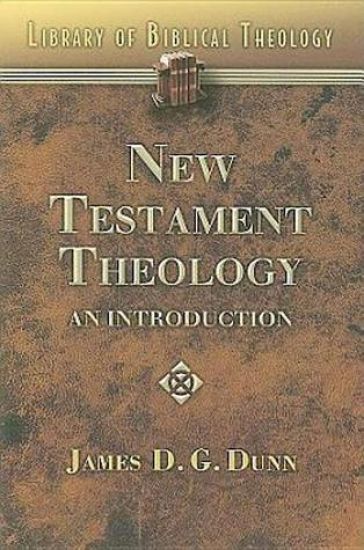
In this volume in the Library of Biblical Theology series, James D. G. Dunn ranges widely across the literature of the New Testament to describe the essential elements of the early church s belief and practice. Eschatology, grace, law and gospel, discipleship, Israel and the church, faith and works, and most especially incarnation, atonement, and resurrection; Dunn places these and other themes in conversation with the contemporary church s work of understanding its faith and life in relation to God s self-revelation in Jesus Christ. "
This collection of essays highlights a dimension of Paul's theology of justification that has been neglected -- that his teaching emerged as an integral part of his understanding of his commission to preach the gospel to non-Jews and that his dismissal of justification "by works of the law" was directed not so much against Jewish legalism but rather against his fellow Jews' assumption that the law remained a dividing wall separating Christian Jews from Christian Gentiles. James Dunn seeks to carry forward the debate on Jewish soteriology, on the relation of justification by faith to judgment "according to works," on Christian fulfillment of the law, and on the crucial role of Christ, his death and resurrection. Full of detail and intriguing thought, Dunn's collection will enlighten any scholar of the New Testament.
The collection of essays highlights a dimension of Paul's theology of justification which has been rather neglected in earlier decades: that his teaching emerged as an integral part of his understanding of his commission to preach the gospel to non-Jews; and that his dismissal of justification 'by works of the law' was directed not so much against Jewish 'legalism' but rather against his fellow Jews' assumption that the law remained a dividing wall separating Christian Jews from Christian Gentiles. The long opening essay interacts with critiques of this 'new perspective on Paul' and seeks to carry forward the debate on Jewish soteriology ('covenantal nomism'), on the relation of justification by faith to judgment 'according to works', on Christian 'fulfilment' of the law, and on the crucial role of Christ, his death and resurrection." This book is a wonderful resource for anyone wishing to become acquainted in particular with the work of James Dunn, and in general with the so-called 'new perspective' on Paul." Preston Sprinkle in Europäische Theologische Zeitschrift 15. Jg. (2006), S. 171"Es ist zu wünschen, dass die über die kontroverstheologischen Fixierungen des 20. Jh.s weit hinausführenden Anregungen von den Vertretern der anderen theologischen Disziplinen aufgegriffen und produktiv rezipiert werden." Karl-Wilhelm Niebuhr in Theologische Literaturzeitung 132. Jg. (2007), S. 168
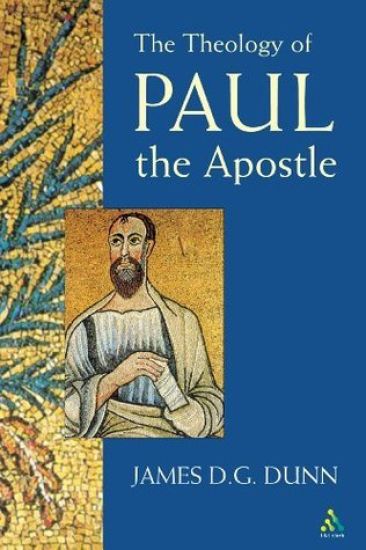
The Theology of Paul the Apostle
James D. G. Dunn
William B. Eerdmans Publishing Company
2006
nidottu
Halvin toimitettuna 49,20 €
In this major work, James D. G. Dunn brings together more than two decades of vigorous and creative work on interpreting the letters of Paul into an integrated, full-scale study of Paul's thought. Using Paul's letter to the Romans as the foundation for constructing a fuller exposition of Paul's whole theology, Dunn's thematic treatment clearly describes Paul's teaching on such topics as God, humankind, sin, christology, salvation, the church, and the Christian life. In the process Dunn engages in a concise way what other important scholars have said regarding each area of inquiry. The Theology of Paul the Apostle represents a major contribution to the ongoing discussion regarding what Paul's theology is and what its continuing relevance is to the study and practice of religion and theology.
The Parting of the Ways is James Dunn's classic exploration of the important questions that surround the emergence of Christian distinctiveness and the pulling apart of Christianity and Judaism in the first century of our era. The book begins by surveying the way in which questions have been approached since the time of F C Baur in the nineteenth century. The author then presents the four pillars of Judaism: monotheism, election and land, Torah and Temple. He then examines various issues which arose with the emergence of Jesus: Jesus and the temple; the Stephen affair; temple and cult in earliest Christianity; Jesus, Israel and the law; 'the end of the law'; and Jesus' teaching on God. The theme of 'one God, one Lord', and the controversy between Jews and Christians over the unity of God, lead to a concluding chapter on the parting of the ways. The issues are presented with clarity and the views and findings of others are drawn together and added to his own, to make up this comprehensive volume.
Unity and Diversity in the New Testament
James D.G. Dunn
SCM Press
2005
sidottu
Halvin toimitettuna 90,90 €
Unity and Diversity in the New Testament is a thorough investigation into the canon of the New Testament, and Christianity's origins. It assumes the reader is familiar with the basic question of who wrote the books, when, why etc and it moves on to look in detail at what were the various emphases in the gospel proclaimed by Jesus, Luke, Paul and John. It also examines primitive Christianity's preaching and teaching, confessional formulae, oral traditions, organisation and worship, concepts of ministry and community, and ritual acts. In the second half of the book, the author maps out the scope of the diversity he found in the first half's investigation. Here he identifies and traces the major currents within the stream of first and second generation Christianity which includes a study of Jewish Christianity, Hellenistic Christianity, Apocalyptic Christianity and Early Catholicism. The book concludes with a consideration of the repercussions of such findings, for how Christians understand the New Testament, and what it means to be Christian, today. This third edition is further enhanced with the author's consideration of these same themes, 25 years after he first wrote about them. The final chapter is the authors "critical refinement" of the ideas and issues that remain relevant and important for any realistic theology of canon to be considered today.
Unity and Diversity in the New Testament
James D.G. Dunn
SCM Press
2005
nidottu
Halvin toimitettuna 73,50 €
A challenging textbook for level two and three New Testament scholars. The new material is the author's critical refinement of all the original issues covered. New Testament study, the synoptic question, and the origins of Christianity are all fundamental areas of study on theology undergraduate degrees today.
A New Perspective on Jesus: What the Quest for the Historical Jesus Missed
James D. G. Dunn
Baker Academic
2005
nidottu
In this compelling study, renowned author James D. G. Dunn provides a critique of the quest for the historical Jesus. Dunn claims that the quest has been misguided from the start in its attempt to separate the historical Jesus from the Christ of faith. Dunn argues that Jesus scholars have consistently failed to recognize how the early disciples' pre-Easter faith and a predominantly oral culture shaped the way the stories about Jesus were told and passed on. Dunn also examines the implications of oral transmission for our understanding of Synoptic relationships. A New Perspective on Jesus proposes a change in direction for Jesus scholarship. It will be of interest to pastors, church leaders, students, and thoughtful laypersons wanting a fresh perspective on Jesus studies.
Concise yet comprehensive, manageable and affordable, T&T Clark Study Guides are an invaluable resource for students, preachers and Bible study leaders. Each book in the series gives the reader a thorough introduction to a particular book of the Bible or the Apocrypha and includes: An introduction to the contents of the particular biblical book A balanced survey of the important critical issues Attention to literary, historical, sociological, and theological perspectives Suggestions about critical appropriation of the text by the contemporary reader Reference to other standard works through annotated bibliographies. All the books in the series, formerly published by Sheffield Academic Press, are by leading biblical scholars and the authors have drawn on their scholarly expertise as well as their experience as teachers of university and college students.
This text is designed for students and academics studying the doctrine of the incarnation. James Dunn clarifies in detail the beginnings of the belief in Christ as the Son of God and discusses the historical context of such beliefs. Exploring key titles and passages within the New Testament, he argues that the incarnation cannot simply be understood in terms of the "myth of heavenly or divine being come to earth", but should be grounded in the New Testament context of meaning.
Using Paul's letter to the Romans as the foundation for his monumental study of Paul's theology, James D. G. Dunn describes Paul's teaching on God, sin, humankind, Christology, salvation, the church, and the nature of the Christian life.
This book contains some of James Dunn's best essays on the Spirit in New Testeament theology.
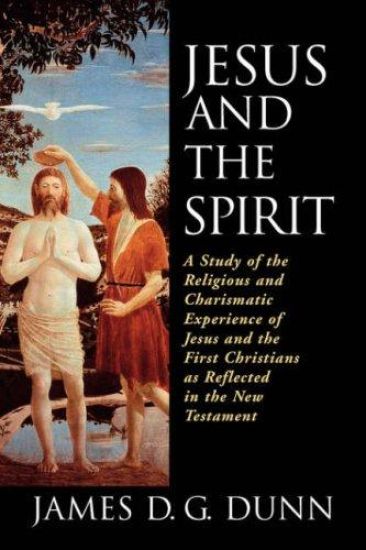
In this book James D. G. Dunn explores the nature of the religious experiences that were at the forefront of emerging Christianity. Dunn first looks at the religious experience of Jesus, focusing especially on his experience of God in terms of his sense of sonship and his consciousness of the Spirit. He also considers the question of whether Jesus was a charismatic. Next Dunn examines the religious experiences of the earliest Christian communities, especially the resurrection appearances, Pentecost, and the signs and wonders recounted by Luke. Finally Dunn explores the religious experiences that made Paul so influential and that subsequently shaped Pauline Christianity and the religious life of his churches. The result is a thorough and stimulating study that not only recovers the religious experiences of Jesus and the early church but also has important implications for our experience of the Spirit today.
The Epistles to the Colossians and to Philemon
James D. G. Dunn
William B Eerdmans Publishing Co
1996
Sidottu
A Commentary on the Greek Text
The biblical theme of justification by faith is all too often regarded as a consumer commodity, as a private transaction between God and the individual. The result is that the social dimension is left, often with disastrous consequences, to market forces. Certain that justification is inseparable from justice, the authors of this book have teamed up to deliver an emphatic restatement of the relational nature of justification and its interaction with communal and social justice. In Part One James D. G. Dunn critiques Luther's "discovery" of the doctrine of justification by faith, showing how he overlooked the social dimension that is part and parcel of Paul's message. A careful look at Old Testament themes recovers an understanding of justification and justice that has national and social as well as individual outworkings. In Part Two Alan M. Suggate offers Nazi Germany, militarist Japan, and 1980s Britain as three modern case studies that demonstrate (at times appallingly so) the distorted nature of justice that can result from an inadequate understanding of justification. This analysis clearly shows how a fresh restatement of the interaction of justification and justice could have fruitful consequences for worldwide social justice.
The Theology of Paul's Letter to the Galatians
James D. G. Dunn
Cambridge University Press
1993
pokkari
Paul’s Letter to the Galatians is one of the fiercest and most polemical writings in the Bible. That is what makes it, for the author of this study, such an exciting document to deal with. It emerges from the early days of a vigorous new movement (Christianity), when basic principles were first being formulated, and when the whole character of the movement was at stake. In the pages of Galatians we witness fundamental features of Christian theology taking shape before our eyes, where the living heart of Paul’s gospel is encountered. For James D. G. Dunn there is an elemental quality about the letter, to which those tired of compromising half-truths are drawn when they feel the impulse to return to first principles. This book, which benefits from the new perspective on Paul, explains more clearly than hitherto both the issues which confronted Paul and the powerful theological arguments he brought to bear in response, and casts fresh light on a document still capable of shaping lives and theology today.
In this book, Paul's epistle is transliterated, translated and explained, showing his central themes of righteousness and justification by faith. The epistle relates to Paul's missionary activities in Galatia, where he had established assemblies of Gentile Christians with no requirement for Jewish practices. Paul's letter is a protest, the first declaration of his "apostle-ship", a rebuke to the Galatians for straying from the doctrine he had given them and a thinking through of that doctrine. The author also discusses the autobiographical details provided by Paul himself, the identity of the Galatians, the date of the epistle and the nature of Paul's opponents and reconstructs the situation which gave rise to the letter.
The latest book in the Understanding Jesus Today series deals with the role of discipleship in Christianity. James Dunn explores the original meaning of discipleship in the early church and then discusses what discipleship should mean for Christians today. The evidence in the Gospels regarding the requirements of discipleship, including the beliefs and daily character of the life of a disciple, are explored and a firm basis upon which a tradition of discipleship can be defined is found. Important questions addressed are: to whom was Jesus's call to discipleship primarily directed; what were the characteristics of the community of disciples that formed around Jesus in His lifetime and how has the character of that community, which has become the Christian Church, changed over time; how does modern discipleship measure up against discipleship in the early Church? The book is based on the best of current scholarship but is written at a popular level.