Kirjojen hintavertailu – 12 903 725 kirjaa ja 27 kauppaa
Kirjailija
James D. Watson
Kirjat ja teokset yhdessä paikassa: 16 kirjaa, julkaisuja vuosilta 1981–2027, suosituimpiin kuuluu Watson, J: Watson Molekularbiologie. Vertaile teosten hintoja ja tarkista saatavuus suomalaisista kirjakaupoista.
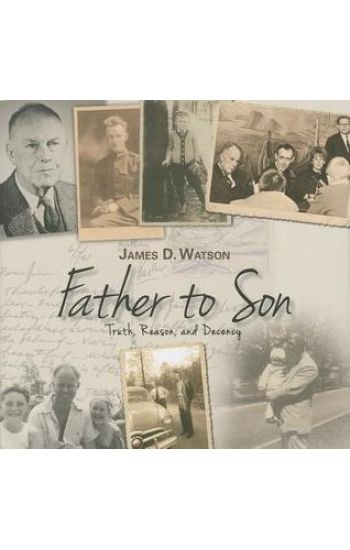
Many of us wonder how our heritage has influenced who we are and what we have become. The renowned scientist and author James D. Watson has more to reflect upon than most. A Radio Quiz Kid at 12 and a University of Chicago student at 15, Watson at 24 had a scientific discovery to his credit - the structure of DNA - that would win a Nobel Prize and forever change our understanding of genes and inheritance. Now, after a lifetime of accomplishment in research, writing, education, and science advocacy, Watson has delved for the first time publicly into his own lineage. Father To Son was first intended as a small, privately published collection of the writings of his father, James D. Watson, Sr. But when Jim Watson, Jr. began investigating his family history, what emerged was a more complex story - the chronicle of an archetypical American family from before the Civil War to Vietnam. Their history includes settlement in the Midwest, a 20-year association with Abraham Lincoln, a successful search for California gold, and bold but disastrous investments in the stock market. Watson, Sr.'s passion for ornithology led to a short-lived association with Nathan Leopold, who would later be sentenced for murder in the 1924 "trial of the century." His Oberlin friendship with Robert Maynard Hutchins, later President of the University of Chicago, began a family association with the University that continues today. The extended clan also included notable individuals like Watson, Jr.'s great uncle Dudley Crafts Watson - artist and teacher - who, for a time, raised a cousin, Orson Welles, the celebrated actor and director, and an uncle, William Weldon Watson, a physicist and participant in the development of the atomic bomb. In this book, Jim Watson portrays these lives in a fascinating narrative, illustrated with previously unpublished photographs and period documents, that ends with an affectionate tribute to his father, a man of principle, decency, intelligence, and reason, from whom Jim Jr. learned liberal politics and incisive writing. Always iconoclastic, in both science and literature, Watson has written his autobiography in installments, beginning with the now classic The Double Helix, followed by Genes, Girls, and Gamow and Avoid Boring People. Concluding The Double Helix, Watson portrayed himself as ..".25 and too old to be unusual." Yet, in Father To Son, the latest of his unsparing self-examinations, Watson shows us that his heritage was remarkable after all and that "Most certainly I didn't emerge from nowhere "
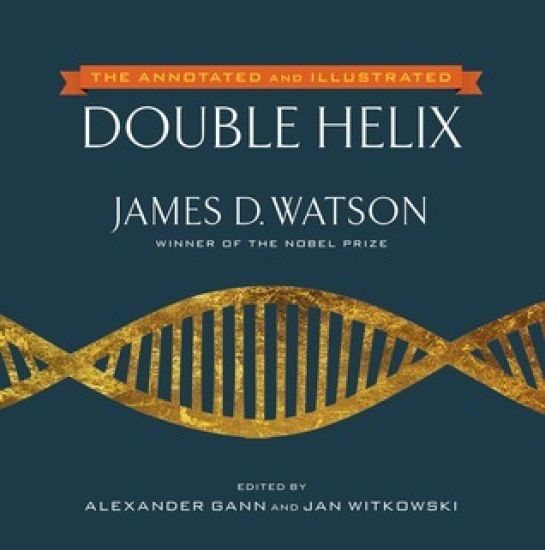
Published to mark the 50th anniversary of the Nobel Prize for Watson and Crick's discovery of the structure of DNA, an annotated and illustrated edition of this classic book gives new insights into the personal relationships between James Watson, Frances Crick, Maurice Wilkins, and Rosalind Franklin, and the making of a scientific revolution. In his 1968 memoir, "The Double Helix, "the brash young scientist James Watson chronicled the drama of the race to identify the structure of DNA, a discovery that would usher in the era of modern molecular biology. Alexander Gann and Jan Witkowski have built upon this gripping narrative, juxtaposing Watson's racy account with the observations of other protagonists and offering an enhanced perspective on the now legendary story of Watson and Crick's discovery. Gann and Witkowski have mined many sources, including a trove of newly discovered correspondence belonging to Francis Crick (mislaid some fifty years ago) and the archives of Maurice Wilkins, Linus Pauling, Rosalind Franklin, and Watson and Crick themselves. Also in this edition are Watson's own account of the Nobel Prize award and celebrations, appendixes that include an account of the book's controversial first publication, and a chapter dropped from the original edition, as well as an extraordinary assortment of documents and photographs-- many never before published. This wealth of material contributes depth and color to Watson's novelistic text and places events in their contemporary scientific and social context. After half a century, the implications of the double helix keep rippling outward; the tools of molecular biology have forever transformed the life sciences and medicine. "The Annotated and Illustrated Double Helix "adds new richness to the account of the momentous events that led the charge.
From Nobel Prize-winning scientist James D. Watson, a living legend for his work unlocking the structure of DNA, comes this candid and entertaining memoir, filled with practical advice for those starting out their academic careers. In Avoid Boring People, Watson lays down a life's wisdom for getting ahead in a competitive world. Witty and uncompromisingly honest, he shares his thoughts on how young scientists should choose the projects that will shape their careers, the supreme importance of collegiality, and dealing with competitors within the same institution. It's an irreverent romp through Watson's colorful career and an indispensable guide to anyone interested in nurturing the life of the mind.
James D. Watson looks back on his extraordinary and varied career -- from its beginnings as a schoolboy in Chicago's South Side to the day he left Harvard almost 50 years later, world-renowned as the co-discoverer of DNA -- and considers the lessons he has learnt along the way. The result is both an engagingly eccentric memoir and an insightful compendium of lessons in life for aspiring scientists. Watson's 'manners' range from those he learnt bird-watching with his father during the Great Depression ('Avoid fighting bigger boys and dogs' and 'Find a young hero to emulate') to the manners appropriate for a Nobel Prize ('Have friends close to those who rule'). He evokes his time as a graduate student in the 1940s ('Hire spunky lab helpers'); the excitement of working in DNA for the first time as well as having his first dates; his time working as a White House advisor; and at Harvard in the '70s. Avoid Boring People is a quirky, original, wise, and infuriatingly un-put-downable blend of candid anecdotes and revealing insights into the life of one of the greatest scientists of the 20th century.
`ames D. Watson looks back on his extraordinary and varied career -- from its beginnings as a schoolboy in Chicago's South Side to the day he left Harvard almost 50 years later, world-renowned as the co-discoverer of DNA -- and considers the lessons he has learnt along the way. The result is both an engagingly eccentric memoir and an insightful compendium of lessons in life for aspiring scientists. Watson's 'manners' range from those he learnt bird-watching with his father during the Great Depression ('Avoid fighting bigger boys and dogs' and 'Find a young hero to emulate') to the manners appropriate for a Nobel Prize ('Have friends close to those who rule'). He evokes his time as a graduate student in the 1940s ('Hire spunky lab helpers'); the excitement of working in DNA for the first time as well as having his first dates; his time working as a White House advisor; and at Harvard in the '70s. Avoid Boring People is a quirky, original, wise, and infuriatingly un-put-downable blend of candid anecdotes and revealing insights into the life of one of the greatest scientists of the 20th century.
Includes a Foreword by Dr. James D. Watson, the co-discoverer of the DNA double helix, and Dr. Jan A. Witkowski. "From the Foreword by Drs. Watson and Witkowski: 'DNA: Forensic and Legal Applications is a comprehensive and invaluable guide to the field, covering topics ranging from collecting samples in the field to presenting the complex results to a jury. We are sure that it will play its part in promoting this most powerful tool in the forensic scientist's armamentarium.'" DNA: Forensic and Legal Applications covers the technology and laws related to DNA, as well as the use of DNA evidence in the legal system. This combination of science and law makes it the first comprehensive title of its kind and an appropriate reference for those with both elementary and advanced knowledge of the topic. It draws together in one source information that would previously have required extensive research and reliance on experts to obtain, offering both breadth and depth in a clear style without s acrificing scholarly goals. With material from both scientific and legal areas, DNA: Forensic and Legal Applications covers the latest advances in technology. It provides an ideal text for forensic scientists and students of forensic science, analytical chemists, lawyers, judges, police officers, and detectives.
In the years following his and Francis Crick's towering discovery of DNA, James Watson was obsessed with finding two things: RNA and a wife. Genes, Girls, and Gamow is the marvelous chronicle of those pursuits. Watson effortlessly glides between his heartbreaking and sometimes hilarious debacles in the field of love and his heady inquiries in the field of science. He also reflects with touching candor on some of science's other titans, from fellow Nobelists Linus Pauling and the incorrigible Richard Feynman to Russian physicist George Gamow, who loved whiskey, limericks, and card tricks as much as he did molecules and genes. What emerges is a refreshingly human portrait of a group of geniuses and a candid, often surprising account of how science is done.
In 1953, two young, unknown scientists sparked a worldwide revolution. Studying DNA for clues to the nature of genes, James Watson and Francis Crick deduced its molecular composition - two chains twisted into a double helix - and immediately realized that the structure implied how genes were copied and passed from one generation to the next. Their observation has had extraordinary consequences: the discovery of a genetic code that all living things share and the realization that the code translates into proteins; the ability to alter an organism's genetic make-up; recognition that diseases like cancer begin when genes go wrong; the foundations of a biotechnology industry and the means of cloning plants and animals; a start on cataloguing human genes; and the glimmer of a new kind of medicine that uses DNA therapeutically. In the midst of the ferment, its instigator Jim Watson has been tireless. A principal architect and visionary of the new biology, a Nobel Prize-winner at 34 and best-selling author at 40 (The Double Helix), he had the authority, flair, and courage to take an early and prominent role as commentator on the march of DNA science and its implications for society. In essays for publications large and small, and in lectures around the world, he delivered what were, in effect, dispatches from the front lines of the revolution. Outspoken and sparkling with ideas and opinions, a selection of them is collected for the first time in this volume. Their resonance with today's headlines is striking. As public concern about genetically modified food mounts, here is Watson's salutory reminder, from a previous era of DNA anxiety, that restrictions on potentially rewarding research are justifiable only if there is robust evidence of likely harm. Commenting on the 1970s War on Cancer, he warns that effective leadership of publicly funded research initiatives, such as the current search for an AIDS vaccine, demands the courage to support promising but risky new ideas and prune away anything less than the best. And as the first Director of the Human Genome Project, now approaching its climax, he acknowledges the past evils of eugenics but argues fiercely for the need to balance potential misuses of genetic data with the overwhelming benefits of a rational attack on the roots of disease. These combative pieces mingle with charming memoirs of distinguished former colleagues, advice for young scientist, and a pointed account of Germany's troubled historical relationship with genetics. They open with Watson's reflections on the family influence and values of his Chicago upbringing that helped shape his career.. This collection of provocative, optimistic, and entertaining essays begins and ends with elegant commentaries from the distinguished molecular biologist and writer Walter Gratzer. They illuminate a volume that portrays the life and work of a scientist, educator, and author who is acknowledged as an intellectual leader of the twentieth century.
Jim Watson is one of the world's most famous scientists. A principal architect and visionary of modern biology, a Nobel Prize winner at 34, and best selling author at 40 (The Double Helix), he has been a fearless commentator on the march of DNA science and its impact on society for over twenty years. This sparkling collection was a bestseller in hardcover, and, for the paperback edition, the author has added three newly written essays containing his reflections on the survival value of pursuing happiness, advice for new college graduates, and his thoughts on the completion of a draft of the human genome, a project he initiated over ten years ago.
One of the two discoverers of DNA recalls the lively scientific quest that led to this breakthrough, from the long hours in the lab, to the after-hours socializing, to the financial struggles that almost sank their project. Reprint. 15,000 first printing.
"The classic personal account of one of the great scientific discoveries of the century." By identifying the structure of DNA, the molecule of life, Francis Crick and James Watson revolutionized biochemistry and won themselves a Nobel Prize. At the time, Watson was only twenty-four, a brilliant young zoologist hungry to make his mark. His uncompromisingly honest account of the heady days of their thrilling sprint against other world-class researchers to solve one of science's greatest unsolved mysteries gives a dazzlingly clear picture of a world of brilliant scientists with great gifts, very human ambitions, and bitter rivalries. With humility unspoiled by false modesty, Watson relates his and Crick's desperate efforts to beat Linus Pauling to the Holy Grail of the life sciences, the identification of the basic building block of life. He is impressed by the achievements of the young man he was, but clear-eyed about his limitations. Never has such a brilliant scientist also been so gifted, and so truthful, in capturing in words the flavor of his work.
Forschung live: Ein 25jähriger Wissenschaftler entdeckt im Wettlauf mit seinen Konkurrenten die Struktur der DNS und damit den Schlüssel des Lebens. Der ungeschminkte Bericht des Nobelpreisträgers über eine der wichtigsten wissenschaftlichen Erkenntnisse des 20. Jahrhunderts.
Since its publication in 1968, The Double Helix has given countless readers a rare and exciting look at one highly significant piece of scientific research Watson and Crick's race to discover the molecular structure of DNA. In this Norton Critical Edition, Watson's lively and irreverent account is placed in historical perspective by Gunther Stent's introduction and by retrospective views from two major figures in the adventure, Francis Crick and Linus Pauling, and by Rosalind Franklin's last student, Aaron Klug."