Kirjojen hintavertailu – 12 903 725 kirjaa ja 27 kauppaa

Kirjailija

James E. Strick

Kirjat ja teokset yhdessä paikassa: 3 kirjaa, julkaisuja vuosilta 2002–2015, suosituimpiin kuuluu The Living Universe. Vertaile teosten hintoja ja tarkista saatavuus suomalaisista kirjakaupoista.

3 kirjaa

Kirjojen julkaisuvuodet: 2002–2015.

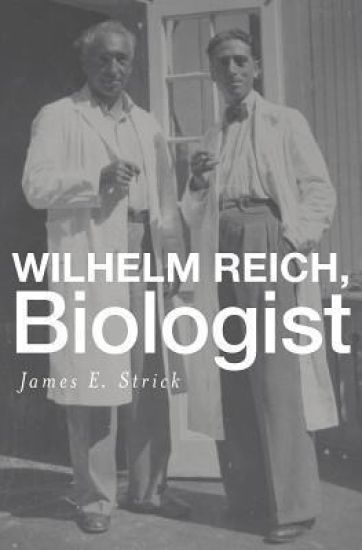
Wilhelm Reich, Biologist

Wilhelm Reich, Biologist

James E. Strick

Harvard University Press
2015
sidottu
Psychoanalyst, political theorist, pioneer of body therapies, prophet of the sexual revolution—all fitting titles, but Wilhelm Reich has never been recognized as a serious laboratory scientist, despite his experimentation with bioelectricity and unicellular organisms. Wilhelm Reich, Biologist is an eye-opening reappraisal of one of twentieth-century science’s most controversial figures—perhaps the only writer whose scientific works were burned by both the Nazis and the U. S. government. Refuting allegations of “pseudoscience” that have long dogged Reich’s research, James Strick argues that Reich’s lab experiments in the mid-1930s represented the cutting edge of light microscopy and time-lapse micro-cinematography and deserve to be taken seriously as legitimate scientific contributions. Trained in medicine and a student of Sigmund Freud, Reich took to the laboratory to determine if Freud’s concept of libido was quantitatively measurable. His electrophysiological experiments led to his “discovery” of microscopic vesicles (he called them “bions”), which Reich hypothesized were instrumental in originating life from nonliving matter. Studying Reich’s laboratory notes from recently opened archives, Strick presents a detailed account of the bion experiments, tracing how Reich eventually concluded he had discovered an unknown type of biological radiation he called “orgone.” The bion experiments were foundational to Reich’s theory of cancer and later investigations of orgone energy. Reich’s experimental findings and interpretations were considered discredited, but not because of shoddy lab technique, as has often been claimed. Scientific opposition to Reich’s experiments, Strick contends, grew out of resistance to his unorthodox sexual theories and his Marxist political leanings.
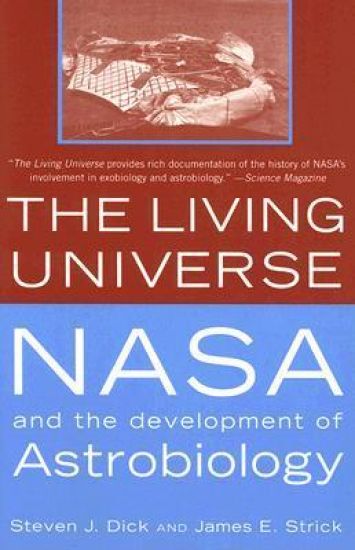
The Living Universe

The Living Universe

Steven J. Dick; James E. Strick

Rutgers University Press
2005
nidottu
The Living Universe is a comprehensive, historically nuanced study of the formation of the new scientific discipline of exobiology and its transformation into astrobiology. Among many other themes, the authors analyze how research on the origin of life became wedded to the search for life on other planets and for extraterrestrial intelligence. Many scientific breakthroughs of the last forty years were either directly supported or indirectly spun off from NASA’s exobiology program, including cell symbiosis, the discovery of the Archaea, and the theories of Nuclear Winter and the asteroid extinction of the dinosaurs. Exobiology and astrobiology have generated public fascination, enormous public relations benefits for NASA, and––on the flip side of the coin––some of the most heated political wrangling ever seen in government science funding. Dick and Strick providea riveting overview of the search for life throughout the universe, with all of the Earthly complexities of a science-in-the-making and the imperfect humans called scientists. Their book will appeal to biologists, historians and philosophers of science, planetary scientists (including geologists), and an educated general readership interested in the investigation of life on other planets.
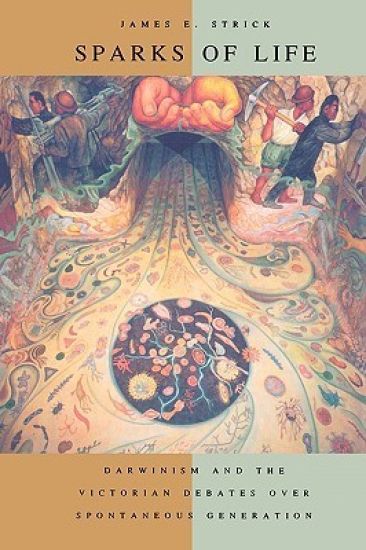
Sparks of Life

Sparks of Life

James E. Strick

Harvard University Press
2002
nidottu
How, asks James E. Strick, could spontaneous generation--the idea that living things can suddenly arise from nonliving materials--come to take root for a time (even a brief one) in so thoroughly unsuitable a field as British natural theology? No less an authority than Aristotle claimed that cases of spontaneous generation were to be observed in nature, and the idea held sway for centuries. Beginning around the time of the Scientific Revolution, however, the doctrine was increasingly challenged; attempts to prove or disprove it led to important breakthroughs in experimental design and laboratory techniques, most notably sterilization methods, that became the cornerstones of modern microbiology and sped the ascendancy of the germ theory of disease. The Victorian debates, Strick shows, were entwined with the public controversy over Darwin's theory of evolution. While other histories of the debates between 1860 and 1880 have focused largely on the experiments of John Tyndall, Henry Charlton Bastian, and others, Sparks of Life emphasizes previously understudied changes in the theories that underlay the debates. Strick argues that the disputes cannot be understood without full knowledge of the factional infighting among Darwinians themselves, as they struggled to create a socially and scientifically viable form of "Darwinian" science. He shows that even the terms of the debate, such as "biogenesis," usually but incorrectly attributed to Huxley, were intensely contested.