Kirjojen hintavertailu – 12 903 725 kirjaa ja 27 kauppaa

Kirjailija

James F. White

Kirjat ja teokset yhdessä paikassa: 11 kirjaa, julkaisuja vuosilta 1989–2023, suosituimpiin kuuluu Christian Worship in North America. Vertaile teosten hintoja ja tarkista saatavuus suomalaisista kirjakaupoista.

Nimi esiintyy myös muodoissa: James F White

11 kirjaa

Kirjojen julkaisuvuodet: 1989–2023.

Introduction to Christian Worship: Fourth Edition
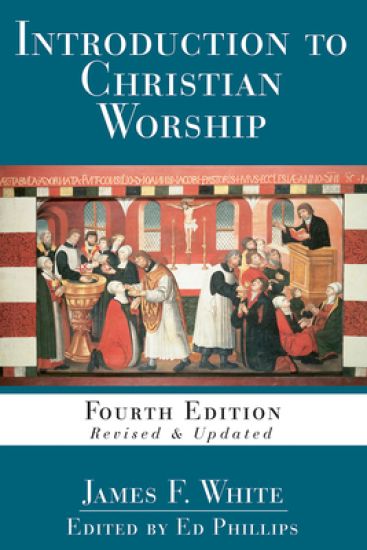
Students of worship have read and re-read White's book for generations. James White's classic Christian worship text, revised and updated for the first time in more than twenty years. Author Ed Phillips was one of White's graduate students. He is joined by practitioners and teachers from emerging generations, who contribute timely and well-researched material from their own areas of expertise. This new content brings the original up to date, filling significant gaps since the original publication on topics like technology, arts, embodiment in and of worship, pluralism and multiculturalism, denominational changes, and changes in the spaces and forms of worship, including worship in the age of pandemics. This new edition will take its place on the shelf of every student, pastor, and leader of Christian worship.
Amphibians and Reptiles of Delmarva

Amphibians and Reptiles of Delmarva

James F. White

Schiffer Publishing Ltd
2009
nidottu
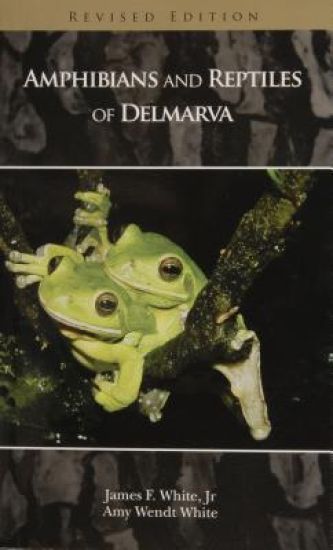
A look at the the 70+ highly diverse species of amphibians and reptiles of the Delmarva peninsula that divides north and south geographic sections of the Atlantic coast. Because of its geographic position and its geologic past, the Delmarva Peninsula is a transition zone between the northern and southern sections of the Atlantic Coast of North America. The north-south influences result in a high diversity of species of plants and animals, including amphibians and reptiles. Delmarva's amphibians and reptiles are overlooked by the vast majority of people living in the area. Many have never heard a northern spring peeper call or seen a salamander, even though a breeding chorus of peepers is common in the spring and salamanders are residents of most woodlands in Delmarva. Misconceptions also abound. For example, people sometimes think they have seen "cottonmouths" (water moccasins) on Delmarva, though this venomous species is not known to occur north of the mouth of the Chesapeake Bay. Other common fallacies are the belief that snakes are slimy or that handling a toad can cause warts. This updated field guide to amphibians and reptiles of Delmarva will be useful to everyone interested in these fascinating creatures—from the curious child who brings home a salamander, to students, experienced naturalists, and professionals in need of life history, behavioral, and distributional information on Delmarva's amphibians (salamanders and frogs) and reptiles (turtles, lizards, and snakes). Seventy-three species are included in this second edition—seventy known to occur on Delmarva and three that the authors believe either occur there or once did. Outstanding color plates aid in identifying the species.
Christian Worship in North America

Christian Worship in North America

James F White

Wipf Stock Publishers
2007
pokkari
In recent years scholars have paid increasing attention to the richness and diversity of North American contributions to Christian worship. This volume of articles by James F. White summarizes a major segment of liturgical history (1955-1995). Characteristic North American emphases, such as liturgy and justice, are highlighted along with other issues growing out of the worship context of the New World. James F. White (1932-2004), who was Professor Emeritus of Liturgical Studies at the University of Notre Dame, devoted his professional life to teaching liturgy and equipping others for this ministry. He was intensely involved in liturgical reform and authored sixteen other books on liturgy.
The Cambridge Movement

The Cambridge Movement

James F White

Wipf Stock Publishers
2004
pokkari
For over a hundred years, Anglican church buildings in every part of the world were dominated by a single idea of what churches should look like and how they should be arranged inside. Only since Vatican II has the dominance of this idea been finally overthrown. Thousands of churches still reflect the architectural dogmas of the Cambridge Camden Society. Millions of worshippers still imbibe the theology so effectively promoted by this group through its powerful influence on the arrangement of church interiors and the style of such buildings. And many of these architectural images of what is the nature of the Church itself have proved to be the most stubborn resisters of Vatican II reforms. The Cambridge Camden Society was so successful in changing the outward aspects of Anglican worship because it had specific ideas as to how churches should be arranged. The Society's infatuation with a certain period of gothic architecture and with the whole medieval 'cultus' brought about drastic changes in worship according to the 'Book of Common Prayer' without changing a single letter of the prayer book itself. The members of the Society led the way not only in the revival of medieval architecture but also of vestments and ceremonial. Though much of the Cambridge Camden theology reflects that of the Oxford Movement, Dr. White shows both parallels and contrasts between the aims of Oxford tractarians and Cambridge ecclesiologists. Architecture proved to be every bit as effective a form of propaganda as tracts, and a good deal more permanent. The public, at first hostile, eventually became receptive to the ideals of the Cambridge Movement. The measure of the Movement's success is seen in almost all Anglican (and many Protestant) churches built or remodelled between 1840 and the 1960s. This is a valuable contribution to nineteenth-century studies, especially to the visual history of the period.
Roman Catholic Worship

Roman Catholic Worship

James F. White; Nathan D. Mitchell

Liturgical Press
2004
pokkari
A great deal has happened in Roman Catholic worship since Vatican II promulgated the Constitution on the Sacred Liturgy on December 4, 1963. But the myth persists that very little happened in the four centuries between the end of the Council of Trent on December 4, 1563, and Vatican II. Roman Catholic Worship explores what occurred in those four hundred years before Vatican II and how the stage was set for all the changes that have come about since the council. It may be true that liturgical texts were frozen during those intervening centuries, but to assume that liturgical texts are the whole of liturgy is questionable. James White demonstrates that the worship life of Roman Catholicism was in constant transition during this entire period despite the intransigence of liturgical texts. Chapters are "The Legacy of the Council of Trent," “The Baroque Age,” “The Enlightenment,” “The Romantic Era,” “The Journey to the Second Vatican Council,” “The Legacy of the Second Vatican Council,” “The Journey Beyond the Second Vatican Council,” and “The Future of Roman Catholic Worship.” Includes glossary, bibliography, index of persons and index of subjects.
Protestant Worship and Church Architecture

Protestant Worship and Church Architecture

James F White

Wipf Stock Publishers
2003
pokkari
Each year a billion dollars is spent on church buildings in the United States. Yet there is no authoritative book available to guide building committees, ministers, and others responsible for new churches in the theological implications of their work. Dr. White explores the theological and historical considerations relevant to building for Protestant worship. Surprisingly, these are often ignored by building committees, usually with disastrous results. His approach is highly original, especially in his theological treatment of worship; yet his book is also a operative in the largest sense, in that it relates theology to practice. Professor White begins with a critical analysis of contemporary concepts of Protestant worship and then defines the liturgical factors in church design. Following this, there are four chapters giving an historical account of various experiments from the third century to the present. This section indicates the tremendous variety of possibilities open to the church builder, many of which have been ignored too long. A final chapter deals with emotive factors - all vitally relevant to the architect: choir, liturgical art, and style. The opportunity to design a new church building occurs only once or twice in each generation of church members. It is all the more important that it be done carefully since the building will continue to affect the life of the congregation for many years. Until fundamental questions as to what the Church is and what the Church does in worship are raised, a congregation is not prepared to build. This book will help churches find the answers. The 155-item bibliography should be of value to many since a recent extensive bibliography on Protestant church architecture does not exist. This book also contains 60 diagrams of experiments in plan garnered from nearly 2000 years of history.
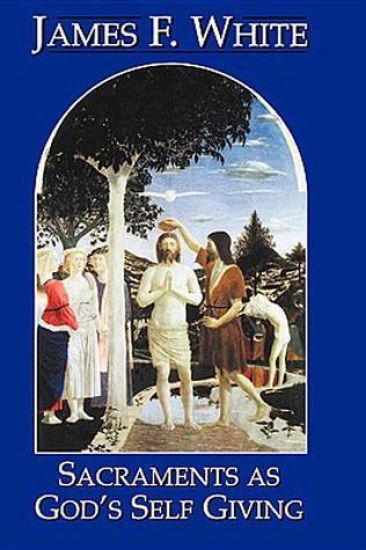
Sacraments as God's Self Giving

Sacraments as God's Self Giving

James F. White

Abingdon Press
2001
pokkari
A comprehensive look at the sacraments in today's mainline Protestant churches. This volume shows how the church can utilize the power of physical symbolism-- embodied in both the "outward and visible" and the "inward and spiritual"--to enrich worship.
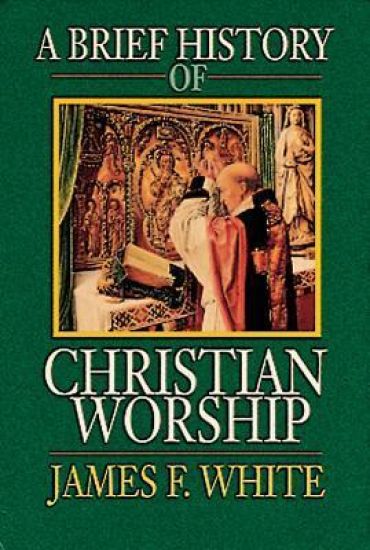
A Brief History of Christian Worship

A Brief History of Christian Worship

James F. White

Abingdon Press
1993
pokkari
Most histories of Christian worship are written as if nothing significant in liturgical history ever happened in North America, as if cultural diversities were insignificant in the development of worship, and as if most of what mattered were words the priest or minister addressed to God. This book is a revisionist work, attempting to give new direction to liturgical history by treating the experience of worship of the people in the pews as the primary liturgical document. It means liturgical history written facing the other way--that is, looking into the chancel rather than out of it. Relishing the liturgical diversity of recent centuries as firm evidence of Chritianity's ability to adapt to a wide variety of peoples and places, Professor White shows that this tendency has been apparent in Chrisitian worship since its inception in the New Testament churches. Instead of imposing one tradition's criteria on worship, he tries to give a balanced and comprehensive approach to the development of the dozen or more traditions surviving in the modern world.
Documents of Christian Worship

Documents of Christian Worship

James F. White

T. T.Clark Ltd
1993
nidottu
A resource for everyone engaged in studying and teaching the forms and meaning of Christian worship. Praise for Documents of Christian Worship:"A treasure trove of primary sources, from many Christian traditions, this book contributes to the study and renewal of worship by allowing readers to hear what Christians of the past said they expereinced in worship." --Ruth C. Dick, Professor of Worship, Garrett-Evangelical Theological Seminary." Documents of Christian Worship belongs in Christian libraries
Documents of Christian Worship

Documents of Christian Worship

James F. White

Westminster/John Knox Press,U.S.
1992
nidottu
Based on twenty years of teaching experience, James White presents this reference book as a resource for students and scholars who are engaged in studying and teaching the forms and meaning of Christian worship. White utilizes original documents and classical statements related to worship and examines historically the application of liturgical practice in parish life.
Protestant Worship

Protestant Worship

James F. White

Westminster/John Knox Press,U.S.
1989
nidottu

Halvin toimitettuna 56,40 €

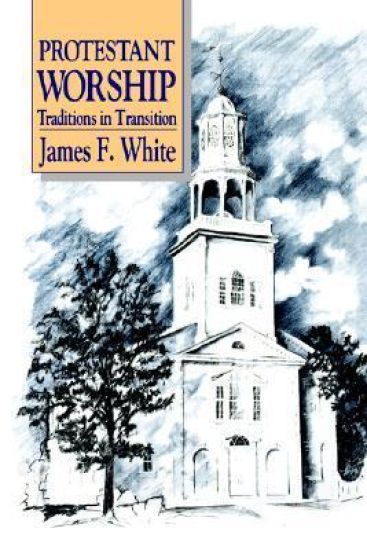
Drawing on years of teaching experience, James F. White provides a unique, comprehensive overview of Protestant worship by examining the origins, development, and present characteristics of various Protestant groups. This study of Protestant worship is an excellent resource for seminary professors and students, clergy, church historians, and laypersons.