Kirjojen hintavertailu – 12 859 819 kirjaa ja 27 kauppaa

Kirjailija

James Fenimore Cooper

Kirjat ja teokset yhdessä paikassa: 1 777 kirjaa, julkaisuja vuosilta 1826–2026, suosituimpiin kuuluu Oeuvres de J. F. Cooper. T. 13 Le Bourreau de Berne. Vertaile teosten hintoja ja tarkista saatavuus suomalaisista kirjakaupoista.

1 777 kirjaa

Kirjojen julkaisuvuodet: 1826–2026.

The Spy

The Spy

James Fenimore Cooper

Graphic Arts Books
2021
pokkari
As tension begins to grow in America during the revolution, Mr. Wharton, a British sympathizer, moves his family to his county estate named “The Locusts,” with the intention to avoid any political conflict. Located in Westchester County, New York, the area was considered a common ground for patriots and loyalists. However, action starts to stir in the neutral town when an enigmatic man shows up at Mr. Wharton’s home. Hoping for shelter from the severe storm looming over the area, Mr. Harper, a man who holds himself like a soldier, but dresses in plain clothes, asks Mr. Wharton if he could harbor himself at The Locusts. Mr. Wharton agrees, immediately attempting to root out Harper’s feelings about the revolution. Harper, however, stays unresponsive to his efforts. The mystery continues when Harper meets with a peddler named Harvey Birch. When a servant in Mr. Wharton’s home overhears part of their conversation, he immediately tells Mr. Wharton about what he perceived as suspicious behavior. As rumors spread about their meetings and political preferences, a theory that Birch is a spy for the British becomes popular. When a bounty is placed over Birch’s head, he must evade capture, attack, and espionage as he struggles to protect his secret. Written with beautiful simplicity, The Spy by James Fenimore Cooper was inspired by a real event during the American Revolution. Originally published in 1821, The Spy served as one of the first literary works to portray an American setting, instead of the traditional English practice to depict European settings. This innovation appealed to James Fenimore Cooper’s intention to eliminate the bias against Americans, and to foster a proud culture by depicting the American landscape with intricate detail. With the depiction of major revolutionary figures, the early environment of small-town America, and an examination of the revolution’s effect on culture, The Spy by James Fenimore Cooper is a complex and comprehensive narrative. This edition of James Fenimore Cooper’s The Spy has been redesigned to accommodate the modern reader. With a striking new cover, and printed in a stylish font, The Spy is an accessible and essential read for any American patriot.
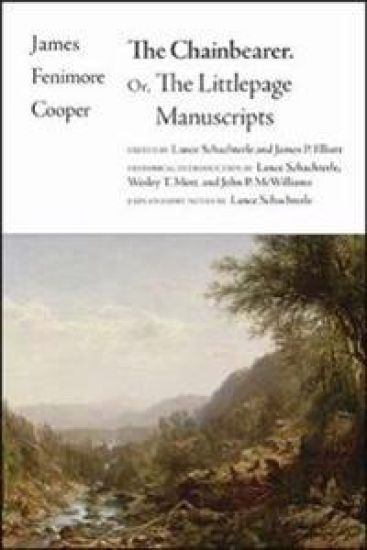
The Chainbearer

The Chainbearer

James Fenimore Cooper

State University of New York Press
2021
pokkari
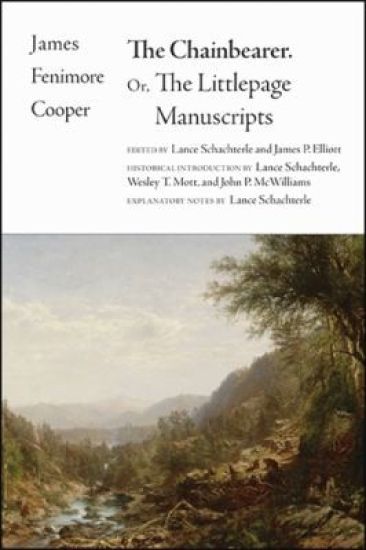
Cooper's The Chainbearer presents an exciting narrative that interrogates issues of what it means to own land. The novel examines the claims of ownership of wilderness land among Native Americans, New England squatters, and the old New York families with legal deeds. In 1845 and 1846, James Fenimore Cooper published The Littlepage Manuscripts, a trilogy reflecting on the anti-rent movement among small farmers leasing parcels in the Hudson Valley who had begun protesting against the land ownership of the old Dutch patroons. Tracing four generations of the landowners, the trilogy focused on fundamental issues of what land ownership meant under the US Constitution-which Cooper understood to guarantee absolute rights of property ownership-and also the legitimacy of such ownership of land taken from the Native Americans who did not hold such doctrines. Cooper told his British publisher that the guiding theme of The Chainbearer (1845), the second novel in the series, was "Revolution," which he presented by beginning the novel with recounting the heroic participation of his hero, Mordaunt Littlepage, in the American Revolution. In 1784, to manage his family's holdings, Mordaunt ventures into the wilds of upper New York, where settlers, many from New England, hoped the Revolution had dissolved their "feudal" commitments to the legal owners. There he encounters one of Cooper's archetypal demagogues, Jason Newcome, who manipulates the settlers to his advantage, as well as an old family friend, Susquesus, the "upright Onondago," who challenges Mordaunt to justify what it means to claim private ownership of land his people held in common. The plot culminates with characteristic flee-and-capture excitement when a lawless squatter, Aaron "Thousandacres," imprisons the hero, who is ultimately freed through the agency of his faithful Dutch surveyor, Andries Coejemans, the "Chainbearer," and his beautiful niece Ursula, whom Mordant ultimately marries-despite her lower-class heritage. The editors have prepared this scholarly edition from the extant manuscript at the American Antiquarian Society. They provide detailed accounts of the genesis of the novel and of their editorial procedures. This edition also contains explanatory notes for the historical references, as well as an essay on the history of the anti-rent movement by John P. McWilliams. The Writings of James Fenimore Cooper The distinguished Cooper scholar James Franklin Beard (1919–1989) began organizing the Writings of James Fenimore Cooper in the late 1960s, as his work on publishing the monumental Letters and Journals of James Fenimore Cooper came to fulfillment. Beard's intention was to provide readers with sound scholarly editions of Cooper's major works, based wherever possible on authorial manuscripts. To date, the Writings of James Fenimore Cooper has made available texts of many of Cooper's best-known novels, as well as some of his most important works of political and social commentary.
Classic Starts(r): The Last of the Mohicans Volume 50
A fascinating adventure story, grounded in American history. As the French and Indian war rages, the two daughters of a British officer prepare to return home. But when, Cora, Alice, and the soldiers who guard them are betrayed by their Native American scout, their safety depends on wily forest tracker Hawkeye and his friends Chingachkook and Uncas--the last of the Mohicans.
The Last of the Mohicans

The Last of the Mohicans

James Fenimore Cooper

Les Prairies Numeriques
2020
pokkari
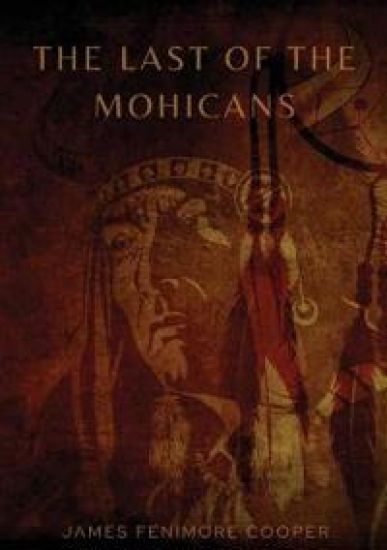
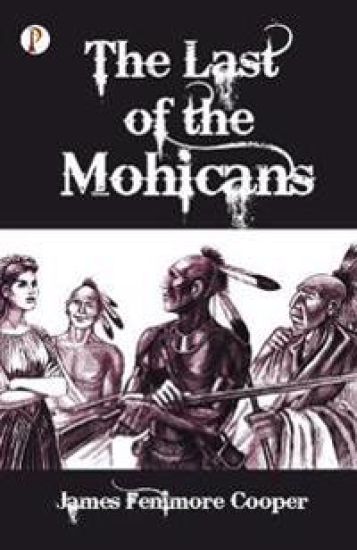
The Last of the Mohicans by James Fenimore CooperCora and Alice Munro, daughters of Lieutenant Colonel Munro, are traveling with Major Duncan Heyward from Fort Edward to Fort William Henry, where Munro is in command, and acquire another companion in David Gamut, a naive singing teacher. They are guided through the forest by a native named Magua, who leads them through a shortcut unaccompanied by the British militia. Heyward is dissatisfied with Magua's shortcut, and the party roam unguided and finally join Natty Bumppo (known as Hawk-eye), a scout for the British, and his two Mohican friends, Chingachgook and his son Uncas. Heyward becomes suspicious of Magua, and Hawk-eye and the Mohicans agree with his suspicion, that Magua is a Huron scout secretly allied with the French. Upon discovery as such, Magua escapes, and in the (correct) belief that Magua will return with Huron reinforcements, Hawk-eye and the Mohicans lead their new companions to a hidden cave on an island in a river. They are attacked there by the Hurons, and when ammunition is exhausted, Hawk-eye and the Mohicans escape, with a promise to return for their companions. Magua and the Hurons capture Heyward, Gamut, and the Munro sisters, and Magua admits that he is seeking revenge against Cora's father Colonel Munro for turning him into an alcoholic with whiskey (causing him to be initially cast out of the Hurons) and then whipping him at a post for drunken behavior. He then offers to spare the party if Cora becomes his wife, but she refuses. Upon a second refusal, he sentences the prisoners to death. Hawk-eye and the Mohicans rescue all four, and lead them to a dilapidated building that was involved with a battle between the Indians and the British some years ago. They are nearly attacked again, but the Hurons leave the area, rather than disturb the graves of their own fellow-countrymen. The next day, Hawk-eye leads the party to Fort Henry, past a siege by the French army. The French general, Montcalm, invites Munro to a parley, and shows him General Webb's letter, in which the British general has refused reinforcements. At this, Munro agrees to Montcalm's terms that the British soldiers, together with their wounded, women, and children, must leave the fort and withdraw from the war for eighteen months. Outside the fort, the column of British prisoners is attacked by 2000 Huron warriors in the ensuing massacre, Magua kidnaps Cora and Alice, and he leads them toward the Huron village. David Gamut follows them. After the massacre, Hawk-eye, the Mohicans, Heyward, and Colonel Munro head into the ruins of the fort to plan their next move. The next morning they set out to follow Magua, and cross a lake to intercept his trail. They encounter a band of Hurons by the lakeshore who spot the travelers. A canoe chase ensues, in which the rescuers reach land before the Hurons can kill them, and eventually follow Magua to the Huron village. Here, they find Gamut (earlier spared by the Hurons as a harmless madman), who says that Alice is held in this village, and Cora in one belonging to the Lenape (Delaware). Disguised as a French medicine man, Heyward enters the Huron village with Gamut, to rescue Alice Hawk-eye and Uncas set out to rescue Cora, and Munro and Chingachgook remain in safety. Uncas is taken prisoner by the Hurons, and left to starve when he withstands torture, and Heyward fails to find Alice. A Huron warrior asks Heyward to heal his lunatic wife, and both are stalked by Hawk-eye in the guise of a bear. They enter a cave where the madwoman is kept, and the warrior leaves. Soon after revelation of his identity to Heyward, Hawk-eye accompanies him, and they find Alice....
The Last of the Mohicans

The Last of the Mohicans

James Fenimore Cooper

Graphic Arts Books
2020
pokkari
“A rousing frontier saga.”-The Washington Post “(Cooper’s) sympathy is large, and his humor is as genuine--and as perfectly unaffected--as his art.”-Joseph Conrad The Last of the Mohicans (1826) is the most popular of James Fenimore Cooper’s Leatherstocking Tales. The continuing adventures of the peerless frontiersman Hawkeye, also known as Natty Bumppo among other monikers, is an unforgettable saga of the frontier life of early America. Set during the French and Indian Wars of mid-eighteenth century, this hair-raising historical novel opens as the French army is attacking Fort William Henry, a British fort in Western New York commanded by the withdrawn Colonel Munro. In the forest between Fort William Henry and another distant British outpost, Munro’s daughters Alice and Cora, are escorted through the dangerous terrain by Major Heyward and a Huron Indian named Magua. When the group crosses their path with the white frontiersman Natty Bumppo and his Indian companions, Heyward is warned that they are being betrayed by Magua, and the group is not being led to Fort William Henry. Magua runs to the woods, and the group is lead to safety by Natty and the two remaining members of the Mohican tribe, Chingachgok and his son Uncas. Next morning, the group is attacked by a gang of the Huron tribe, and all are captured with the exception of Natty Bumppo and the mohicans. In the ensuing events of this extraordinary novel, the conflicts of battle, love, and race are unfolded against a thrilling adventure story. This classic of American literature has been adapted into numerous films, including the 1992 version starring Daniel Day-Lewis. With an eye-catching new cover, and professionally typeset manuscript, this edition of The Last of the Mohicans is both modern and readable.
The Last of the Mohicans

The Last of the Mohicans

James Fenimore Cooper

Graphic Arts Books
2020
sidottu

Halvin toimitettuna 30,10 €

“A rousing frontier saga.”-The Washington Post “(Cooper’s) sympathy is large, and his humor is as genuine--and as perfectly unaffected--as his art.”-Joseph Conrad The Last of the Mohicans (1826) is the most popular of James Fenimore Cooper’s Leatherstocking Tales. The continuing adventures of the peerless frontiersman Hawkeye, also known as Natty Bumppo among other monikers, is an unforgettable saga of the frontier life of early America. Set during the French and Indian Wars of mid-eighteenth century, this hair-raising historical novel opens as the French army is attacking Fort William Henry, a British fort in Western New York commanded by the withdrawn Colonel Munro. In the forest between Fort William Henry and another distant British outpost, Munro’s daughters Alice and Cora, are escorted through the dangerous terrain by Major Heyward and a Huron Indian named Magua. When the group crosses their path with the white frontiersman Natty Bumppo and his Indian companions, Heyward is warned that they are being betrayed by Magua, and the group is not being led to Fort William Henry. Magua runs to the woods, and the group is lead to safety by Natty and the two remaining members of the Mohican tribe, Chingachgok and his son Uncas. Next morning, the group is attacked by a gang of the Huron tribe, and all are captured with the exception of Natty Bumppo and the mohicans. In the ensuing events of this extraordinary novel, the conflicts of battle, love, and race are unfolded against a thrilling adventure story. This classic of American literature has been adapted into numerous films, including the 1992 version starring Daniel Day-Lewis. With an eye-catching new cover, and professionally typeset manuscript, this edition of The Last of the Mohicans is both modern and readable.
The Chainbearer

The Chainbearer

James Fenimore Cooper

State University of New York Press
2020
sidottu
Cooper's The Chainbearer presents an exciting narrative that interrogates issues of what it means to own land. The novel examines the claims of ownership of wilderness land among Native Americans, New England squatters, and the old New York families with legal deeds. In 1845 and 1846, James Fenimore Cooper published The Littlepage Manuscripts, a trilogy reflecting on the anti-rent movement among small farmers leasing parcels in the Hudson Valley who had begun protesting against the land ownership of the old Dutch patroons. Tracing four generations of the landowners, the trilogy focused on fundamental issues of what land ownership meant under the US Constitution-which Cooper understood to guarantee absolute rights of property ownership-and also the legitimacy of such ownership of land taken from the Native Americans who did not hold such doctrines. Cooper told his British publisher that the guiding theme of The Chainbearer (1845), the second novel in the series, was "Revolution," which he presented by beginning the novel with recounting the heroic participation of his hero, Mordaunt Littlepage, in the American Revolution. In 1784, to manage his family's holdings, Mordaunt ventures into the wilds of upper New York, where settlers, many from New England, hoped the Revolution had dissolved their "feudal" commitments to the legal owners. There he encounters one of Cooper's archetypal demagogues, Jason Newcome, who manipulates the settlers to his advantage, as well as an old family friend, Susquesus, the "upright Onondago," who challenges Mordaunt to justify what it means to claim private ownership of land his people held in common. The plot culminates with characteristic flee-and-capture excitement when a lawless squatter, Aaron "Thousandacres," imprisons the hero, who is ultimately freed through the agency of his faithful Dutch surveyor, Andries Coejemans, the "Chainbearer," and his beautiful niece Ursula, whom Mordant ultimately marries-despite her lower-class heritage. The editors have prepared this scholarly edition from the extant manuscript at the American Antiquarian Society. They provide detailed accounts of the genesis of the novel and of their editorial procedures. This edition also contains explanatory notes for the historical references, as well as an essay on the history of the anti-rent movement by John P. McWilliams. The Writings of James Fenimore Cooper The distinguished Cooper scholar James Franklin Beard (1919–1989) began organizing the Writings of James Fenimore Cooper in the late 1960s, as his work on publishing the monumental Letters and Journals of James Fenimore Cooper came to fulfillment. Beard's intention was to provide readers with sound scholarly editions of Cooper's major works, based wherever possible on authorial manuscripts. To date, the Writings of James Fenimore Cooper has made available texts of many of Cooper's best-known novels, as well as some of his most important works of political and social commentary.
The Last of the Mohicans

The Last of the Mohicans

James Fenimore Cooper

Pharos Books
2020
nidottu
"The gifts of our colors may be different, but God has so placed us as to journey in the same path." ― James Fenimore Cooper, The Last of the Mohicans The Last of the Mohicans (1826) by James Fenimore Cooper is a historical novel set during the war between the French and Native Indians in America. In the forests of upper New York State, heart-wrenching clashes between the two parties represent the difficult life on the frontier. The betrayal of the defector Magua, kidnapping of the fine-looking Munro sisters by hostile savages, and the ambush of innocent settlers are the gripping events that lead to the ultimate tragic conflict between the rival war parties. Centered around the brave woodsman Natty Bumppo and his Mohican friends Chingachgook and Uncas caught in the bloody battles of the war, the novel portrays a stirring depiction of the vanishing of an ethnic group and its way of life in the great American forests.
The Spy

The Spy

James Fenimore Cooper

State University of New York Press
2020
pokkari
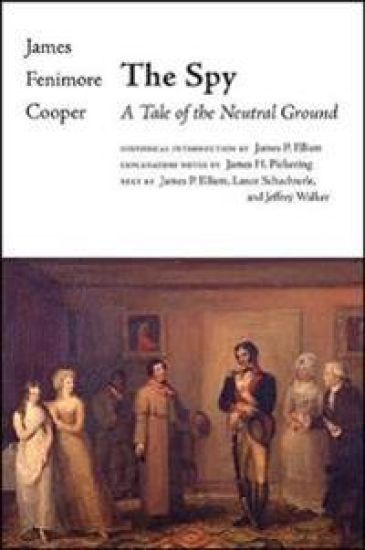
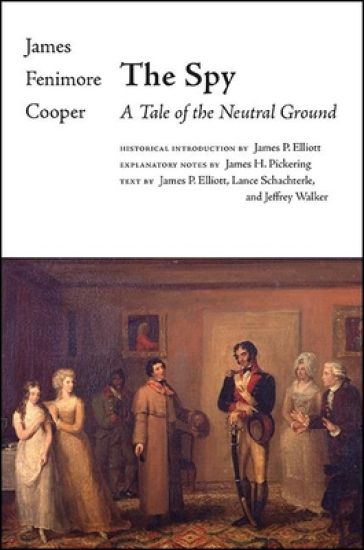
An exciting Revolutionary War tale of double agents and counterespionage in New York State in 1780. A year after his imitative first novel Precaution (1820) enjoyed only modest success, James Fenimore Cooper penned The Spy: A Tale of the Neutral Ground, a Revolutionary War narrative initiating the American historical romance, a novel and a genre that quickly put to rest the British critic Sydney Smith's 1820 quip, "In the four corners of the globe, who reads an American novel?" Beginning with The Spy, everyone did. The novel excited readers with the perilous adventures of the spy (Harvey Birch, the Yankee peddler) and his contact Mr. Harper (George Washington appearing incognito), both surfacing repeatedly in various disguises and engaged in counterespionage (very clearly a parallel to the John Andre and Benedict Arnold stories) with their guerilla nemeses, the loyalist Cow-Boys and renegade Skinners. The Spy revealed the clash of loyalties within families between public and private duty to country and to self, and served as a microcosm of the new American world, staged in the "neutral ground" between opposing forces in Westchester, New York. William Gilmore Simms, Cooper's admirer and imitator, declared "The publication of The Spy … was an event," while Boston's North American Review agreed, "the American Revolution is an admirable basis, on which to found fictions of the highest order of romantic interest." This fresh tale generated good American press for the young Cooper, and so set the stage for Cooper's career-long contributions to the development of the American novel. The editors provide a historical introduction identifying Cooper's sources, as well as detailed explanatory notes to enable readers fully to appreciate the geographical and historical settings in the novel. This scholarly edition, the eighteenth in "The Writings of James Fenimore Cooper," presents an accurate text drawing upon eight texts, from the first edition (with two editorially revised reprintings soon following to satisfy public demand) through the heavily revised Bentley Standard Novels edition (1831) and the more lightly revised Putnam Author's edition (1849). The editors provide a full scholarly apparatus discussing their editorial choices, and the edition has been approved by scholarly peers in the Committee for Scholarly Editions of the Modern Language Association.
The Spy

The Spy

James Fenimore Cooper

State University of New York Press
2020
sidottu
An exciting Revolutionary War tale of double agents and counterespionage in New York State in 1780. A year after his imitative first novel Precaution (1820) enjoyed only modest success, James Fenimore Cooper penned The Spy: A Tale of the Neutral Ground, a Revolutionary War narrative initiating the American historical romance, a novel and a genre that quickly put to rest the British critic Sydney Smith's 1820 quip, "In the four corners of the globe, who reads an American novel?" Beginning with The Spy, everyone did. The novel excited readers with the perilous adventures of the spy (Harvey Birch, the Yankee peddler) and his contact Mr. Harper (George Washington appearing incognito), both surfacing repeatedly in various disguises and engaged in counterespionage (very clearly a parallel to the John Andre and Benedict Arnold stories) with their guerilla nemeses, the loyalist Cow-Boys and renegade Skinners. The Spy revealed the clash of loyalties within families between public and private duty to country and to self, and served as a microcosm of the new American world, staged in the "neutral ground" between opposing forces in Westchester, New York. William Gilmore Simms, Cooper's admirer and imitator, declared "The publication of The Spy … was an event," while Boston's North American Review agreed, "the American Revolution is an admirable basis, on which to found fictions of the highest order of romantic interest." This fresh tale generated good American press for the young Cooper, and so set the stage for Cooper's career-long contributions to the development of the American novel. The editors provide a historical introduction identifying Cooper's sources, as well as detailed explanatory notes to enable readers fully to appreciate the geographical and historical settings in the novel. This scholarly edition, the eighteenth in "The Writings of James Fenimore Cooper," presents an accurate text drawing upon eight texts, from the first edition (with two editorially revised reprintings soon following to satisfy public demand) through the heavily revised Bentley Standard Novels edition (1831) and the more lightly revised Putnam Author's edition (1849). The editors provide a full scholarly apparatus discussing their editorial choices, and the edition has been approved by scholarly peers in the Committee for Scholarly Editions of the Modern Language Association.
The Wing-and-Wing, Or Le Feu-Follet

The Wing-and-Wing, Or Le Feu-Follet

James Fenimore Cooper

State University of New York Press
2020
pokkari
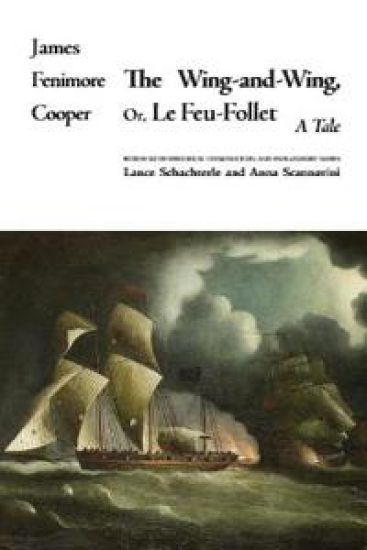
A thrilling novel of seafaring adventure, romance, and Napoleonic history, from the author of The Leatherstocking Tales. In 1842, James Fenimore Cooper returned to transatlantic themes with a thrilling historical novel set in the Mediterranean Sea, weaving together a characteristically exciting narrative of naval pursuit with a story of lovers separated by religious differences. As the novel unfolds, warships under the command of the recently ennobled Lord Nelson are thwarted in their attempt to capture the French privateer Raoul Yvard and his graceful lugger Le Feu-Follet, while Yvard himself is frustrated because the Italian girl he loves, loyal to the Church, refuses to marry a French deist. Cooper also worked into his story one of his most colorful Yankee characters, Ithuel Bolt, an impressed seaman who combines courage and righteousness with bitterness and greedy self-interest. What sets The Wing-And-Wing apart from Cooper's other maritime adventures is the setting: most of the action occurs in the genial Italian waters of the Bay of Naples and Gulf of Salerno, locations Cooper had visited in 1829–30 and later recalled as "the only region of the earth that I truly love." He combined the struggle for naval dominance just beginning between France and England with historical events occurring in the Kingdom of Naples, especially the role reluctantly played by Nelson, pressured by his lover Lady Hamilton, in the execution of the Neapolitan hero Admiral Caraccioli. The editors provide a historical introduction identifying Cooper's Italian sources as well as detailed explanatory notes to enable readers fully to appreciate the geographical and historical settings in the novel. This scholarly edition, the twenty-seventh in the Writings of James Fenimore Cooper, presents an accurate text drawing upon both the first edition and a lightly revised authorial text from 1850. The editors provide a full scholarly apparatus discussing their editorial choices, and the edition has been approved by scholarly peers in the Committee for Scholarly Editions of the Modern Language Association.