

Kirjailija
James Fenimore Cooper
Kirjat ja teokset yhdessä paikassa: 1 777 kirjaa, julkaisuja vuosilta 1826–2026, suosituimpiin kuuluu Oeuvres de J. F. Cooper. T. 13 Le Bourreau de Berne. Vertaile teosten hintoja ja tarkista saatavuus suomalaisista kirjakaupoista.
1 777 kirjaa
Kirjojen julkaisuvuodet: 1826–2026.


The Last of the Mohicans
James Fenimore Cooper
Createspace Independent Publishing Platform
2017
nidottu
It is generally believed that the Aborigines of the American continent have an Asiatic origin. There are many physical as well as moral facts which corroborate this opinion, and some few that would seem to weigh against it. The color of the Indian, the writer believes, is peculiar to himself, and while his cheek-bones have a very striking indication of a Tartar origin, his eyes have not. Climate may have had great influence on the former, but it is difficult to see how it can have produced the substantial difference which exists in the latter. The imagery of the Indian, both in his poetry and in his oratory, is oriental; chastened, and perhaps improved, by the limited range of his practical knowledge. He draws his metaphors from the clouds, the seasons, the birds, the beasts, and the vegetable world. In this, perhaps, he does no more than any other energetic and imaginative race would do, being compelled to set bounds to fancy by experience; but the North American Indian clothes his ideas in a dress which is different from that of the African, and is oriental in itself.



James Fenimore Cooper, best novels
James Fenimore Cooper
Createspace Independent Publishing Platform
2017
nidottu



When in July, 1826, Cooper landed in England with his wife and family, he carried his Indian memories and associations with him. They crossed to France, and ascended the Seine by steamboat, and then settled for a time in Paris. Of their quarters there in the Rue St. Maur, Sarah Fenimore Cooper writes: "It was thoroughly French in character. There was a short, narrow, gloomy lane or street, shut in between lofty dwelling houses, the lane often dark, always filthy, without sidewalks, a gutter running through the centre, over which, suspended from a rope, hung a dim oil lamp or two- such was the Rue St. Maur, in the Faubourg St. Germain. It was a gloomy approach certainly. But a tall porte coch re opened, and suddenly the whole scene changed. Within those high walls, so forbidding in aspect, there lay charming gardens, gay with parterres of flowers, and shaded by noble trees, not only those belonging to the house itself, but those of other adjoining dwellings of the same character- one looked over park-like grounds covering some acres. The hotel itself, standing on the street, was old, and built on a grand scale; it had been the home of a French ducal family in the time of Louis XIV.

The Pioneers James Fenimore Cooper
James Fenimore Cooper
Createspace Independent Publishing Platform
2017
nidottu
The Pioneers: The Sources of the Susquehanna; a Descriptive Tale is a historical novel, the first published of the Leatherstocking Tales, a series of five novels by American writer James Fenimore Cooper. While The Pioneers was published in 1823, before any of the other Leatherstocking Tales, the period of time it covers makes it the fourth chronologically. The story takes place on the rapidly advancing frontier of New York State and features a middle-aged Leatherstocking (Natty Bumppo), Judge Marmaduke Temple of Templeton, whose life parallels that of the author's father Judge William Cooper, and Elizabeth Temple (the author's sister Susan Cooper), of Cooperstown. The story begins with an argument between the Judge and the Leatherstocking over who killed a buck, and as Cooper reviews many of the changes to New York's Lake Otsego, questions of environmental stewardship, conservation, and use prevail. The plot develops as the Leatherstocking and Chingachgook begin to compete with the Temples for the loyalties of a mysterious young visitor, "Oliver Edwards," the "young hunter," who eventually marries Elizabeth. Chingachgook dies, exemplifying the vexed figure of the "dying Indian," and Natty vanishes into the sunset. For all its strange twists and turns, 'The Pioneers' may be considered one of the first ecological novels in the United States.
The Last of the Mohicans
James Fenimore Cooper
Createspace Independent Publishing Platform
2017
nidottu
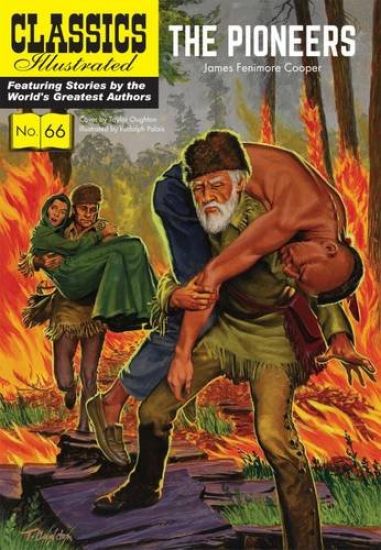
The first of James Fenimore Cooper's "Leatherstocking Tales," "The Pioneers" tells the story of the elderly Natty Bumppo and his ongoing friendship with the Mohican, Chingachgook. Classics Illustrated tells this wonderful tale in colourful comic strip form, offering an excellent introduction for younger readers. This edition also includes a biography of James Fenimore Cooper, theme discussions and study questions, which can be used both in the classroom and at home to further engage the reader in the story. The Classics Illustrated comic book series began in 1941 with its first issue, Alexandre Dumas s "The Three Musketeers," and has since included over 200 classic tales released around the world. This new CCS Books edition is specifically tailored to engage and educate young readers with some of the greatest works ever written, while still thrilling older readers who have loving memories of this series of old."

The pathfinder, or, The inland sea. By: James Fenimore Cooper: Historical novel (Complete in one volume)
James Fenimore Cooper
Createspace Independent Publishing Platform
2017
nidottu
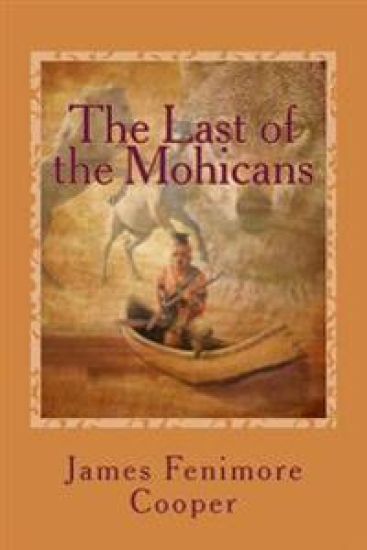
The Last of the Mohicans
James Fenimore Cooper
Createspace Independent Publishing Platform
2017
nidottu
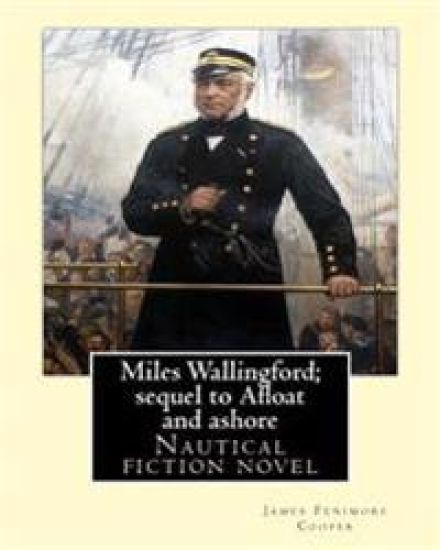
Miles Wallingford; sequel to Afloat and ashore. By; James Fenimore Cooper: Sea tales
James Fenimore Cooper
Createspace Independent Publishing Platform
2017
nidottu
Afloat and Ashore is a nautical fiction novel by James Fenimore Cooper first published in 1844. Set in 1796-1804, the novel follows the maritime adventures of Miles Wallingford Jr., the son of wealthy New York landowners who chooses to go to sea after the death of his parents. The novel ends abruptly part way through, and is followed by what critic Harold D. Langely called a "necessary" sequel Miles Wallingford, which resolves many thematic and plot elements. The novel is partially autobiographical, in part by Cooper's own experiences as a sailor, and is his first full-length novel to fully employ a first-person narrative. In her critical introduction to the novel published at the end of the 19th century, Susan Fenimoore Cooper described the novel as autobiographical fiction, drawing on Coopers experiences growing up in New York, and his experiences with the sea. 3] Critic Thomas Philbrock attributes Cooper's turn to autobiographical experience as inspiration, to a five-month visit by an old shipmate, Ned Myers, which led Cooper to create the biography Ned Myers; or, A Life before the Mast (1843) 2] However, despite Philbrick claiming that the novel is the most autobiographical of Cooper's novels, he notes that "those autobiographical materials in fact make up only a small proportion of the total fabric". 2] Susan Fenimoore Cooper points out Cooper's "truthfully sketched, and tinged with the peculiar coloring of the period" depiction of nautical life, drawn from extensive research with sailors living during the period in which its set. 3] Similary, she notes the contrast between Cooper's earlier nautical fiction like The Pilot, which focuses on the experience of one ship and crew, noting the diversity of vessels and maritime communities depicted. Critic Thomas Philbrick, also notes the importance of historical realism in the novel. He describes the novel being much more realistic largely because of Coopers work on his History of the Navy, as compared to the earlier nautical fiction, like The Pilot (1824), The Red Rover (1827), and The Water-Witch (1830), which treat history and ocean with much more romantic and metaphorical, akin to other Romantic treatments of the sea. Similarly, Philbrick describes Afloat and Ashore as a return to Cooper's interest in the American context, whereas many of his novels in the 10 years before were drawn from European history or the European nautical tradition.... James Fenimore Cooper (September 15, 1789 - September 15, 1851) was a prolific and popular American writer of the early 19th century. His historical romances of frontier and Indian life in the early American days created a unique form of American literature. He lived most of his life in Cooperstown, New York, which was founded by his father William on property that he owned. Cooper was a lifelong member of the Episcopal Church and, in his later years, contributed generously to it. He attended Yale University for three years, where he was a member of the Linonian Society, but was expelled for misbehavior. Before embarking on his career as a writer, he served in the U. S. Navy as a Midshipman, which greatly influenced many of his novels ands other writings. The novel that launched his career was The Spy, a tale about counterespionage set during the Revolutionary War and published in 1821. He also wrote numerous sea stories, and his best-known works are five historical novels of the frontier period known as the Leatherstocking Tales. Among naval historians, Cooper's works on the early U. S. Navy have been well received, but they were sometimes criticized by his contemporaries. Among his most famous works is the Romantic novel The Last of the Mohicans, often regarded as his masterpiece.

The Prairie James Fenimore Cooper
James Fenimore Cooper
Createspace Independent Publishing Platform
2017
nidottu
The Prairie: A Tale (1827) is a historical novel by James Fenimore Cooper, the third novel written by him featuring Natty Bumppo, his fictitious frontier hero, who is simply known as "the trapper" in it. Chronologically The Prairie is the fifth and final installment of the Leatherstocking Tales. It depicts Natty in the final year of his life still proving helpful to people in distress on the American frontier. Continuity with The Last of the Mohicans is indicated by the appearance of the grandson of Duncan and Alice Heyward of The Last of the Mohicans and the noble Pawnee chief Hard Heart, whose name is English for the French nickname for the Delaware, le Coeur-dur. Natty is drawn to Hard Heart as a noble warrior in the likeness of his dear friend Uncas, "the last of the Mohicans."

The Deerslayer James Fenimore Cooper
James Fenimore Cooper
Createspace Independent Publishing Platform
2017
nidottu
The Deerslayer, or The First Warpath (1841) was the last of James Fenimore Cooper's Leatherstocking tales to be written. Its 1740-1745 time period makes it the first installment chronologically and in the lifetime of the hero of the Leatherstocking tales, Natty Bumppo. The novel's setting on Otsego Lake in central, upstate New York, is the same as that of The Pioneers, the first of the Leatherstocking tales to be published (1823). The Deerslayer is considered to be the prequel to the rest of the Leatherstocking tales. Fenimore Cooper begins his work by relating the astonishing advance of civilization in New York State, which is the setting of four of his five Leatherstocking tales.

The Heidenmauer: or, The Benedictines: a legend of the Rhine. By: James Fenimore Cooper: Novel
James Fenimore Cooper
Createspace Independent Publishing Platform
2017
nidottu