Kirjojen hintavertailu – 12 876 677 kirjaa ja 26 kauppaa

Kirjailija

James Fowkes

Kirjat ja teokset yhdessä paikassa: 4 kirjaa, julkaisuja vuosilta 2015–2018, suosituimpiin kuuluu Building the Constitution. Vertaile teosten hintoja ja tarkista saatavuus suomalaisista kirjakaupoista.

4 kirjaa

Kirjojen julkaisuvuodet: 2015–2018.

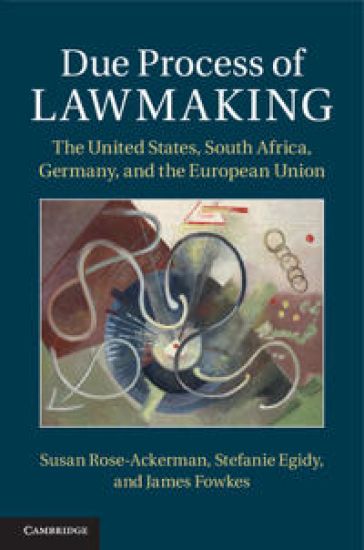
Due Process of Lawmaking

Due Process of Lawmaking

Susan Rose-Ackerman; Stefanie Egidy; James Fowkes

Cambridge University Press
2018
pokkari
With nuanced perspective and detailed case studies, Due Process of Lawmaking explores the law of lawmaking in the United States, South Africa, Germany, and the European Union. This comparative work deals broadly with public policymaking in the legislative and executive branches. It frames the inquiry through three principles of legitimacy: democracy, rights, and competence. Drawing on the insights of positive political economy, the authors explicate the ways in which courts uphold these principles in the different systems. Judicial review in the American presidential system suggests lessons for the parliamentary systems in Germany and South Africa, while the experience of parliamentary government yields potential insights into the reform of the American law of lawmaking. Taken together, the national experiences shed light on the special case of the EU. In dialogue with each other, the case studies demonstrate the interplay between constitutional principles and political imperatives under a range of different conditions.
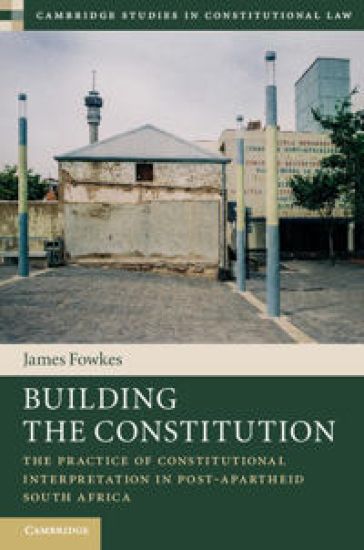
Building the Constitution

Building the Constitution

James Fowkes

Cambridge University Press
2018
pokkari
This revisionary perspective on South Africa's celebrated Constitutional Court draws on historical and empirical sources alongside conventional legal analysis to show how support from the African National Congress (ANC) government and other political actors has underpinned the Court's landmark cases, which are often applauded too narrowly as merely judicial achievements. Standard accounts see the Court as overseer of a negotiated constitutional compromise and as the looked-to guardian of that constitution against the rising threat of the ANC. However, in reality South African successes have been built on broader and more admirable constitutional politics to a degree no previous account has described or acknowledged. The Court has responded to this context with a substantially consistent but widely misunderstood pattern of deference and intervention. Although a work in progress, this institutional self-understanding represents a powerful effort by an emerging court, as one constitutionally serious actor among others, to build a constitution.
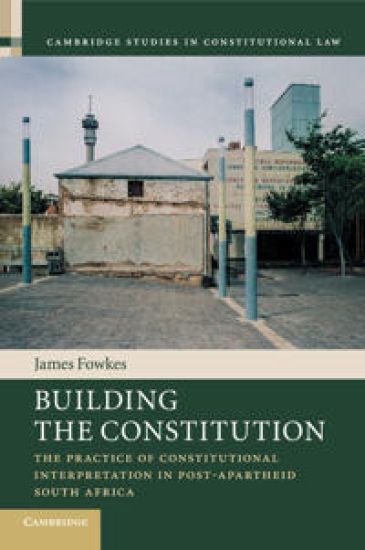
Building the Constitution

Building the Constitution

James Fowkes

Cambridge University Press
2016
sidottu
This revisionary perspective on South Africa's celebrated Constitutional Court draws on historical and empirical sources alongside conventional legal analysis to show how support from the African National Congress (ANC) government and other political actors has underpinned the Court's landmark cases, which are often applauded too narrowly as merely judicial achievements. Standard accounts see the Court as overseer of a negotiated constitutional compromise and as the looked-to guardian of that constitution against the rising threat of the ANC. However, in reality South African successes have been built on broader and more admirable constitutional politics to a degree no previous account has described or acknowledged. The Court has responded to this context with a substantially consistent but widely misunderstood pattern of deference and intervention. Although a work in progress, this institutional self-understanding represents a powerful effort by an emerging court, as one constitutionally serious actor among others, to build a constitution.
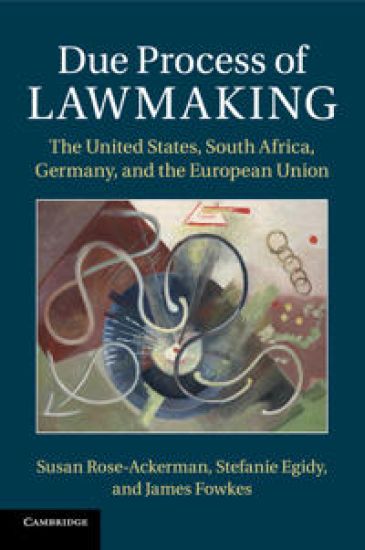
Due Process of Lawmaking

Due Process of Lawmaking

Susan Rose-Ackerman; Stefanie Egidy; James Fowkes

Cambridge University Press
2015
sidottu
With nuanced perspective and detailed case studies, Due Process of Lawmaking explores the law of lawmaking in the United States, South Africa, Germany, and the European Union. This comparative work deals broadly with public policymaking in the legislative and executive branches. It frames the inquiry through three principles of legitimacy: democracy, rights, and competence. Drawing on the insights of positive political economy, the authors explicate the ways in which courts uphold these principles in the different systems. Judicial review in the American presidential system suggests lessons for the parliamentary systems in Germany and South Africa, while the experience of parliamentary government yields potential insights into the reform of the American law of lawmaking. Taken together, the national experiences shed light on the special case of the EU. In dialogue with each other, the case studies demonstrate the interplay between constitutional principles and political imperatives under a range of different conditions.