Kirjojen hintavertailu – 12 859 828 kirjaa ja 27 kauppaa

Kirjailija

James G. Crossley

Kirjat ja teokset yhdessä paikassa: 14 kirjaa, julkaisuja vuosilta 2004–2022, suosituimpiin kuuluu Jesus in an Age of Neoliberalism. Vertaile teosten hintoja ja tarkista saatavuus suomalaisista kirjakaupoista.

Nimi esiintyy myös muodoissa: James G Crossley

14 kirjaa

Kirjojen julkaisuvuodet: 2004–2022.

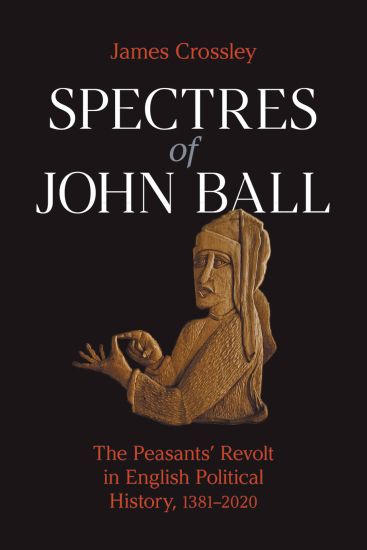
Spectres of John Ball

Spectres of John Ball

James G Crossley

EQUINOX PUBLISHING LTD
2022
pokkari
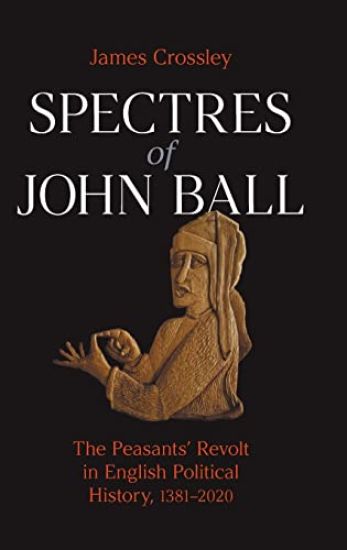
For centuries, the priest John Ball was one of the most infamous or famous figures in the history of English rebels, best known for his saying 'When Adam delved and Eve Span, Who was then the gentleman'. But over the past hundred years his memory has faded dramatically. Along with Wat Tyler, Ball was one of the leaders of the Peasants' Revolt of 1381, a historically remarkable event in that leading figures of the realm were beheaded by the rebels. For a few days in June 1381, the rebels dominated London but soon met their demise, with Ball executed. Ball provided the theological justification for the uprising which he saw in apocalyptic terms. After the revolt, he was soon vilified and received an overwhelmingly hostile press for 400 years as an archetypal enemy of the state and a religious zealot. His reputation was rescued from the end of the eighteenth century onward and for over one hundred years he rivalled Robin Hood and Wat Tyler as a great English folk (and even abolitionist) hero. But his 640-year reception involves much more, of course, and is tied up with the story of what England is or could be. Overall, the book explains how we get from an apocalyptic priest who promoted a theocracy favouring the lower orders and the decapitation of the leading church and secular authorities to someone who promoted democracy and vague notions about love and tolerance. The book also explains why he has gone out of fashion and whether he can make another comeback.
Spectres of John Ball

Spectres of John Ball

James G Crossley

EQUINOX PUBLISHING LTD
2022
sidottu
For centuries, the priest John Ball was one of the most infamous or famous figures in the history of English rebels, best known for his saying 'When Adam delved and Eve Span, Who was then the gentleman'. But over the past hundred years his memory has faded dramatically. Along with Wat Tyler, Ball was one of the leaders of the Peasants' Revolt of 1381, a historically remarkable event in that leading figures of the realm were beheaded by the rebels. For a few days in June 1381, the rebels dominated London but soon met their demise, with Ball executed. Ball provided the theological justification for the uprising which he saw in apocalyptic terms. After the revolt, he was soon vilified and received an overwhelmingly hostile press for 400 years as an archetypal enemy of the state and a religious zealot. His reputation was rescued from the end of the eighteenth century onward and for over one hundred years he rivalled Robin Hood and Wat Tyler as a great English folk (and even abolitionist) hero. But his 640-year reception involves much more, of course, and is tied up with the story of what England is or could be. Overall, the book explains how we get from an apocalyptic priest who promoted a theocracy favouring the lower orders and the decapitation of the leading church and secular authorities to someone who promoted democracy and vague notions about love and tolerance. The book also explains why he has gone out of fashion and whether he can make another comeback.
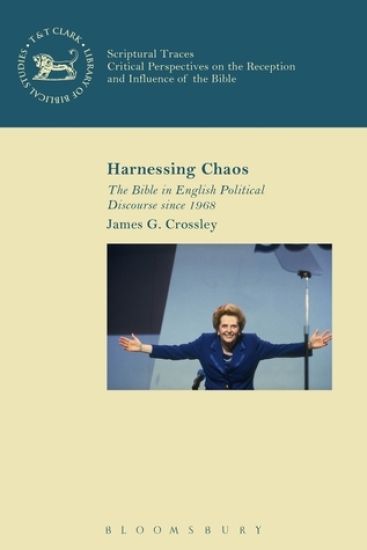
Harnessing Chaos

Harnessing Chaos

James G. Crossley

T. T.Clark Ltd
2016
nidottu
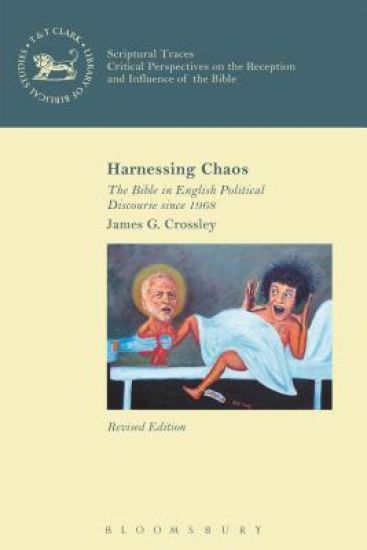
This book is open access and available on www.bloomsburycollections.com. It is funded by Knowledge Unlatched. Harnessing Chaos: The Bible in English Political Discourse Since 1968 (2014) looked at the shifts in political understandings of the Bible in the aftermath of the social and economic changes of the 1960s. The book examined the decline of the Radical bible (i.e. the Bible roughly equated with socialism) in parliamentary politics and the victory of (a modified form of) Thatcher's re-reading of the Liberal Bible tradition, which equated the Bible with rule of law, democracy and tolerance. This showed how Thatcher's Bible was developed by politicians and the significance of Tony Blair's socially liberal qualifications, as well as the Radical Bible's survival outside Parliament and against the backdrop of emerging Thatcherism. The new, revised edition of Harnessing Chaos includes an additional chapter/postscript on some of the remarkable and unexpected uses of the Bible that happened since 2014. These include David Cameron giving a number of key speeches which intensified Thatcher's Bible, particularly in his justification of his most controversial policy decisions surrounding foodbanks, austerity and ISIS, Ed Miliband engaging with Russell Brand's Radical Bible, and the unpredicted emergence of Jeremy Corbyn, which has seen him and his close allies explicitly use the Radical Bible, in direct disagreement with Thatcher, in his first major speeches. These developments have been, in varying degrees, unpredictable but also vital to understanding the fate of the Bible in contemporary English politics.
Harnessing Chaos

Harnessing Chaos

James G. Crossley

T. T.Clark Ltd
2014
sidottu
This book is open access and available on www.bloomsburycollections.com. It is funded by Knowledge Unlatched. Harnessing Chaos is an explanation of changes in dominant politicized assumptions about what the Bible ‘really means’ in English culture since the 1960s. James G. Crossley looks at how the social upheavals of the 1960s, and the economic shift from the post-war dominance of Keynesianism to the post-1970s dominance of neoliberalism, brought about certain emphases and nuances in the ways in which the Bible is popularly understood, particularly in relation to dominant political ideas. This book examines the decline of politically radical biblical interpretation in parliamentary politics and the victory of (a modified form of) Margaret Thatcher’s re-reading of the liberal Bible tradition, following the normalisation of (a modified form of) Thatcherism more generally. Part I looks at the potential options for politicized readings of the Bible at the end of the the1960s, focussing on the examples of Christopher Hill and Enoch Powell. Part II analyses the role of Thatcher’s specific contribution to political interpretation of the Bible and assumptions about ‘religion’. Part III highlights the importance of (often unintended) ideological changes towards forms of Thatcherite interpretation in popular culture and with particular reference to Monty Python’s Life of Brian and the Manchester music scene between 1976 and 1994. Part IV concerns the modification of Thatcher’s Bible, particularly with reference to the embrace of socially liberal values, by looking at the electoral decline of the Conservative Party through the work of Jeffrey Archer on Judas and the final victory of Thatcherism through Tony Blair’s exegesis. Some consideration is then given to the Bible in an Age of Coalition and how politically radical biblical interpretations retain a presence outside parliamentary politics. Harnessing Chaos concludes with reflections on why politicians in English politicians bother using the Bible at all.
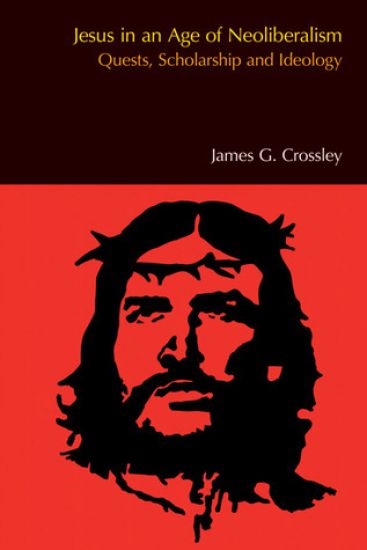
Jesus in an Age of Neoliberalism

Jesus in an Age of Neoliberalism

James G. Crossley

Acumen Publishing Ltd
2013
nidottu
'Jesus in an Age of Neoliberalism' analyses the ideology underpinning contemporary scholarly and popular quests for the historical Jesus. Focusing on cultural and political issues, the book examines postmodernism, multiculturalism and the liberal masking of power. The study ranges across diverse topics: the dubious periodisation of the quest for the historical Jesus; 'biblioblogging'; Jesus the 'Great Man' and western individualism; image-conscious Jesus scholarship; the 'Jewishness' of Jesus and the multicultural Other; evangelical and 'mythical' Jesuses; and the contradictions between personal beliefs and dominant ideological trends in the construction of historical Jesuses. 'Jesus in an Age of Neoliberalism' offers readers a radical revisioning of contemporary biblical studies.
Jesus in an Age of Neoliberalism

Jesus in an Age of Neoliberalism

James G. Crossley

Equinox Publishing Ltd
2012
sidottu
'Jesus in an Age of Neoliberalism' analyses the ideology underpinning contemporary scholarly and popular quests for the historical Jesus. Focusing on cultural and political issues, the book examines postmodernism, multiculturalism and the liberal masking of power. The study ranges across diverse topics: the dubious periodisation of the quest for the historical Jesus; 'biblioblogging'; Jesus the 'Great Man' and western individualism; image-conscious Jesus scholarship; the 'Jewishness' of Jesus and the multicultural Other; evangelical and 'mythical' Jesuses; and the contradictions between personal beliefs and dominant ideological trends in the construction of historical Jesuses. 'Jesus in an Age of Neoliberalism' offers readers a radical revisioning of contemporary biblical studies.
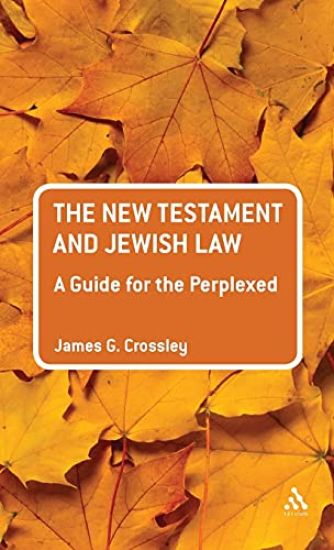
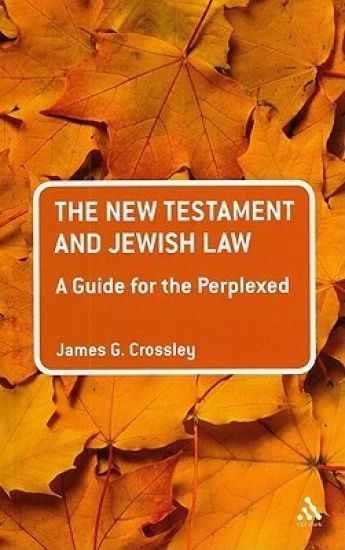
The New Testament and Jewish Law: A Guide for the Perplexed
This title provides a general introduction to Jewish law (Torah) for students of New Testament studies. This book will provide a general introduction to Jewish law (Torah) for students of New Testament studies. It will include a general discussion on the role of Jewish law in understanding Christian origins with particular reference to correcting the harsh and negative evaluations in a previous generation of scholarship and to showing how an understanding of Jewish law is extremely important in understanding the emergence of Christianity. There will also be a general chapter of the origins and sources of early Jewish law, including the biblical texts, the Dead Sea Scrolls, the pseudepigrapha, Josephus, Philo, and early rabbinic material. This will also provide a general introduction to the different ways Jewish law was interpreted. The rest of the book will be taken up by short chapters which will provide specific examples of Jewish law based on issues raised in the New Testament. These will include areas such as circumcision, Sabbath, food and purity, divorce, eye for an eye, family loyalties, ethnicity, and oaths. Throughout, the focus will not be on the 'correct' interpretation or historical accuracy of given gospel passages but rather the areas of Jewish law which illuminate the given New Testament passage. The idea is to provide readers with specific legal contexts for their own interpretations of New Testament passages. Continuum's Guides for the Perplexed are clear, concise and accessible introductions to thinkers, writers and subjects that students and readers can find especially challenging - or indeed downright bewildering. Concentrating specifically on what it is that makes the subject difficult to grasp, these books explain and explore key themes and ideas, guiding the reader towards a thorough understanding of demanding material.
The New Testament and Jewish Law: A Guide for the Perplexed
This book provides a general introduction to Jewish law (Torah) for students of New Testament studies. This book will provide a general introduction to Jewish law (Torah) for students of New Testament studies. It will include a general discussion on the role of Jewish law in understanding Christian origins with particular reference to correcting the harsh and negative evaluations in a previous generation of scholarship and to showing how an understanding of Jewish law is extremely important in understanding the emergence of Christianity. There will also be a general chapter of the origins and sources of early Jewish law, including the biblical texts, the Dead Sea Scrolls, the pseudepigrapha, Josephus, Philo, and early rabbinic material. This will also provide a general introduction to the different ways Jewish law was interpreted. The rest of the book will be taken up by short chapters which will provide specific examples of Jewish law based on issues raised in the New Testament. These will include areas such as circumcision, Sabbath, food and purity, divorce, eye for an eye, family loyalties, ethnicity, and oaths. Throughout, the focus will not be on the 'correct' interpretation or historical accuracy of given gospel passages but rather the areas of Jewish law which illuminate the given New Testament passage. The idea is to provide readers with specific legal contexts for their own interpretations of New Testament passages. "Continuum's Guides for the Perplexed" are clear, concise and accessible introductions to thinkers, writers and subjects that students and readers can find especially challenging - or indeed downright bewildering. Concentrating specifically on what it is that makes the subject difficult to grasp, these books explain and explore key themes and ideas, guiding the reader towards a thorough understanding of demanding material.
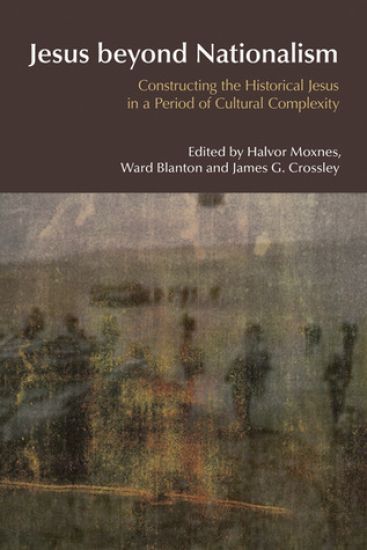
Jesus Beyond Nationalism

Jesus Beyond Nationalism

Halvor Moxnes; Ward Blanton; James G. Crossley

Equinox Publishing Ltd
2009
sidottu
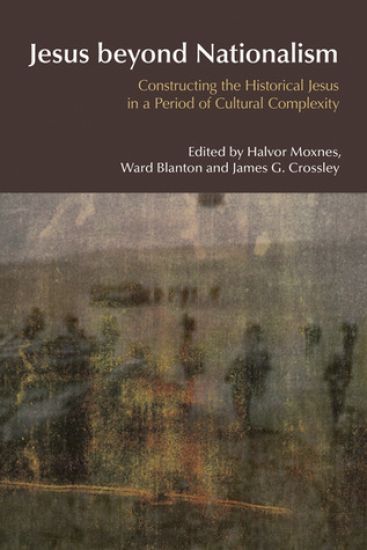
The study of Jesus has rarely looked at its own scholarly context, at how the representation of Jesus might be shaped by those who study him. 'Jesus beyond Nationalism' examines how - since the beginnings of historical Jesus studies in the nineteenth century - representations of Jesus have been used to promote hegemonic or mono-cultural views. The ideology behind such representation has operated to deny difference in society, difference in terms of race, ethnicity, gender, and sexuality. Examining depictions of Jesus in a range of contexts - from the Russian Christ and Jesus as 'Holy Anarchist' to Jesus in Muslim thought - Jesus Beyond Nationalism reveals the politics behind the ways in which Jesus has been constructed and presented.
Jesus Beyond Nationalism

Jesus Beyond Nationalism

Halvor Moxnes; Ward Blanton; James G. Crossley

Equinox Publishing Ltd
2009
nidottu
The study of Jesus has rarely looked at its own scholarly context, at how the representation of Jesus might be shaped by those who study him. 'Jesus beyond Nationalism' examines how - since the beginnings of historical Jesus studies in the nineteenth century - representations of Jesus have been used to promote hegemonic or mono-cultural views. The ideology behind such representation has operated to deny difference in society, difference in terms of race, ethnicity, gender, and sexuality. Examining depictions of Jesus in a range of contexts - from the Russian Christ and Jesus as 'Holy Anarchist' to Jesus in Muslim thought - Jesus Beyond Nationalism reveals the politics behind the ways in which Jesus has been constructed and presented.
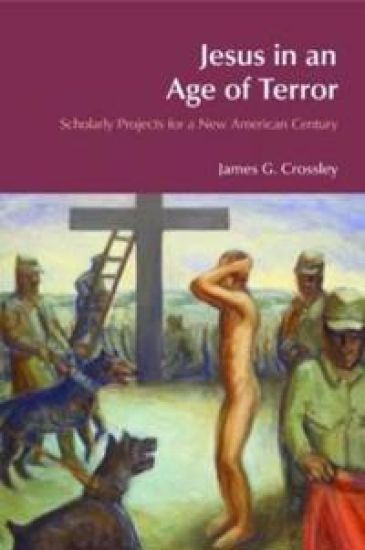
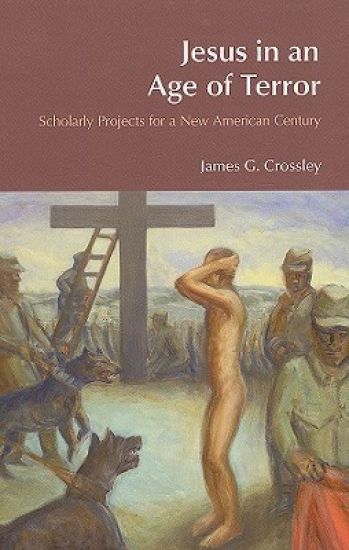
Jesus in an Age of Terror

Jesus in an Age of Terror

James G. Crossley

Equinox Publishing Ltd
2008
nidottu
New Testament and Christian origins scholarship have historically been influenced by their political and social context. 'Jesus in an Age of Terror' applies the work of critical and media theorists to contemporary Christian origins and New Testament scholarship. Part one examines the influence of the mass media on the writing of contemporary biblical scholars, whose political views - as demonstrated in their 'biblio-blogging' - are shown to have striking similarity to the media s depiction of the 'war on terror' and conflict in the Middle East. Part two argues that the Anglo-American cultural mis-representation of Islam as the 'great enemy' has led New Testament and Christian origins scholarship to collude with intellectual defences of the war in Iraq. Part three examines the influence of the media's approach to Palestine and Israel on biblical studies, exploring the shift towards widespread support for Israel in contemporary scholarship.
Jesus in an Age of Terror

Jesus in an Age of Terror

James G. Crossley

Equinox Publishing Ltd
2008
sidottu
New Testament and Christian origins scholarship have historically been influenced by their political and social context. 'Jesus in an Age of Terror' applies the work of critical and media theorists to contemporary Christian origins and New Testament scholarship. Part one examines the influence of the mass media on the writing of contemporary biblical scholars, whose political views - as demonstrated in their 'biblio-blogging' - are shown to have striking similarity to the media s depiction of the 'war on terror' and conflict in the Middle East. Part two argues that the Anglo-American cultural mis-representation of Islam as the 'great enemy' has led New Testament and Christian origins scholarship to collude with intellectual defences of the war in Iraq. Part three examines the influence of the media's approach to Palestine and Israel on biblical studies, exploring the shift towards widespread support for Israel in contemporary scholarship.
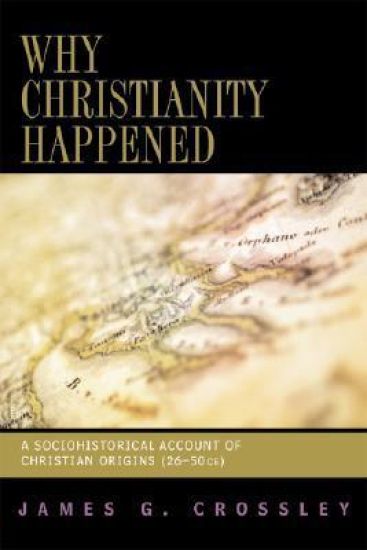
Why Christianity Happened

Why Christianity Happened

James G. Crossley

Westminster/John Knox Press,U.S.
2006
nidottu
Looking beyond theological narratives and offering a sociological, economic, and historical examination of the spread of earliest Christianity, James Crossley presents a thoroughly secular and causal explanation for why the once law-observant movement within Judaism became the beginnings of a new religion. First analyzing the historiography of the New Testament and stressing the problematic omission of a social scientific account, Crossley applies a socioeconomic lens to the rise of the Jesus movement and the centrality of sinners to his mission. Using macrosociological approaches, he explains how Jesus' Jewish teachings sparked the shift toward a gentile religion and an international monotheistic trend. Finally, using approaches from conversion studies, he provides a sociohistorical explanation for the rise of the Pauline mission.
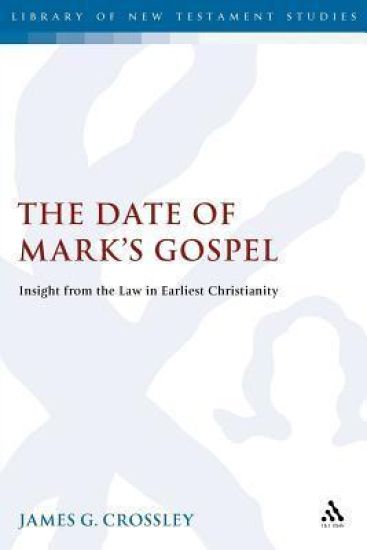
The Date of Mark's Gospel

The Date of Mark's Gospel

James G. Crossley

T. T.Clark Ltd
2004
nidottu
This book argues that Mark s gospel was not written as late as c. 65-75 CE, but dates from sometime between the late 30s and early 40s CE. It challenges the use of the external evidence (such as Irenaeus and Clement of Alexandria) often used for dating Mark, relying instead on internal evidence from the gospel itself. James Crossley also questions the view that Mark 13 reflects the Jewish war, arguing that there are other plausible historical settings. Crossley argues that Mark s gospel takes for granted that Jesus fully observed biblical law and that Mark could only make such an assumption at a time when Christianity was largely law observant: and this could not have been later than the mid-40s, from which point on certain Jewish and gentile Christians were no longer observing some biblical laws (e.g. food, Sabbath).