Kirjailija
James Gairdner
Kirjat ja teokset yhdessä paikassa: 73 kirjaa, julkaisuja vuosilta 2004–2026, suosituimpiin kuuluu The Paston Letters, A.D. 1422-1509. Vertaile teosten hintoja ja tarkista saatavuus suomalaisista kirjakaupoista.
73 kirjaa
Kirjojen julkaisuvuodet: 2004–2026.

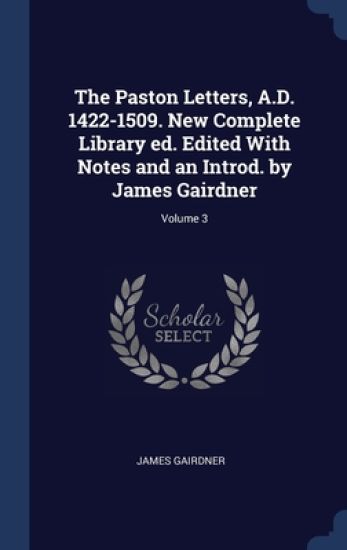
The Paston Letters, A.D. 1422-1509. New Complete Library ed. Edited With Notes and an Introd. by James Gairdner; Volume 3
James Gairdner
Sagwan Press
2015
sidottu

The Paston Letters Volume II
James Gairdner
Createspace Independent Publishing Platform
2015
nidottu
Lollardy and the Reformation in England V3: An Historical Survey
James Gairdner
Literary Licensing, LLC
2014
nidottu
Lollardy and the Reformation in England V1: An Historical Survey
James Gairdner
Literary Licensing, LLC
2014
nidottu
Lollardy and the Reformation in England V4: An Historical Survey
James Gairdner
Literary Licensing, LLC
2014
nidottu

The History Of The Life And Reign Of Richard The Third: To Which Is Added The Story Of Perkin Warbeck From Original Documents
James Gairdner
Literary Licensing, LLC
2014
nidottu

The Houses of Lancaster and York with the Conquest and Loss of France
James Gairdner
Literary Licensing, LLC
2014
nidottu
Lollardy And The Reformation In England V2: An Historical Survey
James Gairdner
Literary Licensing, LLC
2014
nidottu
The History of the Life and Reign of Richard the Third to Which is Added the Story of Perkin Warbeck from Original Documents (LARGE PRINT EDITION)
James Gairdner
KESSINGER PUBLISHING, LLC
2011
sidottu
The Paston letters, 1422-1509 A.D. Volume 1 of 3
James Gairdner
Gale, Making of Modern Law
2010
pokkari
James Gairdner (1828–1912) was one of the foremost authorities of his day on the Tudor period. This magisterial four-volume survey (originally published 1908–1913) argues that the impetus for the English Reformation came from the Lollard movement of the late fourteenth century. A prolific researcher and editor, Gairdner devoted his career to English history, and his study is both meticulous and factually sound. His critics, however, were quick to observe that the Lollard hypothesis was tenuous, and this mature work is most valuable today to those interested in the history of Reformation scholarship. First published in 1911, Volume 3 focuses on the reign of Edward VI, the progress of 'Lollard' ideas into power, and the bishops' objections to the reforms implemented after the death of Henry VIII. It also includes a substantial introduction, and corrections to the two earlier volumes.
James Gairdner (1828–1912) was one of the foremost authorities of his day on the Tudor period. This magisterial four-volume survey (originally published 1908–1913) argues that the impetus for the English Reformation came from the Lollard movement of the late fourteenth century. A prolific researcher and editor, Gairdner devoted his career to English history, and his study is both meticulous and factually sound. His critics, however, were quick to observe that the Lollard hypothesis was tenuous, and this mature work is most valuable today to those interested in the history of Reformation scholarship. Published in 1913, Volume 4 focuses on the first year of the reign of Mary Tudor and her marriage to Philip of Spain. Left unfinished on the death of the author, the book was completed by the Reverend William Hunt and includes a preface outlining Gairdner's life and career.
James Gairdner (1828–1912) was one of the foremost authorities of his day on the Tudor period. This magisterial four-volume survey (originally published 1908–1913) argues that the impetus for the English Reformation came from the Lollard movement of the late fourteenth century. A prolific researcher and editor, Gairdner devoted his career to English history, and his study is both meticulous and factually sound. His critics, however, were quick to observe that the Lollard hypothesis was tenuous, and this mature work is most valuable today to those interested in the history of Reformation scholarship. Focusing on the more immediate causes of the Reformation, Volume 2, published in 1908, considers the rise of German Protestantism, the dissolution of the monasteries, the history of the English Bible and the influence of Katherine Parr and the New Learning, concluding with the death of Henry VIII in 1547.
James Gairdner (1828–1912) was one of the foremost authorities of his day on the Tudor period. This four-volume historical survey (originally published 1908–1913) argues that the impetus for the English Reformation came from the Lollard movement of the late fourteenth century. A prolific researcher and editor, Gairdner devoted his career to English history, and his study is both meticulous and factually sound. His critics, however, were quick to observe that the Lollard hypothesis was tenuous, and this mature work is most valuable today to those interested in the history of Reformation scholarship. Volume 1 begins with an account of Lollard history from the fourteenth century to the eve of the Reformation. The second part of the volume focuses on the question of royal supremacy from an Elizabethan perspective looking back, and also includes a chapter on Sir Thomas More.