Kirjojen hintavertailu – 12 859 829 kirjaa ja 27 kauppaa

Kirjailija

James Gow

Kirjat ja teokset yhdessä paikassa: 26 kirjaa, julkaisuja vuosilta 1997–2026, suosituimpiin kuuluu A Short History of Greek Mathematics. Vertaile teosten hintoja ja tarkista saatavuus suomalaisista kirjakaupoista.

26 kirjaa

Kirjojen julkaisuvuodet: 1997–2026.

Defending the West

Defending the West

James Gow

Polity Press
2004
nidottu
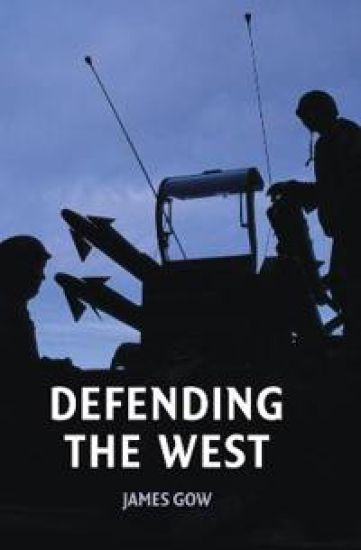
What is the West? Why does it need to be defended? From what, by whom, and how? These are thorny questions that international society must grapple with in order to meet the security challenges of the 21st Century. This little book provides answers to these questions. In it, James Gow sends out a clarion call for a radical re-interpretation of the right of self-defence within the terms of international law and international politics. The world is a wonderful, but dangerous place. There are any number of threats to peace and security, ranging from new forms of terrorism and the proliferation of weapons of mass destruction to environmental degradation, famine and disease. Defending the West matters to everyone, regardless of colour, creed, or nationality. It matters to those who are seeking to destroy it as much as it does to those seeking to protect it. Defence of the West requires pre-emptive action, but it cannot be undertaken on a unilateral basis and outside the law. Instead of outlawing pre-emptive action, we must acknowledge that it is necessary and ensure that it can be taken in a framework of partnership and legitimacy.
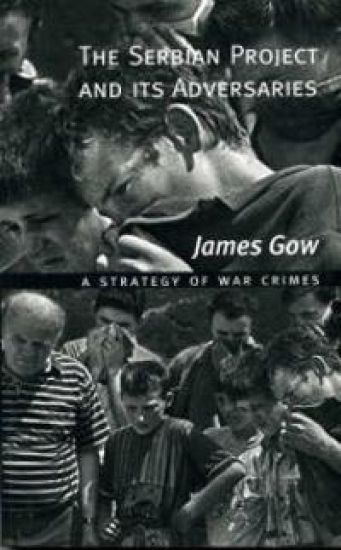
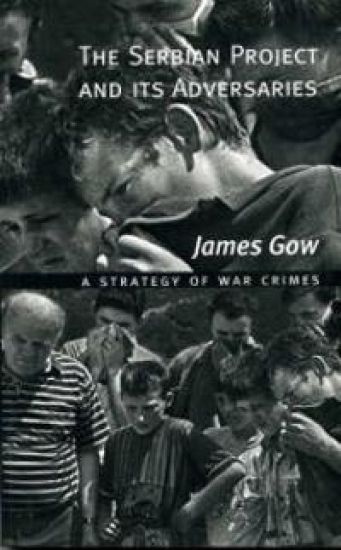
Serbian Project and Its Adversaries

Serbian Project and Its Adversaries

James Gow

C Hurst Co Publishers Ltd
2003
sidottu
This work offers a military-political analysis of the Yugoslav war. James Gow identifies the core of the war in Slobodan Milosevic's Serbian strategic project to create and consolidate borders through ethnic cleansing, and at the same time considers the approaches to the war of each of Belgrade's adversaries. The work is based on research for the Office of the Prosecutor at the International Criminal Tribunal for the former Yugoslavia, and on interviews and Yugoslav materials. Its point of departure is the importance of this material to the practical need legally to establish jurisdiction to hear cases at The Hague Tribunal and of the conceptual distinction between acts of war, on the one hand, and war crimes and crimes against humanity, on the other. Gow argues that the Serbian strategy at the heart of the war was in essence criminal - a strategy of war crimes. Despite this, a strategic understanding may, controversially, mitigate some of the charges against Serbian military-political leaders.
Serbian Project and Its Adversaries

Serbian Project and Its Adversaries

James Gow

C Hurst Co Publishers Ltd
2003
nidottu
This work offers a military-political analysis of the Yugoslav war. James Gow identifies the core of the war in Slobodan Milosevic's Serbian strategic project to create and consolidate borders through ethnic cleansing, and at the same time considers the approaches to the war of each of Belgrade's adversaries. The work is based on research for the Office of the Prosecutor at the International Criminal Tribunal for the former Yugoslavia, and on interviews and Yugoslav materials. Its point of departure is the importance of this material to the practical need legally to establish jurisdiction to hear cases at The Hague Tribunal and of the conceptual distinction between acts of war, on the one hand, and war crimes and crimes against humanity, on the other. Gow argues that the Serbian strategy at the heart of the war was in essence criminal - a strategy of war crimes. Despite this, a strategic understanding may, controversially, mitigate some of the charges against Serbian military-political leaders.
Slovenia and the Slovenes

Slovenia and the Slovenes

Cathie Carmichael; James Gow

C Hurst Co Publishers Ltd
2000
nidottu
One of Europe's smallest countries, with a population of less than 2 million, Slovenia has an ancient and distinct national culture. It emerged in 1991 after fighting a brief war of independence to leave behind the remnants of Tito's Yugoslavia. Traces of the Slovene language are found in documents of the ninth century, a system of peasant democracy is recorded in medieval times, and a Slovene Bible appeared as early as 1557. This volume provides a comprehensive survey of Slovenia and its people, including details of political, economic, military and cultural life.
Triumph of the Lack of Will

Triumph of the Lack of Will

James Gow

Columbia University Press
1997
sidottu
This book examines how and why the United States, Britain, France, and Germany failed to cope with the collapse of Yugoslavia and its descent into a savage civil war. This failure also shattered long-cherished notions about how the UN, NATO, and the European Community would deal with such a crisis and prompted a drastic reassessment of their roles. Gow demonstrates that the lack of timing, bad judgment, poor cohesion, and absence of political will over the use of force were the fundamental reasons for this failure.
Triumph of the Lack of Will

Triumph of the Lack of Will

James Gow

C Hurst Co Publishers Ltd
1997
sidottu
This is an examination of the intemational diplomacy and decision-making that accompanied the collapse of Yugoslavia and its descent into war and chaos. Public opinion has consistently favoured greater Western determination to counter Serbian and Croatian aggression by intervening or arming the Bosnian government, to forge a peace that preserves Bosnia's independence, and to improve the flow of aid to beleaguered cities. However, differences of opinion, between the US and Europe and within the EC itself, have hampered the search for an effective response. James Cow has followed the war on a day-to-day basis, both as an adviser to government and commentator in the Guardian and The Times. Here he assesses the involvement of the UN, the EC and the CSCE; the peacekeeping efforts of UNPROFOR, NATO and the WEU; and the key roles of the US, Germany, France and Britain in shape policy. He concludes that the bad timing, inappropriateness and incoherence of international policies - all linked to the crucial question of political will over the use of force - explain the failure to act decisively and indicate a wider breakdown of political consensus in the Western alliance.