Kirjojen hintavertailu – 12 903 725 kirjaa ja 27 kauppaa

Kirjailija

James H. Banning

Kirjat ja teokset yhdessä paikassa: 7 kirjaa, julkaisuja vuosilta 2010–2018, suosituimpiin kuuluu Positioning Student Affairs for Sustainable Change. Vertaile teosten hintoja ja tarkista saatavuus suomalaisista kirjakaupoista.

7 kirjaa

Kirjojen julkaisuvuodet: 2010–2018.

Positioning Student Affairs for Sustainable Change

Positioning Student Affairs for Sustainable Change

Linda Kuk; James H. Banning; Marilyn J. Amey

Stylus Publishing
2010
nidottu
At a time of increasing student diversity, concern about security, demand for greater accountability, and of economic difficulty, what does the future hold for higher education, and how can student affairs organizations adapt to the increasing and changing demands? How can university leaders position existing resources to effectively address these and other emerging challenges with a sense of opportunity rather than dread? How can organizations be redesigned to sustain change while achieving excellence? As student affairs organizations have grown and become increasingly complex in order to meet new demands, they have often emphasized the expansion of their missions to the detriment of focusing on understanding their roles in relationship to other units, to reviewing their cultures and structures, and to considering how they can improve their effectiveness as organizations. This book provides the tools for organizational analysis and sustainability. Intended for practitioners, graduate students, interns and student affairs leaders, this book presents the key ideas and concepts from business-oriented organizational behavior and change theories, and demonstrates how they can be useful in, and be applied to, student affairs practice – and, in particular, how readers can use these theories to sustain change and enhance their organization’s ability to adapt to complex emerging challenges. At the same time it holds to values and perspectives that support the human dimension of organizational life. Recognizing the complexity of today’s organizations and the value of viewing them from multiple perspectives, this book follows the emerging practice of providing three general epistemological perspectives – the Positivist, Social Constructionist, and Postmodernist – for analyzing often paradoxical organizational structures, environments, and behavior. The book explores the environmental context of student affairs, and how the organization interacts with both the internal and external environments; examines the human dimension of organizations, through a review of individual attributes, human need and motivation, social comparison theory and organizational learning theory; presents the dimensions of structure and design theory and discusses why student affairs organizations need to think differently about how they organize their resources; considers the context and process of organizational change, and the dynamics of decision making, power, conflict and communication; addresses the role of assessment and evaluation; and new forms of leadership. Each chapter opens with a case study, and closes with a set of reflective questions. The authors have all served as practitioners within student affairs and now teach and advise graduate students and future leaders in the field.
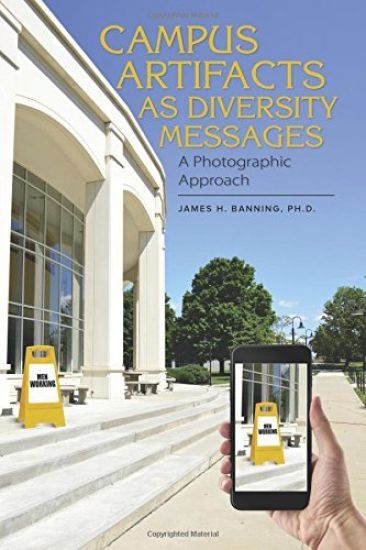
Campus Artifacts as Diversity Messages: A Photographic Approach
The use of the camera to bring about social justice has a long history. The book Campus Artifacts as Diversity Messages: A Photographic Approach seeks to reflect this tradition by sharing how to photograph diversity issues on college and university campuses to bring forth discussions on how to make the institutions of higher education more welcoming, safe, and inclusionary. The book presents the foundational scholarship for using photographs to discuss diversity and how to interpret photographs of campus artifacts. It also includes over 40 photographic illustrations. Photographing for diversity is open to all on campus, it only takes a camera or a cell phone and discussion to promote a more socially just campus.
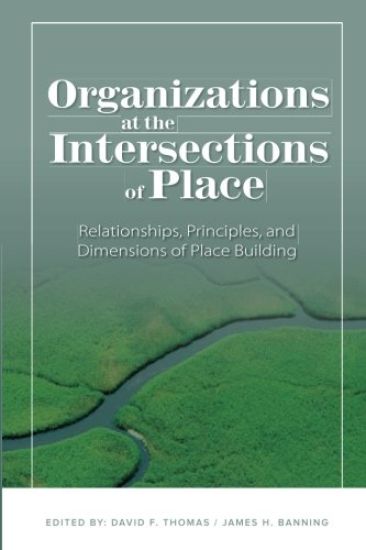
Organizations at the intersections of place: Relationships, Principles, and Dimensions of Place Building
Place is more than a location for an organization or community. Place is the seam of connectedness and intersections between an organization and its community. In this book, the editors have gathered research from across the globe to further explore the many forms of this connecting and intersecting seam of PLACE. This interdisciplinary concept connects geography, human geography, ecological and environmental psychology, and many others in the academic and applied fields. Thomas and Banning looked at the 13 years of research on how organizations valued the places where they reside and discovered that academic and practioneers alike were looking for a different perspective on how organizations relate to their communities. There was great interest in seeing how place can and should play an important role in the strategic relationships organizations have with their communities, their clients, and their employees. The editors demonstrate in this book that place is not just a location, but connections and intersections with important community structures, values, and social responsibility. This book lays out the three principles of place building, the four types of place builders, and the five place dimensions that provide the conceptual framework needed to explore the complexities of the connections and intersections of organizational place building. For additional information regarding the Organizational Place Building Inventory, visit our website at www.placebuilding.net or email David Thomas at [email protected]
Student Affairs Leadership

Student Affairs Leadership

Linda Kuk; James H. Banning

Stylus Publishing
2016
sidottu
Kuk and Banning offer readers a new lens for viewing leadership, one that goes beyond a focus on the behavior and values of leaders as individuals to examine how positional leaders interact with their environments to engage in leadership “in context”. This book is addressed to aspiring and senior student affairs officers and offers a new “ecological” framework that recognizes that today’s leaders are affected by factors they may not control, and work within an environment they cannot expect to mold solely through their execution of skills and strategies. Based on research supported through a grant from the National Association of Student Personnel Administrators (NASPA) Foundation, this book explores leadership as an interactive process within varied environmental contexts, and through an analysis of the transactional process between the leader, the organizational members and the various components of the organizations environment. It describes how leaders deploy differing competencies, skills and strategies in varied contexts, and how they choose to use past experiences, their training and personal characteristics to set priorities and navigate the cultural, social, physical, legal and political, resource, and ethical environments of their organizations. Several chapters conclude with an account of how the experiences of the SSAO participants in the research informed their practice of leadership and understanding of how leadership actually works.
Student Affairs Leadership

Student Affairs Leadership

Linda Kuk; James H. Banning

Stylus Publishing
2016
nidottu
Kuk and Banning offer readers a new lens for viewing leadership, one that goes beyond a focus on the behavior and values of leaders as individuals to examine how positional leaders interact with their environments to engage in leadership “in context”. This book is addressed to aspiring and senior student affairs officers and offers a new “ecological” framework that recognizes that today’s leaders are affected by factors they may not control, and work within an environment they cannot expect to mold solely through their execution of skills and strategies. Based on research supported through a grant from the National Association of Student Personnel Administrators (NASPA) Foundation, this book explores leadership as an interactive process within varied environmental contexts, and through an analysis of the transactional process between the leader, the organizational members and the various components of the organizations environment. It describes how leaders deploy differing competencies, skills and strategies in varied contexts, and how they choose to use past experiences, their training and personal characteristics to set priorities and navigate the cultural, social, physical, legal and political, resource, and ethical environments of their organizations. Several chapters conclude with an account of how the experiences of the SSAO participants in the research informed their practice of leadership and understanding of how leadership actually works.
Designing for Learning

Designing for Learning

C. Carney Strange; James H. Banning

John Wiley Sons Inc
2015
sidottu
Understand the design factors of campus environmental theory that impact student success and create a campus of consequence Designing for Learning is a comprehensive introduction to campus environmental theory and practice, summarizing the influence of collegiate environments on learning and providing practical strategies for facilitating student success through intentional design. This second edition offers new coverage of universal design, learning communities, multicultural environments, online environments, social networking, and safety, and challenges educators to evaluate the potential for change on their own campuses. You'll learn which factors make a living-learning community effective, and how to implement these factors in the renovation of campus facilities. An updated selection of vignettes, case scenarios, and institutional examples help you apply theory to practice, and end-of-chapter reflection questions allow you to test your understanding and probe deeper into the material and how it applies to your environment. Campus design is no longer just about grassy quads and ivy-covered walls—the past decade has seen a surge in new designs that facilitate learning and nurture student development. This book introduces you to the many design factors that impact student success, and helps you develop a solid strategy for implementing the changes that can make the biggest difference to your campus. Learn how environments shape and influence student behaviorEvaluate your campus and consider the potential for changeMake your spaces more welcoming, inclusive, and functionalOrganize the design process from research to policy implementation Colleges and universities are institutions of purpose and place, and the physical design of the facilities must be undertaken with attention to the ways in which the space's dimensions and features impact the behavior and outlook of everyone from students to faculty to staff. Designing for Learning gives you a greater understanding of modern campus design, and the practical application that brings theory to life.