Kirjojen hintavertailu – 12 859 818 kirjaa ja 27 kauppaa

Kirjailija

James H. Charlesworth

Kirjat ja teokset yhdessä paikassa: 19 kirjaa, julkaisuja vuosilta 2002–2020, suosituimpiin kuuluu Rethinking Christmas. Vertaile teosten hintoja ja tarkista saatavuus suomalaisista kirjakaupoista.

Nimi esiintyy myös muodoissa: James H Charlesworth

19 kirjaa

Kirjojen julkaisuvuodet: 2002–2020.

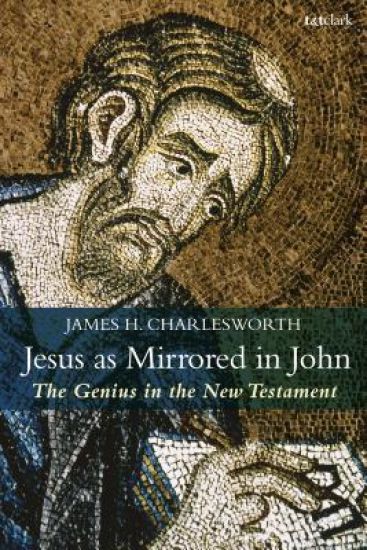
Jesus as Mirrored in John

Jesus as Mirrored in John

James H. Charlesworth

T. T.Clark Ltd
2020
nidottu
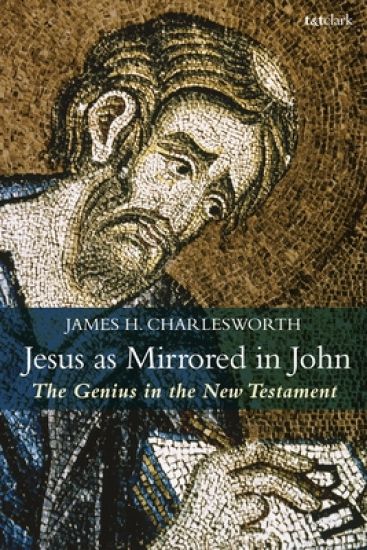
James H. Charlesworth begins from a burgeoning point of scholarly consensus: More and more scholars are coming to recognize that the Fourth Gospel is more historically complex than previously thought. Charlesworth outlines two historical horizons within John. On the one hand, there is the Jewish background to the text (complete with the evangelist’s knowledge of Palestinian geography and Jewish customs) which Charlesworth perceives as offering a window into pre-70 Palestinian Judaism. On the other hand, the gospel also reflects a post-70 world in which non-believing Jews, with more unity, begin to part definitely with those who identified Jesus as the Messiah. Split into four sections, this volume first examines the origins of the Fourth Gospel, its evolution in several editions, and its setting in Judea and Galilee. Charlesworth then looks specifically at the figure of Jesus and issues of history. He proceeds to consider this Gospel alongside earlier and contemporaneous Jewish literature, most notably the Dead Sea Scrolls. Finally, the volume engages with John’s symbolism and language, looking closely at key aspects in which John differs from the Synoptic Gospels, and raising such provocative questions as whether or not it is possible that Jesus married Mary Magdalene. From one of the New Testament’s most noted scholars, this book allows deeper understanding of the ways in which the Gospel of John is a vital resource for understanding both the origin of Christianity and Jesus’ position in history.
Rethinking Christmas

Rethinking Christmas

S T Kimbrough; James H Charlesworth

Resource Publications (CA)
2020
pokkari
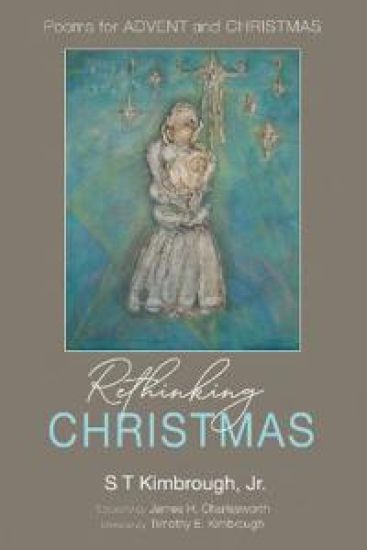
In the poems that appear here imagination plays a significant role. We do not know exactly what people expect or anticipate at Advent, but we know it can be radically different, depending on one's situation in life: the poor, the homeless, those enveloped in war, the wealthy, the desperately ill or injured. What one awaits does not change the nature of Christ's coming, but it greatly influences how Christ is received. One thing is quite clear: it is the love of God that descends to earth in this child, a child of peace and goodwill. If one is not awaiting these things, one's celebration may be well-meaning but very wrong-headed. These poems imagine what Advent and Christmas are not and what they might be. How might they be seen through the eyes of the poor and marginalized? How might they be viewed by a business concern? How are they misunderstood? What does Christmas mean, when a bell rings on Christmas Day, and a church building has been destroyed and all that remains is the bell tower?
Rethinking Christmas

Rethinking Christmas

S T Kimbrough; James H Charlesworth

Resource Publications (CA)
2020
sidottu
In the poems that appear here imagination plays a significant role. We do not know exactly what people expect or anticipate at Advent, but we know it can be radically different, depending on one's situation in life: the poor, the homeless, those enveloped in war, the wealthy, the desperately ill or injured. What one awaits does not change the nature of Christ's coming, but it greatly influences how Christ is received. One thing is quite clear: it is the love of God that descends to earth in this child, a child of peace and goodwill. If one is not awaiting these things, one's celebration may be well-meaning but very wrong-headed. These poems imagine what Advent and Christmas are not and what they might be. How might they be seen through the eyes of the poor and marginalized? How might they be viewed by a business concern? How are they misunderstood? What does Christmas mean, when a bell rings on Christmas Day, and a church building has been destroyed and all that remains is the bell tower?
Jesus as Mirrored in John

Jesus as Mirrored in John

James H. Charlesworth

T. T.Clark Ltd
2018
sidottu
James H. Charlesworth begins from a burgeoning point of scholarly consensus: More and more scholars are coming to recognize that the Fourth Gospel is more historically complex than previously thought. Charlesworth outlines two historical horizons within John. On the one hand, there is the Jewish background to the text (complete with the evangelist’s knowledge of Palestinian geography and Jewish customs) which Charlesworth perceives as offering a window into pre-70 Palestinian Judaism. On the other hand, the gospel also reflects a post-70 world in which non-believing Jews, with more unity, begin to part definitely with those who identified Jesus as the Messiah. Split into four sections, this volume first examines the origins of the Fourth Gospel, its evolution in several editions, and its setting in Judea and Galilee. Charlesworth then looks specifically at the figure of Jesus and issues of history. He proceeds to consider this Gospel alongside earlier and contemporaneous Jewish literature, most notably the Dead Sea Scrolls. Finally, the volume engages with John’s symbolism and language, looking closely at key aspects in which John differs from the Synoptic Gospels, and raising such provocative questions as whether or not it is possible that Jesus married Mary Magdalene. From one of the New Testament’s most noted scholars, this book allows deeper understanding of the ways in which the Gospel of John is a vital resource for understanding both the origin of Christianity and Jesus’ position in history.
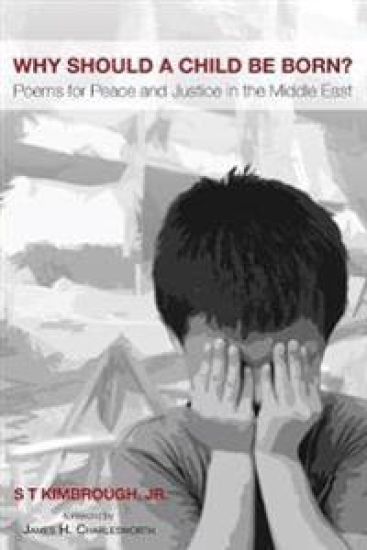
Why Should a Child Be Born?

Why Should a Child Be Born?

S T Kimbrough; James H Charlesworth

Resource Publications (CA)
2018
sidottu
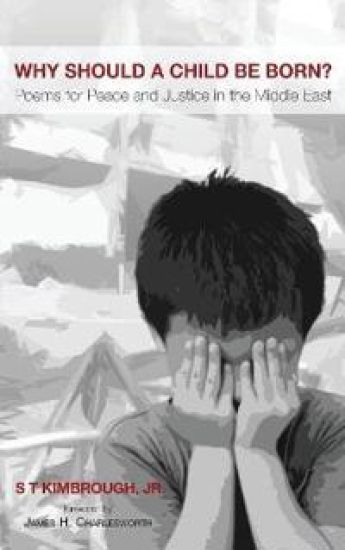
The Jewish/Palestinian conflict in the Middle East goes on and on without resolution, and in the course of the tactics of delay thousands of people have suffered and died. Those who have suffered the most have been women and children, and at times entire villages have been destroyed. Adherents of both sides of the conflict cry ""foul"" and accuse their opponents of injustice and intransigence. An Israeli bus and its passengers are blown up by a suicide bomber, a Palestinian village is bombed in response. Land owned by a Palestinian farmer is confiscated in order to build a Jewish settlement. While politicians jockey back and forth over who is right and wrong and over what is right and wrong, children die from dastardly injuries and malnutrition, and people are unjustly imprisoned. One wonders where is the cry for human dignity? Where is the cry for compassion and humane behavior? The plea of these poems is that the adherents of the three Abrahamic faiths of the Middle East--Jews, Christians, and Muslims--in the midst of conflicts that have precipitated the persecution, starvation, and death of thousands, particularly children, acknowledge their common humanity and work together for peace and harmony. ""Kimbrough's poetic articulation of the heart-rending dislocations and victimizations of a people shows that where prose fails, poetry's aesthetics, rhythm, and symbolism succeed magnificently. It invokes in us rage and powerlessness, demanding a dynamic ethical response and a vigorous prophetic and critical mind. S T's poems reflect his training in Hebrew scriptures, with its prophetic, ethical, and wisdom materials, and he composes these poems as if they were a libretto to be sung, a reminder of his other vocation as an operatic baritone."" --Charles Amjad-Ali, Martin Luther King, Jr., Professor of Justice and Christian Community and Director of Islamic Studies Program, Emeritus, Luther Seminary, St. Paul, Minnesota ""I highly recommend this collection of transformative poems. They are powerful and touch our hearts and minds."" --Mazin Qumsiyeh, Professor and Director, Palestine Institute for Biodiversity and Sustainability, Bethlehem University, Occupied Palestine S T Kimbrough, Jr., holds a PhD from Princeton Theological Seminary and is currently a research fellow of the Center for Studies in the Wesleyan Tradition at Duke Divinity School, Durham, North Carolina. He is author of the following books by Wipf and Stock: The Lyrical Theology of Charles Wesley (2011), Radical Grace: Justice for the Poor and Marginalized (2013), Partakers of the Life Divine: Participation in the Divine Nature in the Writings of Charles Wesley (2016), and has published poetry in the journal Theology Today.
The Qumran Psalter

The Qumran Psalter

James H Charlesworth

Cascade Books
2014
sidottu
In 68 CE, devout Jews left more than one thousand handwritten documents in caves northwest of the Dead Sea. The cave that most defined the beliefs and hopes of these Jews is Cave I. In it were placed many manuscripts, including two copies of the Qumran Psalter or Thanksgiving Hymns. In 1947, Bedouin shepherds found Cave I and retrieved scrolls, including a copy of the Qumran Psalter. It proves Jews created new psalms to complement the Davidic Psalter (the "Psalms" usually attributed to David). We learn for the first time how Jews prior to Hillel and Jesus imagined the universe, articulated unworthiness, and despite suffering were devoted to God's covenant. One author imagines that though his ear was inattentive to God's words he felt a message penetrate his being so that his stone heart palpitated. Throughout and especially in the Self-Glorification Hymn, the authors express transcendence, and a oneness with angels through God's continuing acts of compassion and acceptance. Though confessing unworthiness, the authors thank the Lord for forgiving those who turn from transgression; this theme is the keynote of the symphonic poetry. Jews, Christians, and all interested in spirituality will find insight and comfort studying these psalms and poems.
Jesus and Temple

Jesus and Temple

James H. Charlesworth

Fortress Press,U.S.
2014
pokkari
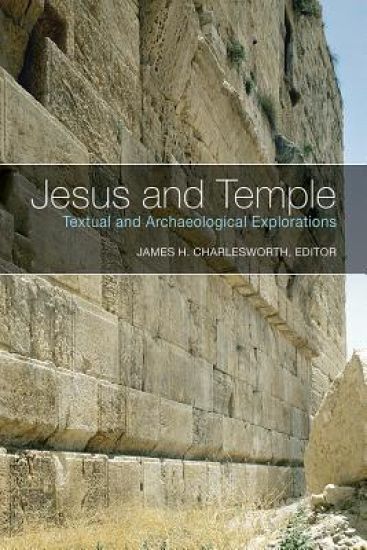
The New Testament provides abundant evidence that Jesus frequented the temple; according to Acts, so did his followers after his death. But the Gospels also depict Jesus in conflict with temple authorities, and questions about his attitude to the temple swirl around what the Gospels label false accusations from his opponents and around the dramatic but inconsistent accounts of Jesus "cleansing" the temple. Jesus' attitude toward the temple is at the center of current historical Jesus research, yet those discussions are often not current with the latest archaeological and related findings regarding the temple and its history, architecture, liturgy, and function. James H. Charlesworth here gathers essays from world-renowned archaeologists and biblical scholars to address the current state of knowledge regarding the temple and to consider anew vital questions about its significance for Jesus, for his followers, and for New Testament readers today.
Jesus Research

Jesus Research

James H. Charlesworth

William B Eerdmans Publishing Co
2014
nidottu
This volume explores nearly every facet of contemporary Jesus research -- from eyewitness criteria to the reliability of memory, from archaeology to psychobiography, from oral traditions to literary sources. With contributions from forty internationally respected Jewish and Christian scholars, this distinguished collection of articles comes from the second (2007) Princeton-Prague Symposium on Jesus Research. It summarizes the significant advances in understanding Jesus that scholars have made in recent years through the development of diverse methodologies. Readers already knowledgeable in the field will discover unique angles from well-known scholars, and all will be amply informed on the current state of Jesus studies. Contributors Dale C. Allison Jr., Mordechai Aviam, Richard Bauckham, Darrell L. Bock, Donald Capps, James H. Charlesworth, Bruce Chilton, Michael Allen Daise, Arye Edrei, Kathy Ehrensperger, Casey D. Elledge, Craig A. Evans, Peter W. Flint, Sean Freyne, David Hendin, Tom Holmen, Richard A. Horsley, Jeremy M. Hutton, Craig Keener, Werner H. Kelber, Ulrich Luz, Gabriel Mazor, Lee Martin McDonald, Doron Mendels, Daniel F. Moore, Suleiman A. Mourad, Etienne Nodet, Lidija Novakovic, Gerbern S. Oegema, George L. Parsenios, Pheme Perkins, Petr Pokorny, Stanley E. Porter, Brian Rhea, Jan Roskovec, D. Moody Smith, Gerd Theissen, Geza Vermes, Walter P. Weaver, Robert L. Webb,
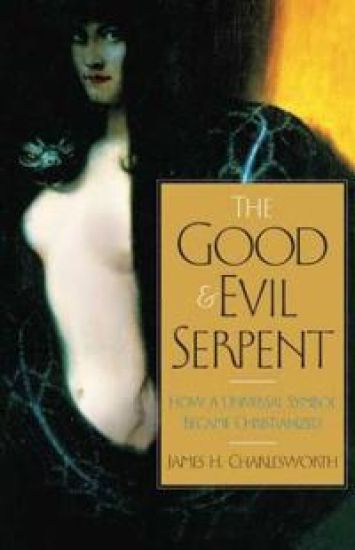
The Good and Evil Serpent

The Good and Evil Serpent

James H. Charlesworth

Yale University Press
2010
sidottu
A pathbreaking study of the serpent’s symbolic meanings from 40,000 BCE to the present day In a perplexing passage from the Gospel of John, Jesus is likened to the most reviled creature in Christian symbology: the snake. Attempting to understand how the Fourth Evangelist could have made such a surprising analogy, James H. Charlesworth has spent nearly a decade combing through the vast array of references to serpents in the ancient world—from the Bible and other religious texts to ancient statuary and jewelry. Charlesworth has arrived at a surprising conclusion: not only was the serpent a widespread symbol throughout the world, but its meanings were both subtle and varied. In fact, the serpent of ancient times was more often associated with positive attributes like healing and eternal life than it was with negative meanings. This groundbreaking book explores in plentiful detail the symbol of the serpent from 40,000 BCE to the present, and from diverse regions in the world. In doing so it emphasizes the creativity of the biblical authors’ use of symbols and argues that we must today reexamine our own archetypal conceptions with comparable creativity.
The Old Testament Pseudepigrapha

The Old Testament Pseudepigrapha

James H. Charlesworth

Hendrickson Publishers Inc
2010
nidottu
Key second-temple texts with introductions and notes by an international team of scholars--now available in affordable softcover bindings. The writers of the Bible lived in a world filled with many writings. Some of these documents are lost forever, but many have been preserved. Part of these extant sources are the Pseudepigrapha. This collection of Jewish and Christian writings shed light on early Judaism and Christianity and their doctrines. This landmark set includes all 65 Pseudepigraphical documents from the intertestamental period that reveal the ongoing development of Judaism and the roots from which the Christian religion took its beliefs. A scholarly authority on each text contributes a translation, introduction, and critical notes for each text. Volume 1 features apocalyptic literature and testaments. Volume 2 includes expansions of the "Old Testament" legends, wisdom, and philosophical literature; prayers, psalms, and odes; and fragments of lost Judeo-Hellenistic Works. Contributors include E. Isaac, B. M. Metzger, J. R. Mueller, S. E. Robinson, D. J. Harrington, G. T. Zervos, and many others. Of enormous value to scholars and students, religious professionals and interested laypeople. Part of Anchor Yale Reference Library.
The Old Testament Pseudepigrapha

The Old Testament Pseudepigrapha

James H. Charlesworth

Hendrickson Publishers Inc
2010
nidottu
Key second-temple texts with introductions and notes by an international team of scholars--now available in affordable softcover bindings. The writers of the Bible lived in a world filled with many writings. Some of these documents are lost forever, but many have been preserved. Part of these extant sources are the Pseudepigrapha. This collection of Jewish and Christian writings shed light on early Judaism and Christianity and their doctrines. This landmark set includes all 65 Pseudepigraphical documents from the intertestamental period that reveal the ongoing development of Judaism and the roots from which the Christian religion took its beliefs. A scholarly authority on each text contributes a translation, introduction, and critical notes for each text. Volume 2 includes expansions of the "Old Testament" legends, wisdom, and philosophical literature; prayers, psalms, and odes; and fragments of lost Judeo-Hellenistic Works. Contributors include E. Isaac, B. M. Metzger, J. R. Mueller, S. E. Robinson, D. J. Harrington, G. T. Zervos, and many others. Of enormous value to scholars and students, religious professionals and interested laypeople. Part of Anchor Yale Reference Library. 2 volume set.
The Messiah

The Messiah

James H. Charlesworth

Fortress Press,U.S.
2009
pokkari
The Messiah How did the Jews from 250 B. C. E. to 200 C. E. conceive and express their beliefs in the coming of God's Messiah? Why did the Jews closely associated with Jesus of Nazareth claim within ten years of his crucifixion in 30 C. E. that he indeed was the promised Messiah? An international team of prominent Jewish and Christian scholars discuss these and related questions in this volume that stems from the First Princeton Symposium on Judaism and Christian Origins. The book focuses on the historical and theological importance of the presence or absence of the term "Messiah" and messianic ideas in the Hebrew Scriptures, the New Testament, Philo, the Apocrypha, the Pseudepigrapha, Josephus, and the Dead Sea Scrolls. It clarifies the key issues to be discussed, illustrates the appropriate methodology shared by international experts, and concentrates on the perplexing questions regarding messianic beliefs in Judaism and Christianity before the close of the New Testament and the editing of the Mishnah. Contributors Hugh Anderson David E. Aune Matthew Black B. M. Bokser Peder Borgen F. H. Borsch James H. Charlesworth Adela Yarbro Collins Nils Alstrup Dahl W. D. Davies J. D. G. Dunn Robert G. Hamerton-Kelly Paul D. Hanson J. G. Heintz Martin Hengel Richard A. Horsley Donald H. Juel Burton L. Mack D. Mendels J. Priest J. J. M. Roberts L. H. Schiffmann Alan F. Segal S. Talmon J. C. VanderKam James H. Charlesworth is the George L. Collord Professor of New Testament Language and Literature and director of the Dead Sea Scrolls Project at Princeton Theological Seminary. He is noted for his research in Apocrypha and Pseudepigrapha of the Hebrew and Christian Bibles, the Dead Sea Scrolls, Josephus, the Historical Jesus, and the Gospel of John. He is a Founder and Veteran of the Enoch seminar and a member of the Advisory Board of the Journal Henoch. Religion / Early Judaism and Christianity
The Historical Jesus

The Historical Jesus

James H. Charlesworth

Abingdon Press
2008
pokkari
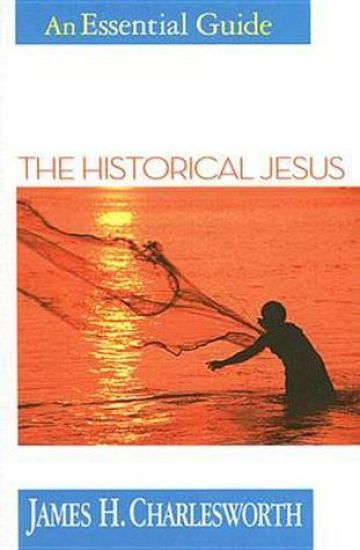
Recent years have seen an explosion of talk about the Historical Jesus from scholarly settings as well as media outlets (including sensational TV documentaries and national magazines). How is the student of the Bible to assess these various claims about Jesus? And what differences do his time and place make for Christian faith, theological thinking, and historical research? Charlesworth presents the solid results of modern study into the life and times of Jesus, especially the role of the Essenes, the significance of the Dead Sea Scrolls, Messianic expectation, and much more. No one today is better equipped than James Charlesworth to lead students through the thickets of controversy that surround much of contemporary Historical Jesus research. This "Abingdon Essential Guide" will fulfill the need for a brief, substantive, yet highly accessible introduction to this core area of New Testament Studies. Drawing on the best in current scholarship, written with the need of students foremost in mind, addressed to learners in a number of contexts, this "Essential Guide" will be the first choice of those who wish to acquaint themselves or their students with the broad scope of issues, perspectives, and subject matters relating to modern quests for the Historical Jesus. It will also be a preferred text for those who need or want to refresh their knowledge regarding the context within which Jesus lived in preparation for leading church discussion groups in studies of the Gospels.
The Pesharim and Qumran History

The Pesharim and Qumran History

James H. Charlesworth

William B Eerdmans Publishing Co
2002
pokkari
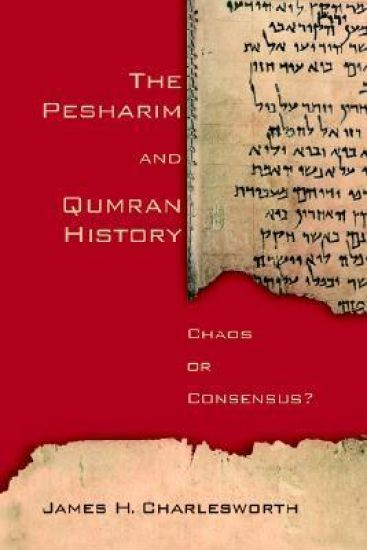
Since their discovery among the Dead Sea Scrolls, the Pesharim have sparked intense debate. Are these ancient documents biblical commentary, or are they historiographies alluding to figures and events of the time? Charlesworth demonstrates that these 16 books do indeed contain historical allusions and relates these references to a synopsis of Qumran history.