

Kirjailija
James Harris
Kirjat ja teokset yhdessä paikassa: 53 kirjaa, julkaisuja vuosilta 1992–2026, suosituimpiin kuuluu Designing What Communities Actually Value. Vertaile teosten hintoja ja tarkista saatavuus suomalaisista kirjakaupoista.
53 kirjaa
Kirjojen julkaisuvuodet: 1992–2026.

Key To Graduated Exercises In Arithmetic And Mensuration (1872)
James Harris
KESSINGER PUBLISHING, LLC
2008
nidottu


Hermes: Or A Philosophical Inquiry Concerning Universal Grammar (1786)
James Harris
KESSINGER PUBLISHING, LLC
2008
nidottu

Logs for the Christmas Fire, a Selection of Tales of Fiction and Romance in Prose and Verse
James Harris; Henry John Hatch; James F. T. Wiseman
Kessinger Pub
2007
pokkari
The Practical Guide to Project Management Documentation
John Rakos; Karen Dhanraj; Scott Kennedy; Laverne Fleck; Steve Jackson; James Harris
John Wiley Sons Inc
2004
muu
Project Management The one-stop resource for project management documentation and templates for all projects The success of any project is crucially dependent on the documents produced for it. The Practical Guide to Project Management Documentation provides a complete and reliable source of explanations and examples for every possible project-related document-from the proposal, business case, and project plan, to the status report and final post-project review. The Practical Guide to Project Management Documentation is packed with material that slashes the time and effort expended on producing new documents from scratch. Following the processes in the Project Management Institute's PMBOK® Guide, this one-stop, full-service book also offers tips and techniques for working with documents in each project process. Documentation for several project/client scenarios is addressed, including internal and externally contracted projects. A single project-the construction of a water theme park-is used as the case study for all the document examples. An included CD-ROM provides all the documents from the book as Microsoft Word(r) files. Readers can use these as a framework to develop their own project documents. The Practical Guide to Project Management Documentation is an unmatched reference for the numerous documents essential to project managers in all industries.(PMBOK is a registered mark of the Project Management Institute, Inc.)

When the Catholic Inquisitors persecuted Galileo for teaching that the Earth moves through space, they did so because Galileo insisted that this was the truth. The Church was quite prepared to tolerate the notion of a moving Earth, so long as it was regarded as an instrument useful for calculation, as true merely within a particular framework which might be adopted or discarded for reasons of convenience. For centuries Galilieo has been seen as a heroic fighter for enlightenment against benighted tyranny, but strangely enough, recent years have seen the rise, within Western philosophy, of a wave of relativism, according to which Galileo was wrong and his persecutors were correct. In the view of this new relativism, which has roots in both the continental and analytic traditions, there are no universal or trans-cultural standards of rationality. Among the sources of the new relativism are the failure of logical positivism and the shift within anthropology from a single evolutionary model to several models for understanding human culture. In this critique of relativism, Professor Harris turns the techniques of relativism against relativism, showing that it is ultimately self-refuting or ineffectual. A number of methodological points are stressed in the book. Quine's rejection of the analytic-synthetic distinction appeals to the very analytic truths Quine hopes to dispel. The relativism arising from Goodman's "grue paradox" is innocuous, since the paradox is not really concerned with induction. Kuhn's theory of paradigms must be either self-refuting or incomprehensible. Winch grossly distorts Wittgenstein's theory and fails to show that basic notions of rationality are culturally relative. Rorty cannot avoid presupposing the epistemological principles he is attacking. Finally, feminist criticism of science can exert a welcome corrective, but the notion of a distinctive "feminist science" is indefensible (and counter-productive for feminism).
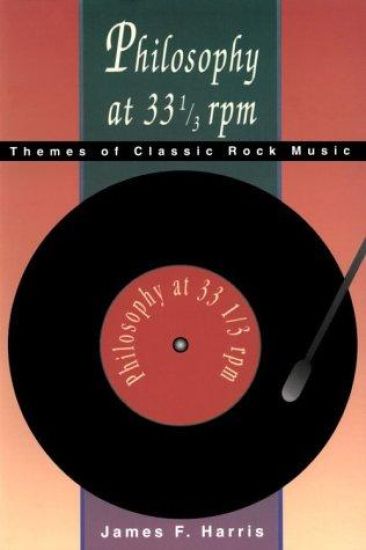
Classic rock of the 1960s and early 1970s broke away from the harmless bubblegum and surfing music of the 1950s to become a vehicle for profound commentary upon the human condition. Theories and motifs from major figures in the history of philosophy, theology and literature were refracted and transfigured in this intelligent new popular art form. Classic rock, argues Professor Harris, should be taken as seriously as the loftiest creations of art and literature. In this book, he lays the groundwork for such an informed appreciation by exhibiting philosophical themes in the greatest rock 'n' roll songs. The writer's examples encompass all the major rock artists of the classic period, including Paul Simon, Elton John, Jefferson Airplane, Janis Joplin, Cat Stevens, Pink Floyd, The Who, The Beatles, The Rolling Stones, Bob Dylan, Chicago, The Moody Blues and Joni Mitchell. His analyses draw upon the ideas of Descartes, Aristotle, Rousseau, Kant, Nietzsche, Marx, Freud, Laing and Camus, to situate the preoccupations of classic rock lyricists in the Western intellectual tradition. Among Professor Harris's detailed exegeses is Joni Mitchell's "Woodstock", which he sees as a defence of Rouseau's view of human nature against that of Hobbes. He argues that Mitchell's "We've got to get ourselves back to the garden" refers to Rousseau's call for a return to simple existence where natural human goodness can flourish. In another exegesis, Pink Floyd's "Dark Side of the Moon", one of the most celebrated of all rock albums, he argues that many listeners fail to understand that it is a systematic exploration of R. D. Laing's radical antipsychiatry concepts, the dark side of the Moon symbolising the authentic self, in contradistinction to the false self, which reflects light from the external source of social convention.
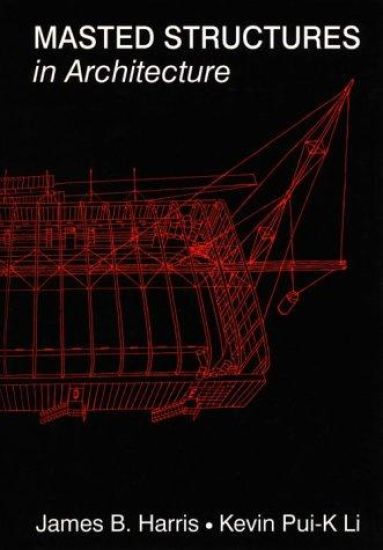
This is the first fully comprehensive survey and analysis of masted structures and covers examples that have evolved during the past three decades. Masted Structures are one of the most interesting developments in post-war architecture resulting from a combination of technology, structural engineering theory and a collaboration between architects and engineers. This is an essential guide for architects to the structural and constructional implications of masted forms in relation to space enclosure, patterns of loading and use of differing materials and techniques. This useful volume will enable architects and engineers to understand the origins, development and nature of masted structures and will provide a stimulating basis for future design.
The Western intellectual tradition has identified rational thinking with he purely logical, excluding other kinds of thinking (such as thinking by analogy, correlation, imaginative simulation) from philosophy, without denying their indispensability in the conduit of life. The central argument of 'Unreason Within reason' is that it is this endeavor to detach the logical from other kinds of thinking which has led to the present crisis of rationality, in which reason seems everywhere to be undermining its own foundations. The concepts from which logical thinking starts are inescapably rooted in the spontaneous correlation of the similar/contrasting and contiguous/remote, which according to Jacobsonian linguistics, structures the sentences analyzed by logic. Logical thinking can turn back on itself to criticize the correlations but cannot detach itself to replace them by logically impregnable foundations. No mode of thinking -- poetic, mythical, mystical -- is inherently irrational; the function of the logical is not to replace them but to test them. Graham finds this approach relevant to the fact/value and egoism/altruism problems in moral philosophy and to the epistemological of conflicting conceptual schemes, as well as to the situating myth and mysticism in relation to philosophy and to the development of a variety of perspectivism clearly distinguishable from relativism. Graham pays special attention to Nietzche and Bataille, as representative critics of rationalism, and to Chinese philosophy, as a tradition which has not isolated the logical from other kinds of thinking. Graham's' engagement of classical Chinese and western sensibilities provides a novel context within which to reconsider issues raised by Derrida's critique of logocentrism and the new Pragmatism of Davidson and Rorty.