Kirjojen hintavertailu – 12 859 819 kirjaa ja 27 kauppaa

Kirjailija

James Hudnut-Beumler

Kirjat ja teokset yhdessä paikassa: 6 kirjaa, julkaisuja vuosilta 1994–2022, suosituimpiin kuuluu Generous Saints. Vertaile teosten hintoja ja tarkista saatavuus suomalaisista kirjakaupoista.

6 kirjaa

Kirjojen julkaisuvuodet: 1994–2022.

Strangers and Friends at the Welcome Table

Strangers and Friends at the Welcome Table

James Hudnut-Beumler

THE UNIVERSITY OF NORTH CAROLINA PRESS
2022
pokkari
In this fresh and fascinating chronicle of Christianity in the contemporary South, historian and minister James Hudnut-Beumler draws on extensive interviews and his own personal journeys throughout the region over the past decade to present a comprehensive portrait of the South's long-dominant religion. Hudnut-Beumler traveled to both rural and urban communities, listening to the faithful talk about their lives and beliefs. What he heard pushes hard against prevailing notions of southern Christianity as an evangelical Protestant monolith so predominant as to be unremarkable. True, outside of a few spots, no non-Christian group forms more than six-tenths of one percent of a state's population in what Hudnut-Beumler calls the Now South. Drilling deeper, however, he discovers an unexpected, blossoming diversity in theology, practice, and outlook among southern Christians. He finds, alongside traditional Baptists, black and white, growing numbers of Christians exemplifying changes that no one could have predicted even just forty years ago, from congregations of LGBT-supportive evangelicals and Spanish-language church services to a Christian homeschooling movement so robust in some places that it may rival public education in terms of acceptance. He also finds sharp struggles and political divisions among those trying to reconcile such Christian values as morality and forgiveness—the aftermath of the mass shooting at Charleston's Emanuel A. M. E. Church in 2015 forming just one example. This book makes clear that understanding the twenty-first-century South means recognizing many kinds of southern Christianities.
The Story of Religion in America

The Story of Religion in America

James P. Byrd; James Hudnut-Beumler

WESTMINSTER/JOHN KNOX PRESS,U.S.
2021
nidottu

Halvin toimitettuna 34,40 €

Written primarily for undergraduate classes in American religious history and organized chronologically, this new textbook presents the broad scope of the story of religion in the American colonies and the United States. While following certain central narratives, including the long shadow of Puritanism, the competition between revival and reason, and the defining role of racial and ethnic diversity, the book tells the story of American religion in all its historical and moral complexity. To appeal to its broad range of readers, this textbook includes charts, timelines, and suggestions for primary source documents that will lead readers into a deeper engagement with the material. Unlike similar history books, The Story of Religion in America pays careful attention to balancing the story of Christianity with the central contributions of other religions.
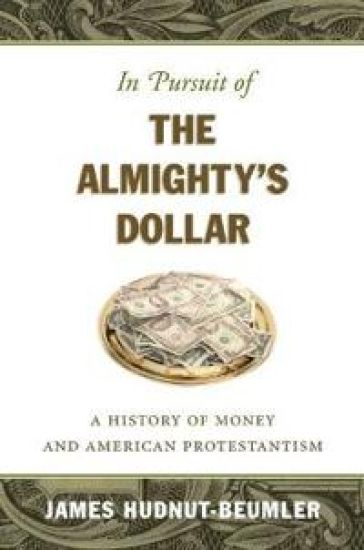
In Pursuit of the Almighty's Dollar

In Pursuit of the Almighty's Dollar

James Hudnut-Beumler

The University of North Carolina Press
2007
sidottu
Every day of the week in contemporary America (and especially on Sundays) people raise money for their religious enterprises - for clergy, educators, buildings, charity, youth-oriented work, and more. In a fascinating look into the economics of American Protestantism, James Hudnut-Beumler examines how churches have raised and spent money from colonial times to the present and considers what these practices say about both religion and American culture. After the constitutional separation of church and state was put in force, Hudnut-Beumler explains, clergy salaries had to be collected exclusively from the congregation without recourse to public funds. In adapting to this change, Protestants forged a new model that came to be followed in one way or another by virtually all religious organizations in the country. Clergy repeatedly invoked God, ecclesiastical tradition, and scriptural evidence to promote giving to the churches they served. Hudnut-Beumler contends that paying for earthly good works done in the name of God has proved highly compatible with American ideas of enterprise, materialism, and individualism. The financial choices Protestants have made throughout history - how money was given, expended, or even withheld - have reflected changing conceptions of what the religious enterprise is all about. Hudnut-Beumler tells that story for the first time.
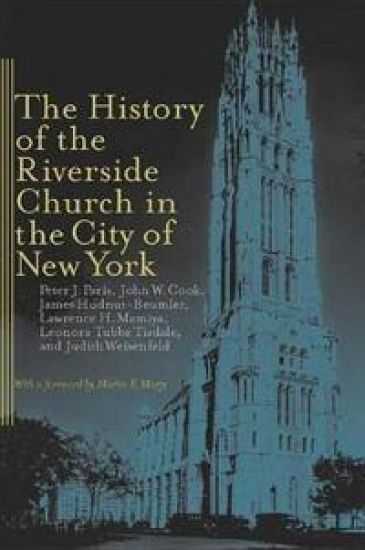
The History of the Riverside Church in the City of New York

The History of the Riverside Church in the City of New York

Peter J. Paris; John W. Cook; James Hudnut-Beumler; Lawrence Mamiya

New York University Press
2004
sidottu
It was from the pulpit of the Riverside Church that Martin Luther King, Jr., first publicly voiced his opposition to the Vietnam War, that Nelson Mandela addressed U. S. church leaders after his release from prison, and that speakers as diverse as Cesar Chavez, Jesse Jackson, Desmond Tutu, Fidel Castro, and Reinhold Niebuhr lectured church and nation about issues of the day. The greatest of American preachers have served as senior minister, including Harry Emerson Fosdick, Robert J. McCracken, Ernest T. Campbell, William Sloane Coffin, Jr., and James A. Forbes, Jr., and at one time the New York Times printed reports of each Sunday's sermon in its Monday morning edition. For seven decades the church has served as the premier model of Protestant liberalism in the United States. Its history represents the movement from white Protestant hegemony to a multiracial and multiethnic church that has been at the vanguard of social justice advocacy, liberation theologies, gay and lesbian ministries, peace studies, ethnic and racial dialogue, and Jewish-Christian relations. A collaborative effort by a stellar team of scholars, The History of the Riverside Church in the City of New York offers a critical history of this unique institution on Manhattan's Upper West Side, including its cultural impact on New York City and beyond, its outstanding preachers, and its architecture, and assesses the shifting fortunes of religious progressivism in the twentieth century.
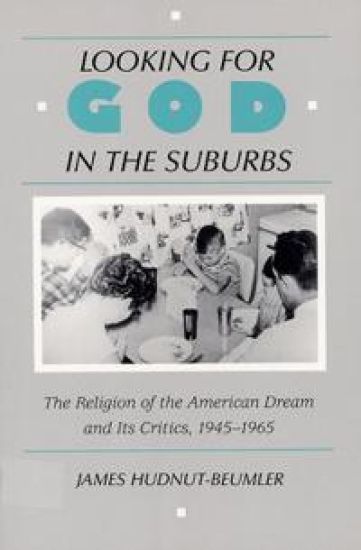
Looking for God in the Suburbs

Looking for God in the Suburbs

James Hudnut-Beumler

Rutgers University Press
1994
nidottu
In the 1950s, 99 percent of adult Americans said they believed in God. How, James Hudnut-Beumler asks, did this consensus about religion turn into the confrontational debates over religion in the 1960s? He argues that post-World War II suburban conformity made church-going so much a part of middle-class values and life that religion and culture became virtually synonymous. Secular critics like David Riesman, William Whyte, C. Wright Mills, and Dwight Macdonald, who blamed American culture for its conformism and lack of class consciousness, and religious critics like Will Herberg, Gibson Winter, and Peter Berger, who argued that religion had lost its true roots by incorporating only the middle class, converged in their attacks on popular religion. Although most Americans continued to live and worship as before, a significant number of young people followed the critics' call for a faith that led to social action, but they turned away from organized religion and toward the counterculture of the sixties. The critics of the 1950s deserve credit for asking questions about the value of religion as it was being practiced and the responsibilities of the affluent to the poor—and for putting these issues on the social and cultural agenda of the next generation.