

Kirjailija
James Hughes
Kirjat ja teokset yhdessä paikassa: 40 kirjaa, julkaisuja vuosilta 1991–2025, suosituimpiin kuuluu Billy Craft. Vertaile teosten hintoja ja tarkista saatavuus suomalaisista kirjakaupoista.
40 kirjaa
Kirjojen julkaisuvuodet: 1991–2025.


Acne: How to get rid of acne - scientifically
James Hughes
Createspace Independent Publishing Platform
2017
nidottu
No miracle cures. No impossible promises. Just easy to follow steps to help clear up your acne for good - based on science. The result of conversations with dermatologists, nutritionists and make-up artists, this book guides you through what you need to know to take back control of your skin - and your life. Written by an acne survivor, it helps identify the sort of spots you have and then your best route to making sure they go away and stay away. It also reveals the twelve biggest mistakes that could actually be making your acne worse - everything from how you sleep to how you use your phone. Does what you eat make a difference? How can you make your current treatment work harder for you? All the answers (without the dodgy miracle claims) are in this book. If you want to take back control of your skin and your life, buying this book is your first step.




Before and After the Honeymoon: Study Guide
James Hughes
Createspace Independent Publishing Platform
2017
nidottu
A study guide for, Before and After the Honeymoon, in this book you will find multiple questions on 48 different "C" topics relative to Christian marriages. It is my hope that the questions presented here will spur you on to ask other questions as you endeavor to make your marriage the best it can be. It is a useful tool for pastors, counselors, cell group leaders, and any couple contemplating marriage or who is married and want to make marriage even better.


How to Make a Christian Marriage
James Hughes
Createspace Independent Publishing Platform
2017
nidottu
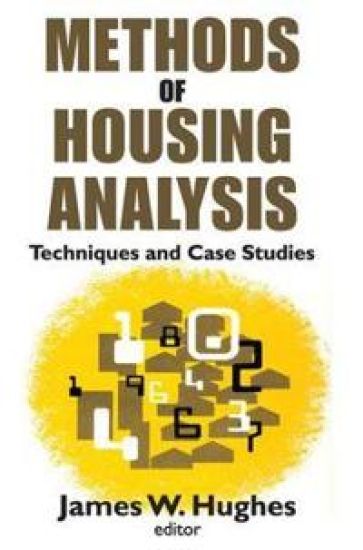
In order to understand and formulate housing policy and programs, it is necessary to have a working knowledge of the internal economic operation of housing from the points of view of both the investor and the owner. James W. Hughes argues that investors' and owners' behavior and activity tend to be governed by market forces and other realities. In that regard, he begins this work by analyzing market rates of return in real estate and housing undertakings, and the variety of analytical techniques which underlie their determination. Methods of Housing Analysis is designed to provide urban planners with an introduction to the basic, quantitative techniques associated with the analysis of housing. A myriad of specific analytical methods has evolved in each of the professions concerned with this subject area. Planners, investors, developers, engineers, appraisers, social scientists, and governmental officials all tend to exhibit unique perspectives when examining housing and have developed their analytical frameworks accordingly. The work is comprised of an extensive discussion by the author, detailed case studies and examples, and a number of essays by leading experts that detail specific analytical procedures and demonstrate their use. The book is divided into four major sections: analysis of the internal operation of housing; basic cost-revenue analysis; expanded cost-revenue/benefit analysis; and government regulation of housing. The thorough nature of Hughes' discussion and of the related readings makes this volume an ideal textbook and reference source.

Are there potentials in central city revitalization? What role will the federal government play in determining future retail locational choices? Shopping center development has never been more popular - or more hazardous than it is today. Retail distribution in the United States has greater efficiency than anywhere else in the world, a tribute to the adaptability and rationalization of systems which have characterized the field. The pressures of the future, however, require greater exertion if they are to be adequately met. The industry drive to the new "middle markets" may change the face of small city America - or it may lead to a blind alley. As central cities, aided by EDA (Economic Development Administration) and UDAG (Urban Development Action Grant), gird up for revitalization in the face of reduced real buying power, these issues take on increased vigor. A whole new legal fabric is evolving in the development of major commercial facilities. Does it mark the path of the future - or is it an ineffectual last gasp effort to reshape the basic overwhelming trend lines of American life? How do we get a grasp on these parameters? Whether city planner, economic or marketing consultant, investor, or developer - much of our future depends on the answers. The authorities brought together for these specially sponsored papers are the best in the business - and provide key insights into this dynamic field. Demographics and consumer response that challenge marketing and planning professionals are also included.



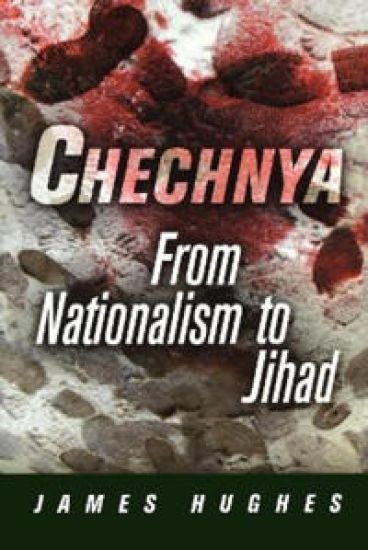
The sheer scale and brutality of the hostilities between Russia and Chechnya stand out as an exception in the mostly peaceful breakup of the Soviet Union. Chechnya: From Nationalism to Jihad provides a fascinating analysis of the transformation of secular nationalist resistance in a nominally Islamic society into a struggle that is its antithesis, jihad. Hughes locates Chechen nationalism within the wider movement for national self-determination that followed the collapse of the Soviet empire. When negotiations failed in the early 1990s, political violence was instrumentalized to consolidate opposing nationalist visions of state-building in Russia and Chechnya. The resistance in Chechnya also occurred in a regional context where Russian hegemony over the Caucasus, especially the resources of the Caspian basin, was in retreat, and in an international context of rising Islamic radicalism. Alongside Bosnia, Kashmir, and other conflicts, Chechnya became embedded in Osama Bin Laden's repertoire of jihadist rhetoric against the "West." It was not simply Russia's destruction of a nationalist option for Chechnya, or "Wahabbist" infiltration from without, that created the political space for Islamism. Rather, we must look also at how the conflict was fought. The lack of proportionality and discrimination in the use of violence, particularly by Russia, accelerated and intensified the Islamic radicalization and thereby transformed the nature of the conflict. This nuanced and balanced study provides a much-needed antidote to the mythologizing of Chechen resistance before, and its demonization after, 9/11. The conflict in Chechnya involves one of the most contentious issues in contemporary international politics-how do we differentiate between the legitimate use of violence to resist imperialism, occupation, and misgovernment, and the use of terrorism against legitimate rule? This book sets out indispensable lessons for understanding conflicts involving the volatile combination of nationalist insurgency, jihad, and terrorism, most notably for the wars in Iraq and Afghanistan.
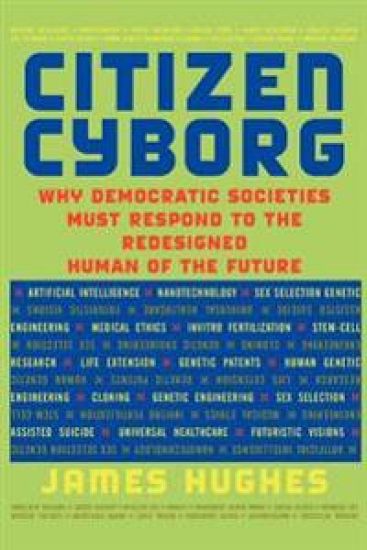
A provocative work by medical ethicist James Hughes, Citizen Cyborg argues that technologies pushing the boundaries of humanness can radically improve our quality of life if they are controlled democratically. Hughes challenges both the technophobia of Leon Kass and Francis Fukuyama and the unchecked enthusiasm of others for limitless human enhancement. He argues instead for a third way, "democratic transhumanism," by asking the question destined to become a fundamental issue of the twenty-first century: How can we use new cybernetic and biomedical technologies to make life better for everyone? These technologies hold great promise, but they also pose profound challenges to our health, our culture, and our liberal democratic political system. By allowing humans to become more than human - "posthuman" or "transhuman" - the new technologies will require new answers for the enduring issues of liberty and the common good. What limits should we place on the freedom of people to control their own bodies? Who should own genes and other living things? Which technologies should be mandatory, which voluntary, and which forbidden? For answers to these challenges, Citizen Cyborg proposes a radical return to a faith in the resilience of our democratic institutions.
Stalin, Siberia and the Crisis of the New Economic Policy
James Hughes
Cambridge University Press
2004
pokkari
This book makes an important contribution to the current re-evaluation of the origins of Stalinism. Although it is widely acknowledged by Western scholars that the Soviet grain crisis of 1927–8 and Stalin’s Siberian tour of January 1928 were crucial factors in the decision to abandon the New Economic Policy (NEP) and return to a more ideologically rigid policy of collectivisation and rapid industrialisation, studies have hitherto concentrated on the role of leading personalities and ‘high politics’. In this book, Dr James Hughes presents an in depth examination of the crisis of the NEP from the regional perspective of Siberia and analyses the events and pressures ‘from below’, at the grassroots level of Soviet society. Using publications of the Siberian party and statistical investigations of the countryside, Dr Hughes offers new insights into several largely uncharted features of the Soviet system in these years.
Stalin, Siberia and the Crisis of the New Economic Policy
James Hughes
Cambridge University Press
1991
sidottu
This 1991 book makes an important contribution to the evaluation of the origins of Stalinism. Although it is widely acknowledged by Western scholars that the Soviet grain crisis of 1927–8 and Stalin's Siberian tour of January 1928 were crucial factors in the decision to abandon the New Economic Policy (NEP) and return to a more ideologically rigid policy of collectivisation and rapid industrialisation, studies have hitherto concentrated on the role of leading personalities and 'high politics'. In this book, Dr James Hughes presents an in depth examination of the crisis of the NEP from the regional perspective of Siberia and analyses the events and pressures 'from below', at the grassroots level of Soviet society. Using publications of the Siberian party and statistical investigations of the countryside, Dr Hughes offers insights into several largely uncharted features of the Soviet system in these years.