Kirjojen hintavertailu – 12 903 725 kirjaa ja 27 kauppaa

Kirjailija

James King

Kirjat ja teokset yhdessä paikassa: 90 kirjaa, julkaisuja vuosilta 1999–2026, suosituimpiin kuuluu Bill Warrington's Last Chance. Vertaile teosten hintoja ja tarkista saatavuus suomalaisista kirjakaupoista.

90 kirjaa

Kirjojen julkaisuvuodet: 1999–2026.

Roland Penrose

Roland Penrose

James King

Edinburgh University Press
2016
sidottu
The first biography of Roland Penrose, one of the great English-born practitioners of modernism in the twentieth centuryAs an artist, an impresario, a biographer and a collector, Roland Penrose (1900-1984) is a key figure in the study of art in England from 1920 to 1984. In the first biography of Penrose, acclaimed biographer James King explores the intricacies of Penrose's life and work tracing the profound effects of his upbringing in a Quaker household on his values, the early influence of Roger Fry, his friendships with Max Ernst, Andre Breton and other surrealists, especially Paul luard, his organization of the landmark International Surrealist Exhibition in the summer of 1936, his conflicted relationship with Pablo Picasso, and his tireless promotion of surrealism as well as the production of his own surrealist art. With a deftness of touch, King traces Penrose's complex professional and personal lives, including his pacifism, his work as a biographer including his outstanding life of Picasso as well as those of Mir, Man Ray, and Tapies and as an art historian, as well as his unconventionality, especially in his two marriages including that to Lee Miller and his numerous love affairs. Key FeaturesThe first biography of Roland Penrose and his role in the development of surrealismEvaluates Penrose as an artist in his own rightPresents Penrose in the context of a rural modernist environmentPoints to a deep divide in Penrose between his career as a modernist painter and his work as a promoter of modernism, a chasm central to Penrose's existence
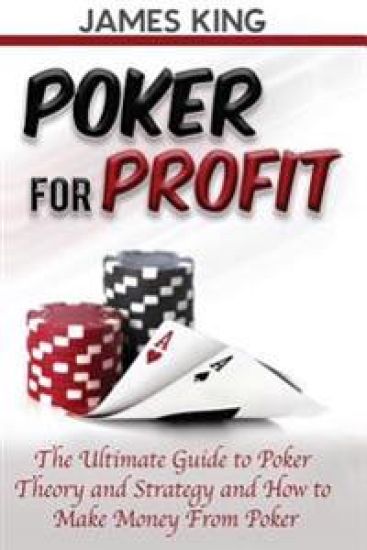
Poker For Profit: The Ultimate Guide to Poker Theory & Strategy

Poker For Profit: The Ultimate Guide to Poker Theory & Strategy

James King

Createspace Independent Publishing Platform
2016
nidottu
Have you ever watched those late night Poker games and thought "I could do that ?" New Extended 2nd Edition with FREE bonus inside . You're about to discover how to make serious cash with small investments while playing a fun, simple yet challenging game. More and more people are making their living online or in casinos from poker. Now is your chance to join in the Texas Holdem frenzy that is sweeping the nation and more importantly, Get good at it Here Is A Preview Of What You'll Learn... Why Play Poker How to Play PokerPoker Strategy & TheoryBankroll ManagementPot OddsWhen to Play Your HandTournament PokerBetting StrategyPoker MathematicsMuch, much more Download your copy today Take action today and download this book for a limited time discount
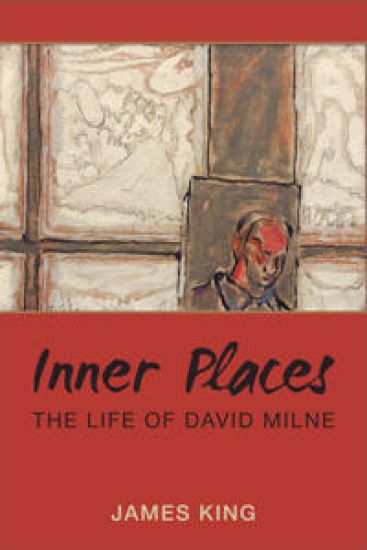
Inner Places

Inner Places

James King

Dundurn Group Ltd
2015
sidottu
2016 Hamilton Arts Council Literary Award for Non-Fiction — WinnerDavid Milne is one of Canada’s finest artists, a man whose work speaks to the intricate beauty of the world as he experienced it. David Milne (1882–1953) dedicated his life to exploring nature and casting it into art in a variety of modernist formats. He was born into poverty in rural Ontario and remained poor all his life because of his relentless dedication to his art. For him, art was life. Nothing mattered to him as much as the enormous “kick“ he felt when he was able to produce the image his artist's eye told him was there. Milne returned to Ontario in 1929 after a twenty-five-year stay in the United States. In every place he lived his peripatetic existence, Milne created a different kind of landscape painting. In his chosen life of solitude, his mind and hand remained very much alive. Since Milne spent as much time writing as he did painting, he provides an enormous amount of material for a life writer. His biography re-creates the texture of the artist's one-of-a-kind life and struggles, allowing a truly intimate portrait to emerge.
Bloody British History: Winchester

Bloody British History: Winchester

Clare Dixon; Don Bryan; Geraldine Buchanan; James King

The History Press Ltd
2013
nidottu
The queen who walked on fire! Weird legends of St Swithin explored! The Vikings are coming! Death and destruction in ancient Winchester! Sufferings she could not describe’: the amazing life and dolorous death of Miss Jane Austen! Fed to the dogs! Winchester’s most gruesome executions! The secret histories of Winchester’s most famous buildings revealed! Winchester has one of the darkest and most fascinating histories on record – more than 2,000 years of death, disease and destruction. With Georgian terrorists and legendary kings, trials, plagues and chilling true stories including the tale of William Walker, the diver who spent five years in pitch-black water under the cathedral, you’ll never see the city in the same way again!
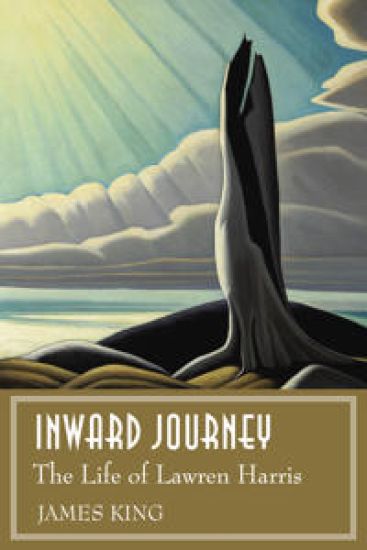
Inward Journey

Inward Journey

James King

Thomas Allen Publishers
2012
sidottu
The first complete biography ever published of Group of Seven artist and spokesman Lawren Harris. Lawren Harris (1885-1970) is among the most iconic of Canadian artists. Harris was an outspoken defender of modernism, and a very private person. In this gripping, sympathetic account, James King writes about Harris' public persona as the spokesman for the Group of Seven as well as his championship of Canadian art and artists. Born to great wealth, Harris spent much of his existence selflessly promoting Canadian painting and the interests of his fellow artists. But Harris' own personal struggle to become an artist was long and complex, and he was beset by much turmoil throughout his life. When, early in 1930, he achieved his creative peak - in paintings such as North of Lake Superior - he turned his back on representational art and spent the remainder of his career becoming an abstract painter. Harris' unhappy first marriage, his flight to New Hampshire and New Mexico, his sometimes overbearing attitude towards younger artists, and the full magnitude of his inner struggles are all dealt with fully in this sensitive, engaging narrative that captures the complexity of the man behind the mask.
Under Foreign Eyes

Under Foreign Eyes

James King

John Hunt Publishing
2012
nidottu
This book is about the perception of Japan in the sixty films set there by gaijin (foreigners) - outsiders who almost always do not speak or read Japanese. My area of attention is directed to films depicting post World War II Japan and the Japanese, and, in many cases, films showing how foreigners in the same time frame respond to Japan. Why have a substantial number of films been set there by strangers? As a body of work, what do they tell us about contemporary Japan and about cinema? These films certainly provide a new cultural history of the West's reaction to Japan, but, even more, they are constructions that demonstrate how the West gazes at Japan. As such, more information can often be derived about the onlookers as on those looked-upon.
Beyond «The Great Wave»

Beyond «The Great Wave»

James King

Peter Lang AG, Internationaler Verlag der Wissenschaften
2010
nidottu
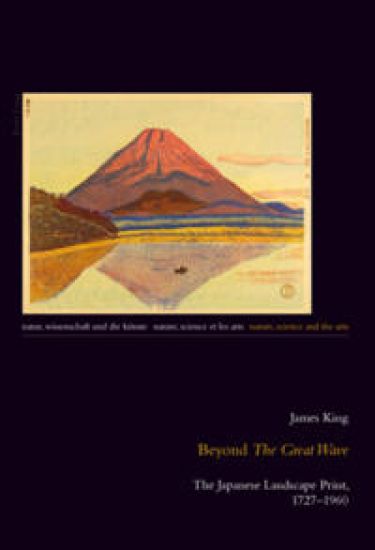
The Japanese landscape print has had a tremendous influence on Western art of the nineteenth and twentieth centuries. In Japan and in the West it is often seen as the dominant form in Ukiyo-e, pictures from the floating world. And yet for all its importance, it is a genre whose history has never been written. Beyond The Great Wave is a survey or overview for all those interested in discovering the inner dynamics of one of art history’s most remarkable achievements. However, it is also a quest narrative, in which landscapes and notions of Japan as a homeland are intertwined and interconnected. Although there has never been a book-length study of the Japanese landscape print in either Japanese or English, a great deal has been written about the two giants of the genre, Hokusai and Hiroshige. From what traditions did these two nineteenth-century artists emerge? Who were their predecessors? What influence, if any, did they have on other Ukiyo-e artists? Can their influence be seen in the shin-hanga and sôsaku-hanga artists of the twentieth century? This book addresses these issues, but it also looks at a number of other factors, such as the growth of tourism in nineteenth-century Japan, necessary for understanding this genre.