Kirjojen hintavertailu – 12 903 725 kirjaa ja 27 kauppaa

Kirjailija

James Koranyi

Kirjat ja teokset yhdessä paikassa: 4 kirjaa, julkaisuja vuosilta 2017–2023, suosituimpiin kuuluu Modern Europe. Vertaile teosten hintoja ja tarkista saatavuus suomalaisista kirjakaupoista.

4 kirjaa

Kirjojen julkaisuvuodet: 2017–2023.

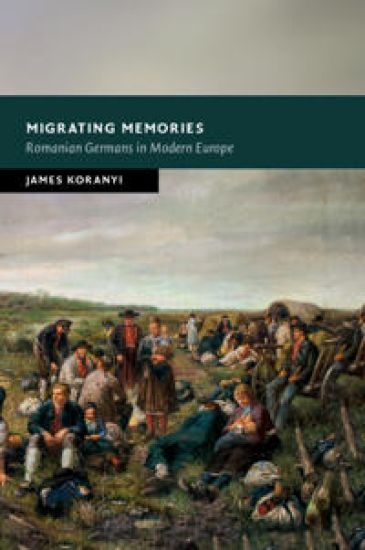
Migrating Memories

Migrating Memories

James Koranyi

Cambridge University Press
2023
pokkari
Romanian Germans, mainly from the Banat and Transylvania, have occupied a place at the very heart of major events in Europe in the twentieth century yet their history is largely unknown. This east-central European minority negotiated their standing in a difficult new European order after 1918, changing from uneasy supporters of Romania, to zealous Nazis, tepid Communists, and conciliatory Europeans. Migrating Memories is the first comprehensive study in English of Romanian Germans and follows their stories as they move across borders and between regimes, revealing a very European experience of migration, minorities, and memories in modern Europe. After 1945, Romanian Germans struggled to make sense of their lives during the Cold War at a time when the community began to fracture and fragment. The Revolutions of 1989 seemed to mark the end of the German community in Romania, but instead Romanian Germans repositioned themselves as transnational European bridge-builders, staking out new claims in a fast-changing world.
Migrating Memories

Migrating Memories

James Koranyi

Cambridge University Press
2021
sidottu
Romanian Germans, mainly from the Banat and Transylvania, have occupied a place at the very heart of major events in Europe in the twentieth century yet their history is largely unknown. This east-central European minority negotiated their standing in a difficult new European order after 1918, changing from uneasy supporters of Romania, to zealous Nazis, tepid Communists, and conciliatory Europeans. Migrating Memories is the first comprehensive study in English of Romanian Germans and follows their stories as they move across borders and between regimes, revealing a very European experience of migration, minorities, and memories in modern Europe. After 1945, Romanian Germans struggled to make sense of their lives during the Cold War at a time when the community began to fracture and fragment. The Revolutions of 1989 seemed to mark the end of the German community in Romania, but instead Romanian Germans repositioned themselves as transnational European bridge-builders, staking out new claims in a fast-changing world.
Modern Europe

Modern Europe

Bernhard Struck; James Koranyi; Jan Koura

Bloomsbury Academic
2017
pokkari
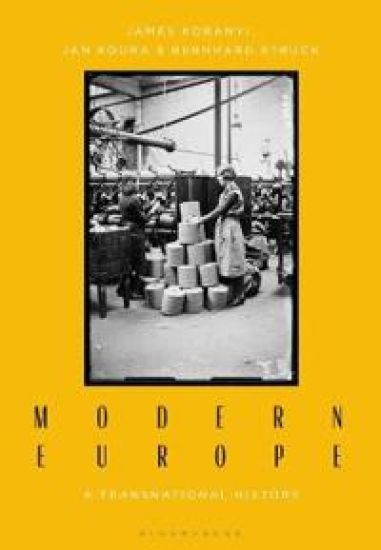
Europe is a small continent, and yet it became the dominant global power from the late eighteenth century. While the continent appeared to become a global centre, it also experienced various fractures along constantly shifting state borders. These developments over the past 250 have made European history especially dynamic and exciting. Modern Europe: A Transnational History explores the complexity of this continent by telling a history of transnational Europe, showing how it has been constantly reinvented and reconfigured by global and local connections and ruptures. The authors explain Europe not in terms of a collection of national histories, but focuses on the numerous cross-border flows of peoples, goods and ideas that cut across state boundaries. As this book shows, Europe, its people and societies can only be understood by painting a picture of connections and contestations created within empire, the national, and the local.
Modern Europe

Modern Europe

Bernhard Struck; James Koranyi; Jan Koura

Bloomsbury Academic
2017
sidottu
Europe is a small continent, and yet it became the dominant global power from the late eighteenth century. While the continent appeared to become a global centre, it also experienced various fractures along constantly shifting state borders. These developments over the past 250 have made European history especially dynamic and exciting. Modern Europe: A Transnational History explores the complexity of this continent by telling a history of transnational Europe, showing how it has been constantly reinvented and reconfigured by global and local connections and ruptures. The authors explain Europe not in terms of a collection of national histories, but focuses on the numerous cross-border flows of peoples, goods and ideas that cut across state boundaries. As this book shows, Europe, its people and societies can only be understood by painting a picture of connections and contestations created within empire, the national, and the local.