Kirjojen hintavertailu – 12 903 724 kirjaa ja 27 kauppaa

Kirjailija

James Lacey

Kirjat ja teokset yhdessä paikassa: 10 kirjaa, julkaisuja vuosilta 2012–2025, suosituimpiin kuuluu Great Strategic Rivalries. Vertaile teosten hintoja ja tarkista saatavuus suomalaisista kirjakaupoista.

10 kirjaa

Kirjojen julkaisuvuodet: 2012–2025.

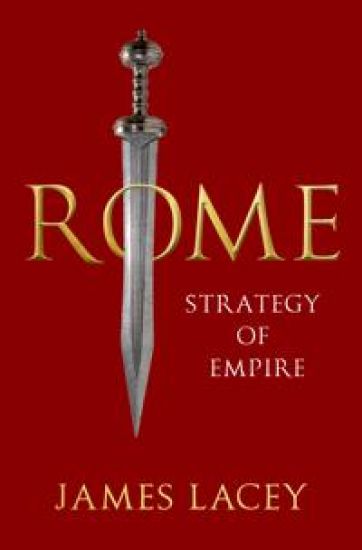
Rome

Rome

James Lacey

OXFORD UNIVERSITY PRESS INC
2025
nidottu

Halvin toimitettuna 24,90 €

The first work to lay out Roman strategic thinking from its start under Augustus until its final demise in 476 CE From Octavian's victory at Actium (31 bc) to its traditional endpoint in the West (476), the Roman Empire lasted a solid 500 years—an impressive number by any standard, and fully one-fifth of all recorded history. In fact, the decline and final collapse of the Roman Empire took longer than most other empires even existed. Any historian trying to unearth the grand strategy of the Roman Empire must, therefore, always remain cognizant of the time scale, in which she is dealing. Although the pace of change in the Roman era never approached that of the modern era, it was not an empire in stasis. While the visible trappings may have changed little, the challenges Rome faced at its end were vastly different than those faced by Augustus and the Julio-Claudians. Over the centuries, the Empire's underlying economy, political arrangements, military affairs, and, most importantly, the myriad of external threats it faced were in constant flux, making adaptability to changing circumstances as important to Roman strategists as it is to strategists of the modern era. Yet the very idea of Rome having a grand strategy, or what it might be, had not concerned historians until Edward Luttwak's The Grand Strategy of the Roman Empire appeared forty years ago. Although this pioneering work generated much debate, it failed to win over many ancient historians, in part because of its heavy emphasis on military force and its neglect of considerations of diplomacy, economics, politics, culture, and the changing nature of the threats that confronted Rome. By employing an expansive definition of strategy and by focusing much of the narrative on crucial historical moments and the personalities involved, James Lacey provides a comprehensive, persuasive, and engaging account of the rise and fall of the Roman Empire. It assimilates the most recent work of classical historians and archaeologists to correct the flaws and omissions of previous accounts, thus presenting the most complete and nuanced narrative of Roman strategic thinking and execution ever published.

Derelict Merseyside

Derelict Merseyside

James Lacey; David Gooch

AMBERLEY PUBLISHING
2025
nidottu
In this collection of haunting images, photographers James Lacey and David Gooch have brought to the light the fascination of derelict and abandoned buildings and other structures around Liverpool and Merseyside. These buildings and places have been left to slowly decay, no longer in use for their original purpose, but often the echoes of their former life can be seen. Their urban exploring reveals buildings associated with all walks of life, including hospitals, cinemas, churches, schools, factories and libraries. As the fortunes of Liverpool and the surrounding area rose and fell, industries such as shipbuilding flourished and declined, transport changed the face of the area, including railway infrastructure that came and went, and residential areas were rebuilt and changing demographics and ideas of care saw hospitals and asylums closed. Look through these photographs and you will soon see the fascination of this portrayal of the after-life of these derelict and decaying buildings and structures around Liverpool and Merseyside.
The Year God Died

The Year God Died

James Lacey

RANDOM HOUSE USA INC
2025
sidottu
A groundbreaking account of how the Roman Empire shaped the life and death of Jesus, overturning centuries of historical beliefs around the world--from the New York Times bestselling author of The First Clash. In late 31 AD, after the Roman senators murdered Lucius Sejanus, the Roman Emperor Tiberius's closest confidant, the Empire was forever changed. If Sejanus had not been murdered, Jesus would never have been crucified. This profound connection between the lives of Sejanus and Jesus is the first of many revelations in this startling reexamination of the Roman world in which Jesus walked. With new evidence and meticulous research, Dr. James Lacey weaves a majestic and accurate description of who Jesus was. The Year God Died contradicts longstanding historical malpractice to reveal the most comprehensive and accurate view of the New Testament. Lacey explains how the events in Rome drove events in Judea--which is directly linked to Jesus' crucifixion. He uncovers a vibrant and rich world, but one still coming to grips with the reality of Roman power. He introduces ten-year-old Boadicea, who is destined to lead Britain's tribes in a great revolt against Rome. He depicts Varus marching his legions past a four-year-old Jesus on his war to Jerusalem. And he describes how Herod prospered by appeasing some of the most dangerous people in history--Pompey, Julius Caesar, Mark Anthony, Cleopatra, and Augustus. In this sweeping chronicle, Lacey dissects reams of misinformation to reveal, for the first time, Jesus, as he was born and lived within the grand spectacle of the Roman world.
Rome

Rome

James Lacey

OXFORD UNIVERSITY PRESS INC
2022
sidottu

Halvin toimitettuna 37,00 €

The first work to lay out Roman strategic thinking from its start under Augustus until its final demise in 476 CE From Octavian's victory at Actium (31 bc) to its traditional endpoint in the West (476), the Roman Empire lasted a solid 500 years—an impressive number by any standard, and fully one-fifth of all recorded history. In fact, the decline and final collapse of the Roman Empire took longer than most other empires even existed. Any historian trying to unearth the grand strategy of the Roman Empire must, therefore, always remain cognizant of the time scale, in which she is dealing. Although the pace of change in the Roman era never approached that of the modern era, it was not an empire in stasis. While the visible trappings may have changed little, the challenges Rome faced at its end were vastly different than those faced by Augustus and the Julio-Claudians. Over the centuries, the Empire's underlying economy, political arrangements, military affairs, and, most importantly, the myriad of external threats it faced were in constant flux, making adaptability to changing circumstances as important to Roman strategists as it is to strategists of the modern era. Yet the very idea of Rome having a grand strategy, or what it might be, had not concerned historians until Edward Luttwak's The Grand Strategy of the Roman Empire appeared forty years ago. Although this pioneering work generated much debate, it failed to win over many ancient historians, in part because of its heavy emphasis on military force and its neglect of considerations of diplomacy, economics, politics, culture, and the changing nature of the threats that confronted Rome. By employing an expansive definition of strategy and by focusing much of the narrative on crucial historical moments and the personalities involved, James Lacey provides a comprehensive, persuasive, and engaging account of the rise and fall of the Roman Empire. It assimilates the most recent work of classical historians and archaeologists to correct the flaws and omissions of previous accounts, thus presenting the most complete and nuanced narrative of Roman strategic thinking and execution ever published.
Great Strategic Rivalries

Great Strategic Rivalries

James Lacey

Oxford University Press Inc
2020
nidottu
From the legendary antagonism between Athens and Sparta during the Peloponnesian War to the Napoleonic Wars and the two World Wars of the twentieth century, the past is littered with long-term strategic rivalries. History tells us that such enduring rivalries can end in one of three ways: a series of exhausting conflicts in which one side eventually prevails, as in the case of the Punic Wars between ancient Rome and Carthage, a peaceful and hopefully orderly transition, like the rivalry between Great Britain and the United States at the turn of the twentieth century, or a one-sided collapse, such as the conclusion of the Cold War with the fall of the Soviet Union. However, in spite of a wealth of historical examples, the future of state rivalries remains a matter of conjecture. Great Strategic Rivalries explores the causes and implications of past strategic rivalries, revealing lessons for the current geopolitical landscape. Each chapter offers an accessible narrative of a historically significant rivalry, comprehensively covering the political, diplomatic, economic, and military dimensions of its history. Featuring original essays by world-class historians--including Barry Strauss, Geoffrey Parker, Williamson Murray, and Geoffrey Wawro--this collection provides an in-depth look at how interstate relations develop into often violent rivalries and how these are ultimately resolved. Much more than an engaging history, Great Strategic Rivalries contains valuable insight into current conflicts around the globe for policymakers and policy watchers alike.
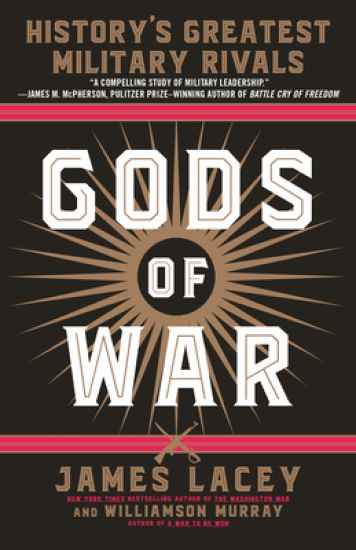
Gods of War: History's Greatest Military Rivals

Gods of War: History's Greatest Military Rivals

James Lacey; Williamson Murray

BANTAM
2020
sidottu
Hannibal vs. Scipio. Grant vs. Lee. Rommel vs. Patton. The greatest battles, commanders, and rivalries of all time come to life in this engrossing guide to the geniuses of military history. "A compelling study of military leadership."--James M. McPherson, Pulitzer Prize-winning author of Battle Cry of Freedom Any meeting of genius may create sparks, but when military geniuses meet, their confrontations play out upon a vast panorama of states or civilizations at war, wielding the full destructive power of a mighty nation's armies. Gods of War is the first single-volume, in-depth examination of the most celebrated military rivalries of all time, and of the rare, world-changing battles in which these great commanders in history matched themselves against true equals. From Caesar and Pompey deciding the fate of the Roman Republic, to Grant and Lee battling for a year during the American Civil War, to Rommel and Montgomery and Patton meeting in battle after battle as Hitler strove for European domination, these match-ups and their corresponding strategies are among the most memorable in history. A thrilling look into both the generals' lives and their hardest-fought battles, Gods of War is also a thought-provoking analysis of the qualities that make a strong commander and a deep exploration of the historical context in which the contestants were required to wage war, all told with rousing narrative flair. And in a time when technology has made the potential costs of war even greater, it is a masterful look at how military strategy has evolved and what it will take for leaders to guide their nations to peace in the future.
Great Strategic Rivalries

Great Strategic Rivalries

James Lacey

Oxford University Press Inc
2016
sidottu
Great Strategic Rivalries explores the histories and implications of past strategic rivalries so as to bring forth lessons pertinent to today's geopolitical world. The starting assumption is that each of these rivalries holds a number of areas of commonality from which one can determine pitfalls as well as opportunities (many of them missed). For instance, even a cursory glance at history's great strategic rivals indicates that virtually all of them began as "commercial rivalries" and then transitioned into a strategic rivalry centered on military power. One could even claim a commercial interest was at the heart of the US-USSR rivalry, but this time rather than a contest over global markets each power aimed at ensuring its economic ideology (Communism vs. Capitalism) was triumphant. In addition, history tells us that such enduring strategic rivalries typically end in one of three ways: a series of exhausting conflicts in which one side eventually prevails (Rome vs. Carthage), a peaceful and hopefully orderly transition (Great Britain vs. the US at the turn of the 20th century), or a one-sided collapse (Soviet Union in 1991). The first work covering a key element of the strategic relationship between states from ancient history to the late 20th century, Great Strategic Rivalries fills a major gap in the historiography of state relations. Each chapter provides an accessible narrative of an historically significant rivalry, comprehensively covering all aspects (political, diplomatic, economic, and military) of its history. The authors -- including Barry Strauss, Geoffrey Parker, Williamson Murray, and Geoffrey Wawro -- are all renowned historians and recognized experts in their selected topics.
Gold, Blood, and Power: Finance and War Through the Ages

Gold, Blood, and Power: Finance and War Through the Ages

James Lacey; Strategic Studies Institute; U.S. Army War College

Lulu.com
2015
nidottu
cCicero once pointed out that the crucial sinew of war is, and always has been, "endless streams of money." Wars throughout history have been waged for only as long as the money has held out. If silver and gold continued to pour forth from a state's treasury, then a ruler or government could tap a never-ending supply of soldiers and war materiel. However, soon after the supply of coin was expended, armies began to vanish and sources of supply would dry up. Only when new methods of providing long-term finances started to evolve, first in the Netherlands and soon thereafter through the Bank of England, do we begin to witness progress toward a financial revolution that was still evolving at the start of the 20th century. By World War II, however, this process was complete. For the first time in recorded history, a major war was fought where the manpower and productive capacity of states was exhausted before any major state's finances gave out.