Kirjojen hintavertailu – 12 859 828 kirjaa ja 27 kauppaa
Kirjailija
James M. McPherson
Kirjat ja teokset yhdessä paikassa: 33 kirjaa, julkaisuja vuosilta 1976–2025, suosituimpiin kuuluu Both Prayed to the Same God. Vertaile teosten hintoja ja tarkista saatavuus suomalaisista kirjakaupoista.
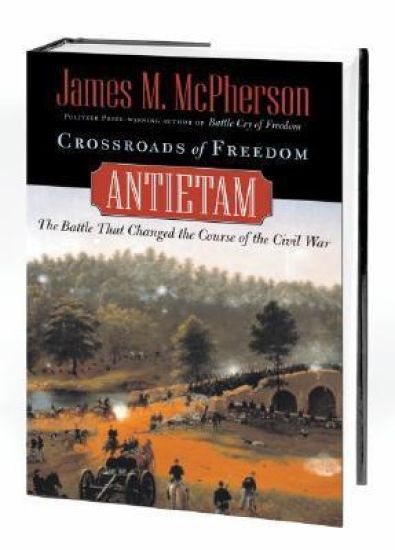
The Battle of Antietam was the bloodiest day in American history, and the turning point of the whole Civil War. At the point where Confederate troops invaded Maryland, poised to take Washington, the morale of the Union was at an all time low. It had suffered a series of defeats, it seemed that foreign governments were on the verge of recognizing the Confederacy and legitimizing its cause, and the Emancipation Proclamation had been shelved indefinitely. McPherson argues that the Union victory at Antietam sharply reversed all this, and gave the Union a new raison d'être in the form of Emancipation. McPherson combines a compelling narrative of the battle itself with a clear analysis of the political situation surrounding it. The final chapters discuss the aftermath of the battle, and its reputation as a pivotal moment in American history.
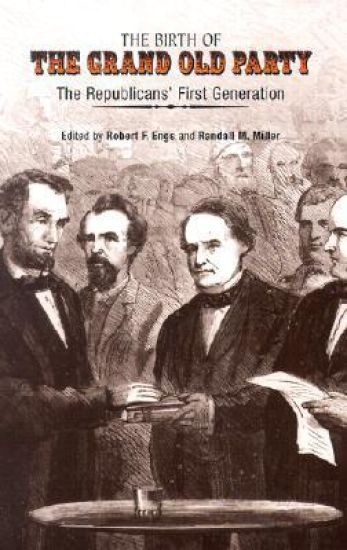
The period from 1850 to 1876 was the most transformative era in American history. During the course of this tumultuous quarter century Americans fought a bloody civil war, tried to settle the issue of state versus central government power, recognized the dominance of the new industrial economy over the older agricultural one, and ended slavery, long the shame of the nation. At the same time, a major political realignment occurred with the collapse of the "second American party system" and the emergence of a new party, the Republicans. But the defeat of slavery-the chief catalyst for the birth of the Republican party-was at best a limited success. The Constitution had been rewritten to abolish slavery and guarantee equal protection under the law, but social equality for African Americans and expanding freedom for others remained elusive throughout the nation. For these triumphs and enduring tragedy, the Republican party, which became in time and memory the party of Abraham Lincoln, bore primary responsibility. This collection of six original essays by some of America's most distinguished historians of the Civil War era examines the origins and evolution of the Republican party over the course of its first generation. The essays consider the party in terms of its identity, interests, ideology, images, and individuals, always with an eye to the ways the Republican party influenced midnineteenth-century concerns over national character, political power, race, and civil rights. The authors collectively extend their inquiries from the 1850s through the 1870s to understand the processes whereby the second American party system broke down, a new party and politics emerged, the Civil War came, and a new political and social order developed. They especially consider how ideas about freedom in the 1850s coalesced during war and Reconstruction to produce both an expanded call for political and civil rights for the ex-slaves and a concern over expanded federal involvement in the protection of those rights. By observing the transformation of a sectional party born in the 1850s into the "Grand Old Party" by the 1870s, the authors demonstrate that no modern political party, even the one that claims descent from Lincoln, has surpassed the accomplishments of the first generation of Republicans. Contributors- Jean H. Baker, Professor of History at Goucher College, Maryland, is author of Mary Todd Lincoln: A Biography. Eric Foner, DeWitt Clinton Professor of History at Columbia University, is author of Reconstruction: America's Unfinished Revolution, 1863-1877, winner of the Bancroft Prize. Michael F. Holt, Langbourne M. Williams Professor of American History at the University of Virginia, is author of The Rise and Fall of the American Whig Party: Jacksonian Politics and the Onset of the Civil War. James M. McPherson, Professor of History at Princeton University, is author of Battle Cry of Freedom: The Civil War Era, winner of the Pulitzer Prize in history. Mark E. Neely, Jr., McCabe-Greer Professor in the American Civil War Era at Pennsylvania State University, is author of The Fate of Liberty: Abraham Lincoln and Civil Liberties, winner of the Pulitzer Prize in history. Phillip Shaw Paludan, Naomi Lynn Professor of Lincoln Studies at the University of Illinois at Springfield, is author of The Presidency of Abraham Lincoln, winner of the Lincoln Prize. Brooks D. Simpson, Professor of History at Arizona State University, is author of Ulysses S. Grant: Triumph over Adversity, 1822-1865.
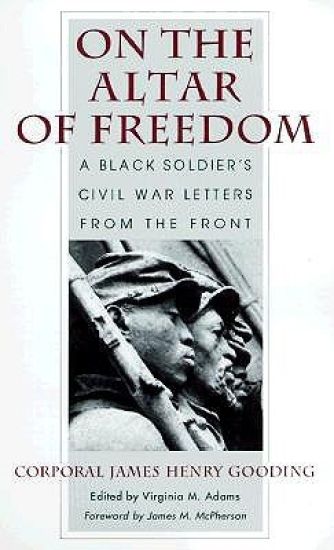
The letters featured in this book were sent by Corporal James Henry Gooding, a member of Company C., of the 54th Massachusetts regiment. They were sent to the New Bedford (Massachusetts) ""Mercury"" and published. He was described as a ""truthful and intelligent correspondent, and a good soldier"".
James M. McPherson is acclaimed as one of the finest historians writing today and a preeminent commentator on the Civil War. Battle Cry of Freedom, his Pulitzer Prize-winning account of that conflict, was a national bestseller that Hugh Brogan, in The New York Times, called `history writing of the highest order.' Now, McPherson has brilliantly recreated the war and battle experience of that war from the point of view of the soldiers themselves, drawing on at least 25,000 letters written by over 1000 soldiers, both Union and Confederate. He shows that, contrary to what many scholars believe, these men remained highly motivated and idealistic about the cause for which they fought, regardless of the obstacles and deprivation that they faced.
James M. McPherson is acclaimed as one of the finest historians writing today and a preeminent commentator on the Civil War. Battle Cry of Freedom, his Pulitzer Prize-winning account of that conflict, was a national bestseller that Hugh Brogan, in The New York Times, called "history writing of the highest order." Now, in Drawn With the Sword, McPherson offers a series of thoughtful and engaging essays on some of the most enduring questions of the Civil War, written in the masterful prose that has become his trademark. Filled with fresh interpretations, puncturing old myths and challenging new ones, Drawn With the Sword explores such questions as why the North won and why the South lost (emphasizing the role of contingency in the Northern victory), whether Southern or Northern aggression began the war, and who really freed the slaves, Abraham Lincoln or the slaves themselves. McPherson offers memorable portraits of the great leaders who people the landscape of the Civil War: Ulysses S. Grant, struggling to write his memoirs with the same courage and determination that marked his successes on the battlefield; Robert E. Lee, a brilliant general and a true gentleman, yet still a product of his time and place; and Abraham Lincoln, the leader and orator whose mythical figure still looms large over our cultural landscape. And McPherson discusses often-ignored issues such as the development of the Civil War into a modern "total war" against both soldiers and civilians, and the international impact of the American Civil War in advancing the cause of republicanism and democracy in countries from Brazil and Cuba to France and England. Of special interest is the final essay, entitled "What's the Matter With History?", a trenchant critique of the field of history today, which McPherson describes here as "more and more about less and less." He writes that professional historians have abandoned narrative history written for the greater audience of educated general readers in favor of impenetrable tomes on minor historical details which serve only to edify other academics, thus leaving the historical education of the general public to films and television programs such as Glory and Ken Burns's PBS documentary The Civil War. Each essay in Drawn With the Sword reveals McPherson's own profound knowledge of the Civil War and of the controversies among historians, presenting all sides in clear and lucid prose and concluding with his own measured and eloquent opinions. Readers will rejoice that McPherson has once again proven by example that history can be both accurate and interesting, informative and well-written. Mark Twain wrote that the Civil War "wrought so profoundly upon the entire national character that the influence cannot be measured short of two or three generations." In Drawn With the Sword, McPherson gracefully and brilliantly illuminates this momentous conflict.
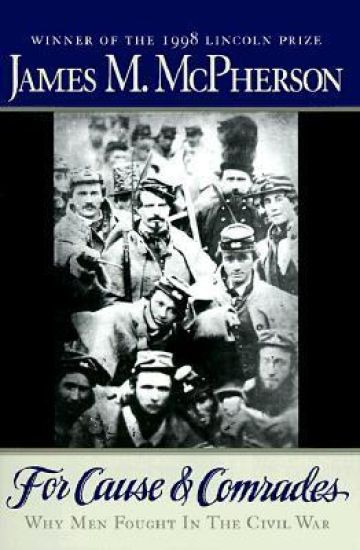
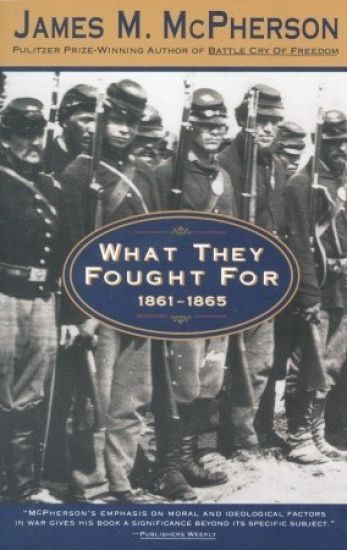
General John A. Wickham, commander of the famous 101st Airborne Division in the 1970s and subsequently Army Chief of Staff, once visited Antietam battlefield. Gazing at Bloody Lane where, in 1862, several Union assaults were brutally repulsed before they finally broke through, he marveled, `You couldn't get American soldiers today to make an attack like that.' Why did those men risk certain death, over and over again, through countless bloody battles and four long, awful years ? Why did the conventional wisdom -- that soldiers become increasingly cynical and disillusioned as war progresses -- not hold true in the Civil War? It is to this question -- why did they fight -- that James McPherson, America's preeminient Civil War historian, now turns his attention. He shows that, contrary to what many scholars believe, the soldiers of the Civil War remained powerfully convinced of the ideals for which they fought throughout the conflict. Motivated by duty and honor, and often by religious faith, these men wrote frequently of their firm belief in the cause for which they fought: the principles of liberty, freedom, justice, and patriotism. Soldiers on both sides harkened back to the Founding Fathers, and the ideals of the American Revolution. They fought to defend their country, either the Union -- `the best Government ever made' -- or the Confederate states, where their very homes and families were under siege. And they fought to defend their honor and manhood. `I should not lik to go home with the name of a couhard,' one Massachusetts private wrote, and another private from Ohio said, `My wife would sooner hear of my death than my disgrace.' Even after three years of bloody battles, more than half of the Union soldiers reenlisted voluntarily. `While duty calls me here and my country demands my services I should be willing to make the sacrifice,' one man wrote to his protesting parents. And another soldier said simply, `I still love my country.' McPherson draws on more than 25,000 letters and nearly 250 private diaries from men on both sides. Civil War soldiers were among the most literate soldiers in history, and most of them wrote home frequently, as it was the only way for them to keep in touch with homes that many of them had left for the first time in their lives. Significantly, their letters were also uncensored by military authorities, and are uniquely frank in their criticism and detailed in their reports of marches and battles, relations between officers and men, political debates, and morale. For Cause and Comrades lets these soldiers tell their own stories in their own words to create an account that is both deeply moving and far truer than most books on war. Battle Cry of Freedom, McPherson's Pulitzer Prize-winning account of the Civil War, was a national bestseller that Hugh Brogan, in The New York Times, called `history writing of the highest order.' For Cause and Comrades deserves similar accolades, as McPherson's masterful prose and the soldiers' own words combine to create both an important book on an often overlooked aspect of our bloody Civil War, and a powerfully moving account of the men who fought it.
This series of essays reveal McPherson's profound knowedge of the Civil War and of the controversies among historians that have existed about aspects of it. He is eminently fair in stating the opposing arguments in each of these controversies, but his own measured opinions are always clearly stated and are invariably persuasive.
From the Pulitzer Prize-winning author of Battle Cry of Freedom--an impressive scholarly tour de force and a lively, highly accessible account of the sentiments of both Northern and Southern soldiers during the national trauma of the Civil War. In Battle Cry Of Freedom, James M. McPherson presented a fascinating, concise general history of the defining American conflict. With What They Fought For, he focuses his considerable talents on what motivated the individual soldier to fight. In an exceptional and highly original Civil War analysis, McPherson draws on the letters and diaries of nearly one thousand Union and Confederate soldiers, giving voice to the very men who risked their lives in the conflict. His conclusion that most of them felt a keen sense of patriotic and ideological commitment counters the prevailing belief that Civil War soldiers had little or no idea of what they were fighting for. In their letters home and their diaries--neither of which were subject to censorship--these men were able to comment, in writing, on a wide variety of issues connected with their war experience. Their insights show how deeply felt and strongly held their convictions were and reveal far more careful thought on the ideological issues of the war than has previously been thought to be true. Living only eighty years after the signing of the Declaration of Independence, Civil War soldiers felt the legacy and responsibility entrusted to them by the Founding Fathers to preserve fragile democracy--be it through secession or union--as something worth dying for. In What They Fought For, McPherson takes individual voices and places them in the great and terrible choir of a country divided against itself.
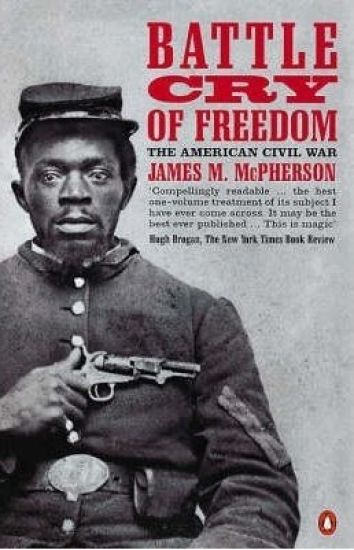
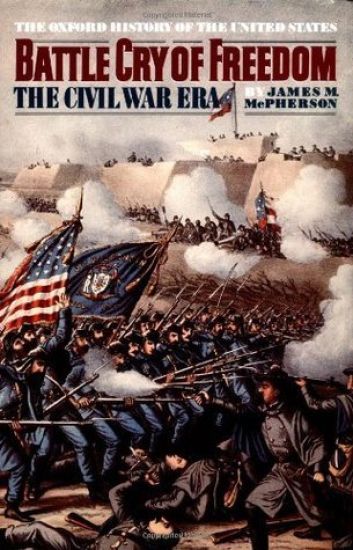
Winner of the Pulitzer Prize for History'Read it. It will open your eyes about race history in America. It will shock you for what it tells you about politics in America today.' Richard Ford'A remarkably wide-ranging synthesis of the history of the 1850s and the Civil War ... that effectively integrates in one volume social, political and military events from the immediate aftermath of the Mexican War through the sectional strife of the 1850s, the secession movement, and the Civil War ... It is a masterful work' New York Review of Books'Compellingly readable ... the best one-volume treatment of its subject I have ever come across. It may be the best ever published ... This is magic' The New York TimesThis book covers one of the most turbulent periods of the USA's history, from the Mexican War in 1848 to the end of the Civil War in 1865. With a broad historical sweep, it traces the heightening sectional conflict of the 1850s: the growing estrangement of the South and its impassioned defence of slavery; the formation of the Republican Party in the North, with its increasing opposition to slavery; and the struggle over territorial expansion, with its accompanying social tensions and economic expansion. The whole panorama of the Civil War is captured in these pages, from the military campaign, which is described with vividness, immediacy, a grasp of strategy and logistics, and a keen awareness of the military leaders and the common soldiers involved, to its political and social aspects.
This book covers one of the most turbulent periods of the USA's history, from the Mexican War in 1848 to the end of the Civil War in 1865. With a broad historical sweep, it traces the heightening sectional conflict of the 1850s: the growing estrangement of the South and its impassioned defence of slavery; the formation of the Republican Party in the North, with its increasing opposition to slavery; and the struggle over territorial expansion, with its accompanying social tensions and economic expansion. The whole panorama of the Civil War is captured in these pages, from the military campaign, which is described with vividness, immediacy, a grasp of strategy and logistics, and a keen awareness of the military leaders and the common soldiers involved, to its political and social aspects.
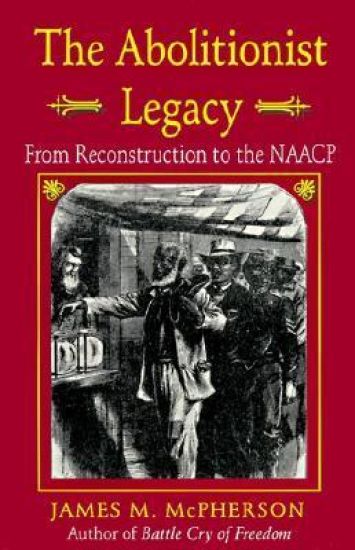
Building on arguments presented in The Struggle for Equality, James McPherson shows that many abolitionists did not retreat from Reconstruction, as historical accounts frequently lead us to believe, but instead vigorously continued the battle for black rights long after the Civil War. Tracing the activities of nearly 300 abolitionists and their descendants, he reveals that some played a crucial role in the establishment of schools and colleges for southern blacks, while others formed the vanguard of liberals who founded the NAACP in 1910. The author's examination of the complex and unhappy fate of Reconstruction clarifies the uneasy partnership of northern and southern white liberals after 1870, the tensions between black activists and white neo-abolitionists, the evolution of resistance to racist ideologies, and the origins of the NAACP.