Kirjojen hintavertailu – 12 859 829 kirjaa ja 27 kauppaa

Kirjailija

James M. Russell

Kirjat ja teokset yhdessä paikassa: 10 kirjaa, julkaisuja vuosilta 2009–2021, suosituimpiin kuuluu The Forking Trolley. Vertaile teosten hintoja ja tarkista saatavuus suomalaisista kirjakaupoista.

Nimi esiintyy myös muodoissa: James M Russell

10 kirjaa

Kirjojen julkaisuvuodet: 2009–2021.

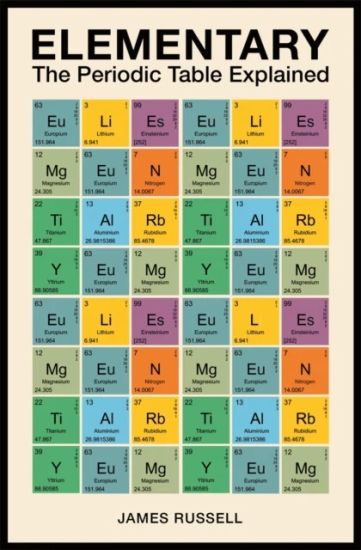
Elementary

Elementary

James M. Russell

Michael O'Mara Books Ltd
2021
nidottu

Halvin toimitettuna 14,50 €

Chemistry's most significant chart, the Periodic Table, and its 118 elements, is laid bare in this lively, accessible and compelling expose. The periodic table, created in the early 1860s by Russian chemist Dmitri Mendeleev, marked one of the most extraordinary advances in modern chemistry. This basic visual aid helped scientists to gain a deeper understanding of what chemical elements really were and the role they played in everyday life. Here, in the authoritative Elementary, James Russell uses his engaging narrative to explain the elements we now know about. From learning about the creation of the first three elements, hydrogen, lithium and helium, in the big bang, through to oxygen and carbon, which sustain life on earth – along with the many weird and wonderful uses of elements as varied as fluorine, arsenic, krypton and einsteinium – even the most unscientifically minded will be enthralled by this fascinating subject. This is the story of the building blocks of the universe, and the people who identified, isolated and even created them.
A Brief Guide to Smart Thinking

A Brief Guide to Smart Thinking

James M. Russell

Robinson
2020
pokkari
Each book is summarised to convey a brief idea of what each one has to offer the interested reader, while a 'Speed Read' for each book delivers a quick sense of what each book is like to read and a highly compressed summary of the main points of the book in question. The titles covered include thought-provoking classics on psychology, mindfulness, rationality, the brain, mathematical and economic thought and practical philosophy. The selection includes books about self-improvement as well as historically interesting accounts of how the mind works. Titles included go back as far as the Epictetus classic The Enchiridion and Bertrand Russell's charming The ABC of Relativity, and proceed through classics such as Edward de Bono's Lateral Thinking and into the digital era with titles such as The Shallows and Big Data. The books are arranged chronologically, which draws attention to some of the interesting juxtapositions and connections between them. Some of the titles included are: Freakonomics, by Steven D. Levitt; Blink: The Power of Thinking Without Thinking, by Malcolm Gladwell; Sapiens: A Brief History of Humankind, by Yuval Noah Harari; The Organized Mind: Thinking Straight in the Age of Information Overload, by Daniel J. Levitin; The Descent of Man, by Grayson Perry; How the Mind Works, by Steven Pinker; Black Box Thinking: Why Some People Never Learn from Their Mistakes - But Some Do, by Matthew Syed; We Should All Be Feminists, by Chimamanda Ngozi Adichie; Guns, Germs, and Steel: The Fates of Human Societies, by Jared Diamond; The Black Swan: The Impact of the Highly Improbable, by Nassim Nicholas Taleb; Man's Search for Meaning, by Viktor E. Frankl; The News: A User's Manual, by Alain de Botton; Mindware: Tools for Smart Thinking, by Richard E. Nisbett; The ABC of Relativity, by Bertrand Russell; The Psychopath Test, by Jon Ronson; The Path: What Chinese Philosophers Can Teach Us About the Good Life, by Michael Puett; A Brief History of Time, by Stephen Hawking; Messy: The Power of Disorder to Transform Our Lives, by Tim Harford; Big Data: A Revolution That Will Transform How We Live, Work, and Think, by Viktor Mayer-Schönberger; Moneyball: The Art of Winning an Unfair Game, by Michael Lewis; The Survivors Club: The Secrets and Science That Could Save Your Life, by Ben Sherwood; Black Box Thinking, by Matthew Syed; Chaos: Making a New Science, by James Gleick; A Short History of Nearly Everything, by Bill Bryson; The Shallows: What the Internet Is Doing to Our Brains, by Nicholas Carr; Making Ideas Happen: Overcoming the Obstacles Between Vision and Reality, by Scott Belsky; The Enchiridion, by Epictetus; Gödel, Escher, Bach, by Douglas R. Hofstadter; What I Talk About When I Talk About Running, by Haruki Murakami; and Lateral Thinking, by Edward de Bono.

The Forking Trolley

The Forking Trolley

James M Russell

Palazzo Editions Ltd
2019
nidottu

Halvin toimitettuna 17,90 €

Holy Motherforking Shirtballs! The madly popular sitcom The Good Place, has propelled ethics and moral philosophy into the 21st century mainstream. The story of Eleanor Shellstrop, who has accidentally been sent to the Good Place after her death, continually challenges us to ask what makes for a 'good person'? Taking inspiration from the show, this is a guide to 'doing the right thing'. Using thought experiments, from the trolley problem to the balloon debate, as well as modern dilemmas like the etiquette of texting and 'selfie' culture (you're going to the Bad Place), here is (nearly) everything you need to know about being in your own 'good place' in life.
A Brief Guide to Self-Help Classics

A Brief Guide to Self-Help Classics

James M. Russell

Robinson
2019
pokkari
From Dale Carnegie's How to Win Friends and Influence People, published in 1936, which has sold over 30 million copies to date, to the mind management programme of Professor Steve Peters' The Chimp Paradox, a concise and insightful guide to seventy of the most influential self-help books ever published An entertaining, accessible companion, for readers of self-help books and sceptics alike. The titles include classics on achieving success, confidence and happiness, mindfulness, how to change your life, self-control, overcoming anxiety and self-esteem issues and stress relief. The chronological arrangement of the titles reveals the intriguing story of how early self-improvement titles were succeeded by increasingly personality-based, materialistic titles and shows how breakout classics often influenced other titles for decades to come. Each book is summarised to convey a brief idea of what it has to offer the interested reader, while a 'Speed Read' for each book delivers a quick sense of what each writer is like to read and a highly compressed summary of the main points of the book in question. This is a work of reference to dip into, that acknowledges that some of the most powerful insights into ourselves can be found in texts that aren't perceived as being 'self-help' books, and that wisdom and consolation can be found in the strangest places.