Kirjojen hintavertailu – 12 903 724 kirjaa ja 27 kauppaa
Kirjailija
James McGuire
Kirjat ja teokset yhdessä paikassa: 11 kirjaa, julkaisuja vuosilta 2004–2025, suosituimpiin kuuluu Evidence-Based Policing and Community Crime Prevention. Vertaile teosten hintoja ja tarkista saatavuus suomalaisista kirjakaupoista.
‘Gate fever’ is the name of a non-medical syndrome said to infect men in prison as the date of their discharge draws near. Its symptoms are euphoria and anxiety, mixed with irrational thinking; and the unfailing cure of the condition is the cold douche of reality which awaits the victim outside the prison gate. The primary aim of this book, originally published in 1984, is to describe and promote social-skills-based methods for helping offenders cope better with the problems they face in the community: finding and keeping work and accommodation, managing money and leisure time, getting on with other people and, in some cases, controlling their drinking or violent behaviour. Based on an action-research project undertaken with nearly four hundred men in Ranby and Ashwell prisons and at the Sheffield day training centre, the book outlines the origins of the project, the design and development of course materials, and the training of prison officers and probation staff to administer them. It looks at the characteristics of the men who took part in the experiment and at their problems, and details the content and conduct of the courses in practice. The results of the work are also reported, often in the words of the men who made use of the methods. Overall offending rates were not reduced but violent offenders at Ranby were less likely to be re-convicted of violent offences after release. One of the outcomes of the project was a model for working with offenders which has spread to other prisons and probation areas. A final chapter discusses the difficulties of doing innovative work in penal establishments and makes suggestions for developing social skills work with prisoners and probationers.
This book addresses and reviews progress in a major innovative development within police work known as evidence-based policing. It involves a significant extension and strengthening of links between research and practice and is directed to the task of increasing police effectiveness in the field of community crime prevention. This volume provides an international perspective that synthesizes recent research results from the United States and other countries – including systematic reviews of large bodies of evidence – to illuminate several of the most challenging issues currently confronting police departments. It examines recent advances in research-based models of policing and the expanding base in outcome evaluation. Key areas of coverage include:Managing the nighttime economy. Supervising sex offenders. Tackling domestic/intimate partner violence. Addressing school violence and the formation of gangs. Reducing victim and witness retraction and disengagement. Responding to mental disorders, safeguarding vulnerable adults, and providing victim support. Leveraging public awareness campaigns. In addition, each chapter presents an overview of key issues within a designated area, synthesizes existing reviews, and examines the most recent research. The book clearly and concisely presents major concepts, theories, and research findings, thereby providing both conceptual and analytic tools alongside an integrated presentation of principal findings and messages. The volume concludes with a discussion of current directions in research, key developments in policing strategies, and identification of effective operational structures for facilitating and sustaining research-practice links. Evidence-Based Policing and Community Crime Prevention is a must-have resource for researchers, clinicians and other professionals, and graduate students in forensic psychology, criminology and criminal justice, public health, developmental psychology, psychotherapy and counseling, psychiatry, social work, educational policy and politics, health psychology, nursing, and behavioral therapy/rehabilitation.
This thought-provoking book draws together research from genetics, anthropology, psychology and the social sciences to show that widespread assumptions about the inevitability of human violence are almost entirely a collection of myths. While violence has been a recurring feature of human life, there is no reason to suppose that it is inherent in 'human nature'. On the contrary, patterns of aggressive behaviour are largely learned through experience and even those individuals who have often acted violently can learn to change. Rejecting the speculations of much contemporary writing about human aggression, Violence Rewired presents an evidence-based alternative: a multi-level model of action to reduce violence at both individual and collective levels, linked to public health initiatives developed by the World Health Organization. If humanity is to survive the challenges it faces, a more realistic appraisal of ourselves and our basic tendencies is an indispensable part of the solution.
This book addresses and reviews progress in a major innovative development within police work known as evidence-based policing. It involves a significant extension and strengthening of links between research and practice and is directed to the task of increasing police effectiveness in the field of community crime prevention. This volume provides an international perspective that synthesizes recent research results from the United States and other countries – including systematic reviews of large bodies of evidence – to illuminate several of the most challenging issues currently confronting police departments. It examines recent advances in research-based models of policing and the expanding base in outcome evaluation. Key areas of coverage include:Managing the nighttime economy. Supervising sex offenders. Tackling domestic/intimate partner violence. Addressing school violence and the formation of gangs. Reducing victim and witness retraction and disengagement. Responding to mental disorders, safeguarding vulnerable adults, and providing victim support. Leveraging public awareness campaigns. In addition, each chapter presents an overview of key issues within a designated area, synthesizes existing reviews, and examines the most recent research. The book clearly and concisely presents major concepts, theories, and research findings, thereby providing both conceptual and analytic tools alongside an integrated presentation of principal findings and messages. The volume concludes with a discussion of current directions in research, key developments in policing strategies, and identification of effective operational structures for facilitating and sustaining research-practice links. Evidence-Based Policing and Community Crime Prevention is a must-have resource for researchers, clinicians and other professionals, and graduate students in forensic psychology, criminology and criminal justice, public health, developmental psychology, psychotherapy and counseling, psychiatry, social work, educational policy and politics, health psychology, nursing, and behavioral therapy/rehabilitation.
This thought-provoking book draws together research from genetics, anthropology, psychology and the social sciences to show that widespread assumptions about the inevitability of human violence are almost entirely a collection of myths. While violence has been a recurring feature of human life, there is no reason to suppose that it is inherent in 'human nature'. On the contrary, patterns of aggressive behaviour are largely learned through experience and even those individuals who have often acted violently can learn to change. Rejecting the speculations of much contemporary writing about human aggression, Violence Rewired presents an evidence-based alternative: a multi-level model of action to reduce violence at both individual and collective levels, linked to public health initiatives developed by the World Health Organization. If humanity is to survive the challenges it faces, a more realistic appraisal of ourselves and our basic tendencies is an indispensable part of the solution.
The Illustrated Histories of Everyday Expressions uncovers the fascinating, humorous, and often unbelievable origin stories behind the English language's most common sayings! Nobody thinks twice about sayings like bite the bullet and the cat's out of the bag. But the strange and wonderful origins of these expressions are far from arbitrary: They are rooted in forgotten history. Within this book, you will discover the origins of idioms like:Why we say an unwell person is under the weather. It goes back to when sickly sailors and seafarers had to rest below deck! How come sitting in the passenger seat of a vehicle is called riding shotgun." In the Wild West, passengers had a crucial job: packing heat and preventing highway robberies! What's up with the phrase, cat got your tongue. Here's a hint: It doesn't have anything to do with cats! With over 100 pieces of original artwork, The Illustrated Histories of Everyday Expressions is as beautiful as it is entertaining and informative. Read up on this fascinating history of the English language's 64 most popular idioms, and you will know what it really means when you say pass with flying colors, bury the hatchet, and rest on your laurels!
This book reveals how the awareness of one man's mind was transformed following a spiritual experience. In one moment a fearful world disappeared and a world without fear took its place. Factually the only thing that had changed was the author's perception of the world. From the author of 'I May Be Wrong' this book contains seventy one essays. Each essay contextualises a hypothesis that the mind's perception of stimulus is the exclusive cause of all emotional responses. One of the main themes of this book is a recurring claim that feelings such as unhappiness, anger, hatred, fear and anxiety are pre-programmed perceptually induced neurochemical responses. Each person's emotional and behavioural responses to people and experiences is determined exclusively by how their mind perceives that stimulus. In the moment we define stimulus we create our mind's unique perception of it.
This brand new textbook provides a complete course in forensic psychology, covering the criminal justice system, law and legislation, and treatments and outcomes for offenders. It offers rigorous coverage of the major topics: from theoretical concepts and research methods to explaining criminal acts and patterns of crime. The authors, both from leading institutions and well-known in the field, guide readers through the interlocking systems of criminal justice, mental health and social service provision, providing a deeper critical appreciation of what motivates crime and how criminal behaviour can be understood, assessed and treated. This text will be core reading for upper level undergraduates and postgraduates studying forensic psychology, either as a module on a BSc Psychology degree or on an MSc for trainee Forensic Psychologists. It will also be ideal for early career practitioners. Accompanying online resources for this title can be found at bloomsburyonlineresources.com/forensic-psychology. These resources are designed to support teaching and learning when using this textbook and are available at no extra cost.
This book is about the transformation of one man's mind following a spiritual experience. In one moment the old fearful world disappeared and a world without fear took its place. Factually all that changed was the author's perception of the world. This led to the realisation that for his entire life his feelings had not responded to the world. His feelings had been responding to his perception of the world. The author realised that his educated perception of the world was a distortion of someone else's making. This book describes a spiritual awakening experience and includes fifty essays on a range of topics.
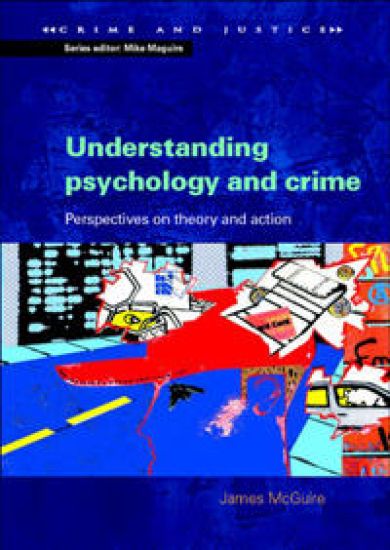
"This is an exceptional book that comprehensively covers the interface between psychology and criminology regarding an empirical understanding of crime. It is written in an engaging and accessible manner, nicely linking key themes in order to situate the contribution of psychology to theories of criminal behaviour, strategies for informed practice, and contemporary challenges. It should prove to be an incredible resource for students, but also be of interest to researchers and clinicians. I cannot recommend this text more heartily." Dr Ralph Serin, Carleton University, Canada"James McGuire is one of the leading international experts on what works in reducing reoffending, and he has written an extremely valuable and accessible textbook on psychology and crime. The book is a clearly written, well-researched and up-to-date survey of important contributions of psychology to key criminological issues. It is especially noteworthy for its illuminating reviews of cognitive-social learning theories, risk factors and longitudinal studies, risk assessment, cognitive-behavioural programmes and meta-analyses of treatment effectiveness." Professor David Farrington, Institute of Criminology, University of CambridgeWhat contributions can psychology make to our understanding of crime? How can psychological models and research help to prevent crime and reduce repeat offending? This highly readable book discusses the complex relationships between psychology, criminology and criminal justice. Challenging the assumptions of those who object to the use of psychology within criminology, this book shows how a methodical approach to the study of criminal behaviour can generate both systematic findings and practical solutions to problems. McGuire argues for a broader understanding of crime, based on factors such as the individual’s cognitive and emotional development, in addition to the influences of socialization, peer groups, and the social and economic environment. He highlights the value of understanding ‘pathways’ to offending behaviour, and the critical points at which choices are made. Topics include:Theoretical and empirical research foundations of ‘criminogenic risk factors’Theory turned into practice – the development of offending behaviour programmesA psychological perspective on some core concepts in criminology: retribution, deterrence and incapacitationMajor practical applications of psychology in policing, prosecution and sentencing This authoritative and stimulating text is essential reading for students in criminology and psychology and for criminal justice practitioners and policy makers.