
Kirjailija
James Mill
Kirjat ja teokset yhdessä paikassa: 40 kirjaa, julkaisuja vuosilta 1992–2026, suosituimpiin kuuluu Analysis of the Phenomena of the Human Mind (Cram Edition). Vertaile teosten hintoja ja tarkista saatavuus suomalaisista kirjakaupoista.
40 kirjaa
Kirjojen julkaisuvuodet: 1992–2026.
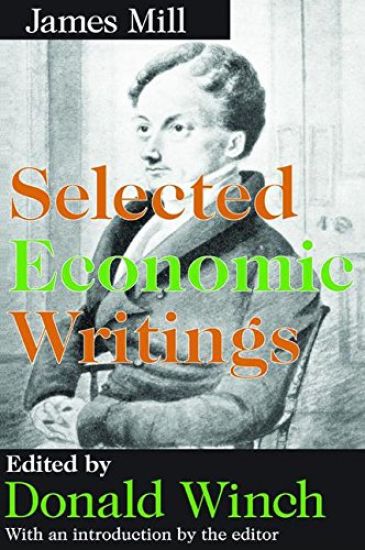
James Mill was the consummate utilitarian economist and theorist: his numerous intellectual interests and practical pursuits shatter the net boundaries of modern specialist scholarship in social science. Mill's many-sided genius was primarily a product of the age in which he lived. The late eighteenth and early nineteenth centuries saw a remarkable flowering of intellectual genius in Scotland in all of the arts and sciences, which gave the country a leading place in the broad European movement known as the Enlightenment, Mill being in fact only one of many brilliant men Scotland produced at that time. Mill's writings in this volume, first published in 1966, cover his development as an economist and are an attempt to assess his contribution to classic political economy. Particular attention is paid to the formative but less well-known pre-Benthamite period of his life. The volume opens with a substantial biographical assessment of Mill's life and work. The selections are specifically divided into four groups consisting of: early economic writings ("An Essay of the Impolicy of a Bounty on the Exportation of Grain," "Commerce Defended," and "Smith on Money and Exchange"); James Mill and David Ricardo ("Elements of Political Economy"); Mill on scope and method ("Whether Political Economy is Useful"); and Mill and India ("History of British India"). Donald Winch provides an introduction to each section that contextualizes the essays in Mill's own work and the economic thought of the time. James Mill: Selected Economic Writings is sure to be of interest to students of economic theory and social policy. One of the founders of utilitarianism, he adopted that doctrine to both British conditions and Britain's broader imperial pursuits. Donald Winch is professor of economics at the University of Sussex. He has authored and edited many books and papers on economics, economic theory, economic policy and economic history.
James Mill (1773–1836) was a Scottish political philosopher, economist and proponent of Utilitarianism. He was the father of John Stuart Mill. Originally published in 1937, this book presents the complete text of Mill's An Essay on Government. An editorial introduction and textual notes are also included. This book will be of value to anyone with an interest in the writings of Mill and political history.
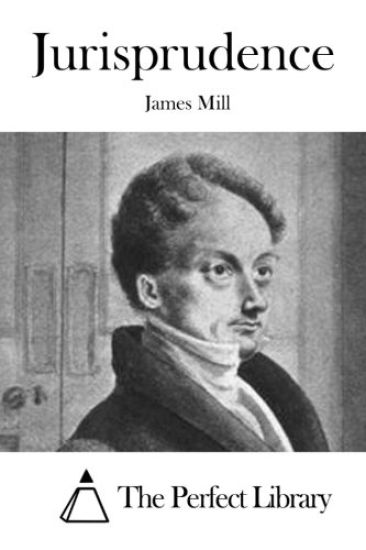
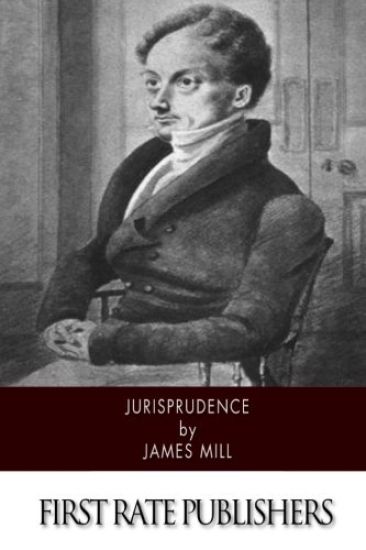
James Mill's three volume History of British India was published from 1817 to 1818 and became an immediate success. A friend of Jeremy Bentham and a follower of utilitarianism, Mill focuses more on historical processes than human interest. He uses extensive sources rather than first-hand experience to create, as his preface claims, an 'objective' yet 'critical' history, often making harsh judgements of the country and its people within the context of a wider theoretical framework. He also criticises the British involvement in India and the process of conquest, colonization, and administration, the intention being to encourage the reader to a greater understanding of historical processes, ideas, and institutions with a view to encouraging thorough reform. Volume 2 covers the period from the establishment of the Honourable East India Company in 1708 to East India Company Act of 1773, and from this to Pitt's India Act of 1784.
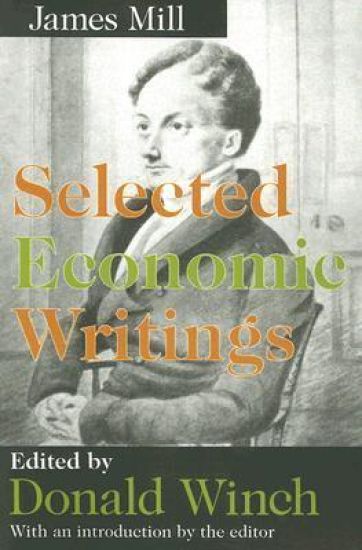
James Mill was the consummate utilitarian economist and theorist: his numerous intellectual interests and practical pursuits shatter the net boundaries of modern specialist scholarship in social science. Mill's many-sided genius was primarily a product of the age in which he lived. The late eighteenth and early nineteenth centuries saw a remarkable flowering of intellectual genius in Scotland in all of the arts and sciences, which gave the country a leading place in the broad European movement known as the Enlightenment, Mill being in fact only one of many brilliant men Scotland produced at that time. Mill's writings in this volume, first published in 1966, cover his development as an economist and are an attempt to assess his contribution to classic political economy. Particular attention is paid to the formative but less well-known pre-Benthamite period of his life. The volume opens with a substantial biographical assessment of Mill's life and work. The selections are specifically divided into four groups consisting of: early economic writings ("An Essay of the Impolicy of a Bounty on the Exportation of Grain," "Commerce Defended," and "Smith on Money and Exchange"); James Mill and David Ricardo ("Elements of Political Economy"); Mill on scope and method ("Whether Political Economy is Useful"); and Mill and India ("History of British India"). Donald Winch provides an introduction to each section that contextualizes the essays in Mill's own work and the economic thought of the time. James Mill: Selected Economic Writings is sure to be of interest to students of economic theory and social policy. One of the founders of utilitarianism, he adopted that doctrine to both British conditions and Britain's broader imperial pursuits. Donald Winch is professor of economics at the University of Sussex. He has authored and edited many books and papers on economics, economic theory, economic policy and economic history.
James Mill (1773-1836), British philosopher, political theorist, historian and psychologist was largely responsible for organizing the influential Bentham followers that became know as the "philosophical radicals", which included David Ricardo, Joseph Hume, J. R. McCulloch, George Grote and John Austin. A prolific writer, Mill is remembered mainly as Bentham's chief disciple, and for his influence on the radicals and in particular on his son John Stuart Mill, the prominent utilitarian thinker. An important work in which Mill attacks Sir James Mackintosh, a leading Whig apologist and critic of the philosophical radicals. Mill defends the utilitarian ethical theory against Mackintosh's article on ethics in the "Encyclopaedia Britannica". "A Fragment" demonstrates Mill's belief that the proper aim of human actions and practices was the promotion of human happiness and is a lucid illustration of his psychological and ethical theories.
In this monumental work James Mill exhibited the character, history, religion, arts, literature and the laws of the people of India, together with the physical influences arising out of the climate of the country. He narrated the story of the acquisition by England of its Indian Empire for the first time and brought to bear a vast body of political theory on the delineation of the Hindu civilization, severely criticizing the conduct of those involved in the successive stages of India's conquest and administration. The work itself and Mill's official subsequent connection with India had a profound effect on the whole system of governing that country. Mill had never been to India, so the editorial involvement of the great Orientalist Horace Hayman Wilson enhances this edition well. He has not only extended the history up to 1835 but added notes gained from his intimate knowledge of India and its languages. Together these two writers have produced one of the great history books of the last century, of interest to social and political historians of the British Empire and general historians alike.
James Mill (1773–1836) is today best known as Jeremy Bentham’s chief disciple and John Stuart Mill’s father. Yet Mill himself was a formidable and important Utilitarian thinker in his own right, who earned the respect of even those who disagreed with him. His range was enormous (historian, political philosopher, psychologist, educational theorist, and economist), repeatedly crossing the disciplinary boundaries we take for granted today. This volume presents a wide sampling of Mill’s political writings and polemical essays. It begins with his classic work, the Essay on Government, it also includes pieces on the protection of rights, the importance of education, the free press, the secret ballot, and government’s use of punishment against those who violate the rights of fellow citizens. The collection concludes with Macaulay’s famous critique of the Essay, and Mill’s heretofore unnoticed reply in his Fragment on Mackintosh (1835). This is the first time that such a selection of Mill’s political works has appeared as one volume. It will be of interest to students and scholars of politics, philosophy, and the history of ideas.