Kirjojen hintavertailu – 12 859 828 kirjaa ja 27 kauppaa
Kirjailija
James Montgomery
Kirjat ja teokset yhdessä paikassa: 79 kirjaa, julkaisuja vuosilta 2006–2025, suosituimpiin kuuluu The Poetical Works of John Milton;. Vertaile teosten hintoja ja tarkista saatavuus suomalaisista kirjakaupoista.
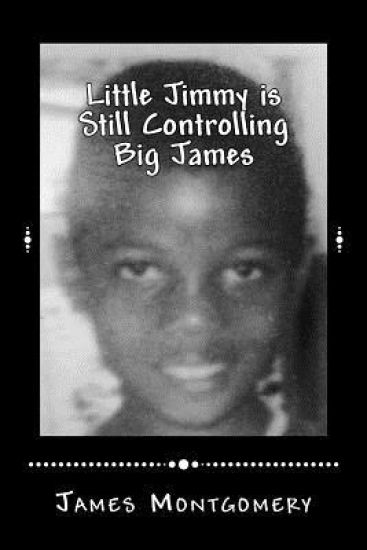
To one and to all: Here is a message that helps us understand why things need to change. Suppression has ALWAYS been pressed on the black community, by both our own people and others. If we want to ask for change, then we better be prepared to make it happen.BLACK MEN AND WOMEN. I say this again and again, if we don't start loving ourselves, how can we demand love from anyone else? We preach, teach, and talk about freedom, but until we start loving ourselves, we will never overcome the struggles that we face.
The 18th century was a wealth of knowledge, exploration and rapidly growing technology and expanding record-keeping made possible by advances in the printing press. In its determination to preserve the century of revolution, Gale initiated a revolution of its own: digitization of epic proportions to preserve these invaluable works in the largest archive of its kind. Now for the first time these high-quality digital copies of original 18th century manuscripts are available in print, making them highly accessible to libraries, undergraduate students, and independent scholars. Delve into what it was like to live during the eighteenth century by reading the first-hand accounts of everyday people, including city dwellers and farmers, businessmen and bankers, artisans and merchants, artists and their patrons, politicians and their constituents. Original texts make the American, French, and Industrial revolutions vividly contemporary.++++The below data was compiled from various identification fields in the bibliographic record of this title. This data is provided as an additional tool in helping to insure edition identification: ++++British LibraryT148762The title leaf and final leaf is a bifolium. The recto of the final leaf is numbered iii. Sheffield: printed by J. Montgomery, 1795. 2],44, 2]p.; 12
The 18th century was a wealth of knowledge, exploration and rapidly growing technology and expanding record-keeping made possible by advances in the printing press. In its determination to preserve the century of revolution, Gale initiated a revolution of its own: digitization of epic proportions to preserve these invaluable works in the largest archive of its kind. Now for the first time these high-quality digital copies of original 18th century manuscripts are available in print, making them highly accessible to libraries, undergraduate students, and independent scholars. Western literary study flows out of eighteenth-century works by Alexander Pope, Daniel Defoe, Henry Fielding, Frances Burney, Denis Diderot, Johann Gottfried Herder, Johann Wolfgang von Goethe, and others. Experience the birth of the modern novel, or compare the development of language using dictionaries and grammar discourses. ++++The below data was compiled from various identification fields in the bibliographic record of this title. This data is provided as an additional tool in helping to insure edition identification: ++++British LibraryT106186Paul Positive = James Montgomery, who signs the dedication: J---- M----. London: printed for J. Johnson, 1797. viii,200p.; 8
This work has been selected by scholars as being culturally important, and is part of the knowledge base of civilization as we know it. This work was reproduced from the original artifact, and remains as true to the original work as possible. Therefore, you will see the original copyright references, library stamps (as most of these works have been housed in our most important libraries around the world), and other notations in the work. This work is in the public domain in the United States of America, and possibly other nations. Within the United States, you may freely copy and distribute this work, as no entity (individual or corporate) has a copyright on the body of the work. As a reproduction of a historical artifact, this work may contain missing or blurred pages, poor pictures, errant marks, etc. Scholars believe, and we concur, that this work is important enough to be preserved, reproduced, and made generally available to the public. We appreciate your support of the preservation process, and thank you for being an important part of keeping this knowledge alive and relevant.
The Olney Hymns were first published in February 1779 and are the combined work of curate John Newton (1725-1807) and his poet friend, William Cowper (1731-1800). The hymns were written for use in Newton's rural parish, which was made up of relatively poor and uneducated followers. The Olney Hymns are an illustration of the potent ideologies of the Evangelical movement, to which both men belonged, present in many communities in England at the time. The Olney Hymns were very popular; by 1836 there had been 37 recorded editions, and it is likely that many other editions were printed in both Britain and America. As hymn-singing gained popularity in the nineteenth century, many (around 25) of the hymns were reproduced in other hymn-books and pamphlets. Today around six of the original 348 Olney Hymns regularly feature in modern church worship, the most famous of which is "Amazing Grace". The Buckinghamshire town from which the hymns get their name, Olney, was, at the time of first publication, a market town of about 2,000 people. Around 1,200 of these were employed in its lace-making industry. This was generally poorly paid, and Cowper is said to have described his neighbours as "the half-starved and ragged of the earth". The Olney Hymns were written primarily with these poor and under-educated people in mind. Olney is situated near the borders of Buckinghamshire, Bedfordshire, and Northamptonshire - an area traditionally associated with religious Dissent. Dissenters were Protestants who refused to follow the rules of the Church of England after the Restoration of Charles II in 1660, and when Newton settled in Olney the town still supported two Dissenting chapels. Notable local Dissenters included John Bunyan, from Bedford, author of the Pilgrim's Progress, and another important hymn writer, Philip Doddridge (1702-51), from Northampton. Newton's own associations with Dissenters (his mother was one) meant he was in a position to conciliate with, rather than confront, his parishioners, and he quickly achieved a reputation as a popular preacher. Within his first year at Olney a gallery was added to the church to increase its congregational capacity, and the weekly prayer-meetings were moved in 1769 to Lord Dartmouth's mansion, the Great House, to accommodate even greater numbers. Jesus where'er thy people meet was written for their first meeting at the Great House.