Kirjojen hintavertailu – 12 859 828 kirjaa ja 27 kauppaa

Kirjailija

James Mooney

Kirjat ja teokset yhdessä paikassa: 39 kirjaa, julkaisuja vuosilta 1991–2025, suosituimpiin kuuluu The Sacred Formulas of the Cherokees. Vertaile teosten hintoja ja tarkista saatavuus suomalaisista kirjakaupoista.

39 kirjaa

Kirjojen julkaisuvuodet: 1991–2025.

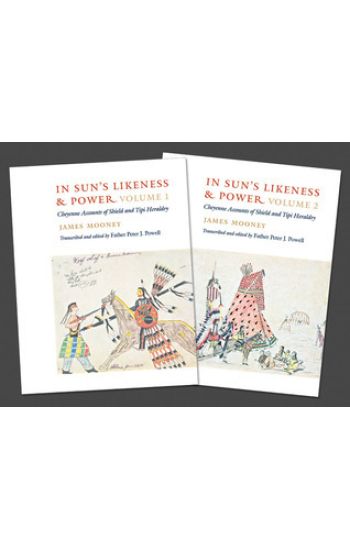
In Sun's Likeness and Power, 2-volume Set

In Sun's Likeness and Power, 2-volume Set

James Mooney

University of Nebraska Press
2013
muu
According to traditional Cheyenne belief, shields are living, spirit-filled beings, radiating supernatural power from the Supreme Being for protection and blessing. Shields stand at the nexus of several dimensions of Cheyenne culture, including spirituality, warfare, and artistic expression. From 1902 to 1906, fifty Cheyenne elders spoke with famed ethnologist James Mooney, sharing with him their interpretations of shield and tipi heraldry. Mooney’s handwritten field notes of these conversations are the single best source of information on Plains Native shields and tipi art available and are a source of inestimable value today for both the Cheyennes and for scholars. In 1955, with the blessing and permission of the Keepers of the Two Great Covenants and the Chiefs and Headmen of the Northern and Southern Cheyenne People, Father Peter J. Powell began a five-decade effort to help preserve the religion, culture, and history of the Cheyenne People for the generations ahead. His transcriptions and annotations of Mooney’s notes on Cheyenne heraldry is the culmination of these efforts. This two-volume set features nearly 150 color illustrations as well as more than 50 black and white photographs.
Myths of the Cherokee

Myths of the Cherokee

James Mooney

Union Square Co.
2007
pokkari
James Mooney’s Myths of the Cherokee is one of the most revered works on a Native American subject. Originally released as the Nineteenth Annual Report of the Bureau of American Ethnology, in 1900, it provides a concise history of the Cherokee tribe and the undisputed definitive study of their mythology. This publication ensures that the stories that the Cherokee elders entrusted to Mooney in the 1880s will survive for future generations to be inspired by and to enjoy. The timeless messages in the traditions and stories that have been handed down for generations hold a fascination for readers of all ages and backgrounds.
Historical Sketch of the Cherokee

Historical Sketch of the Cherokee

James Mooney

AldineTransaction
2005
nidottu
When James Mooney lived with and studied the Cherokee between 1887 and 1900, they were the largest and most important Indian tribe in the United States. His dispassionate account of their history from the time of their first contact with whites until the end of the nineteenth century is more than a sequence of battles won and lost, treaties signed and broken, towns destroyed and people massacred. There is humanity along with inhumanity in the relations between the Cherokee and other groups, Indian and non-Indian; there is fortitude and persistence balanced with disillusionment and frustration. In these respects, the history of the Cherokee epitomizes the experience of most Native Americans. The Cherokee Nation ceased to exist as a political entity seven years after the initial study was done, when Oklahoma became a state. In the introduction to the original publication of this history in 1900, James Mooney commented that "there is change indeed in dress and outward seeming, but the heart of the Indian is still his own." This history was originally included in the 19th Annual Report of the Bureau of American Ethnology. It was republished under the auspices of the National Anthropological Archives of the Smithsonian Museum of Natural History, at the request of the Governing Body of the Cherokee Nation, in 1975, with new introductory material and supplementary illustrations from the archives. The volume has a foreword from W. W. Keeler, chief of the Cherokee Nation, and an introduction by Richard Mack Bettis, president of the Tulsa Tsa-La-Gi-Ya Cherokee Community.

The Ghost-Dance Religion and the Sioux Outbreak of 1890
Responding to the rapid spread of the Ghost Dance among tribes of the western United States in the early 1890s, James Mooney set out to describe and understand the phenomenon. He visited Wovoka, the Ghost Dance prophet, at his home in Nevada and traced the progress of the Ghost Dance from place to place, describing the ritual and recording the distinctive song lyrics of seven separate tribes. His classic work (first published in 1896 and here reprinted in its entirety for the first time) includes succinct cultural and historical introductions to each of those tribal groups and depicts the Ghost Dance among the Sioux, the fears it raised of an Indian outbreak, and the military occupation of the Sioux reservations culminating in the tragedy at Wounded Knee. Seeking to demonstrate that the Ghost Dance was a legitimate religious movement, Mooney prefaced his study with a historical survey of comparable millenarian movements among other American Indian groups. In addition to his work on the Ghost Dance, James Mooney is best remembered for his extraordinarily detailed studies of the Cherokee Indians of the Southeast and the Kiowa and other tribes of the southern plains, and for his advocacy of American Indian religious freedom.