Kirjojen hintavertailu – 12 903 724 kirjaa ja 27 kauppaa

Kirjailija

James Morrison

Kirjat ja teokset yhdessä paikassa: 58 kirjaa, julkaisuja vuosilta 1974–2026, suosituimpiin kuuluu As Good As Any. Vertaile teosten hintoja ja tarkista saatavuus suomalaisista kirjakaupoista.

58 kirjaa

Kirjojen julkaisuvuodet: 1974–2026.

McNae's Essential Law for Journalists and Essential Public Affairs for Journalists Pack
Published in partnership with the NCTJ, these two essential texts have been packaged together to offer great value for journalism students and those already working in the industry. Essential Public Affairs for Journalists offers comprehensive and engaging coverage of the workings of both central and local government, and provides all the information necessary to cover public affairs with confidence. McNae's Essential Law for Journalists remains the definitive media law guide for journalists and students alike. This text offers unrivalled practical guidance on a wide range of reporting situations - a vital tool throughout your journalism career.
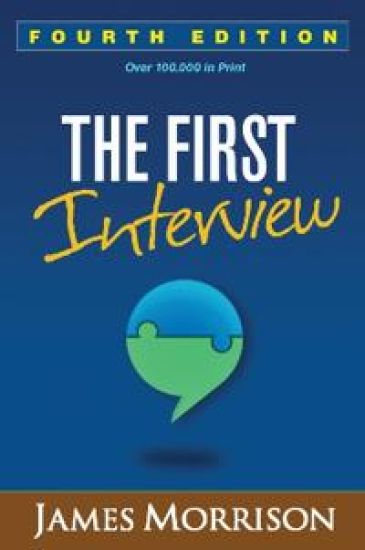
The First Interview, Fourth Edition

The First Interview, Fourth Edition

James Morrison

Guilford Press
2014
sidottu
This trusted practitioner resource and course text is grounded in James Morrison's experience with more than 15,000 mental health patients. Morrison provides a complete framework for interviewing adult patients about their current symptoms, personal and family history, mental status, behavioral risks, and other relevant issues. He offers guidance for selecting the best strategy for any clinical situation, building rapport, overcoming common challenges, and communicating findings. Appendices include a detailed semistructured interview and a self-assessment tool for interviewers, both with permission to photocopy. Purchasers also get access to a Web page where they can download and print the reproducible materials in a convenient 8 1/2" x 11" size. New to This Edition *Revised throughout for DSM-5. *Updated resources and suggested readings. See also Morrison's DSM-5-TR® Made Easy, which explains DSM diagnoses in clear language, illustrated with vivid case vignettes; Diagnosis Made Easier, Second Edition, which offers principles and decision trees for integrating diagnostic information from multiple sources; and The Mental Health Clinician's Workbook, which uses in-depth cases and carefully constructed exercises to build the reader's diagnostic skills.
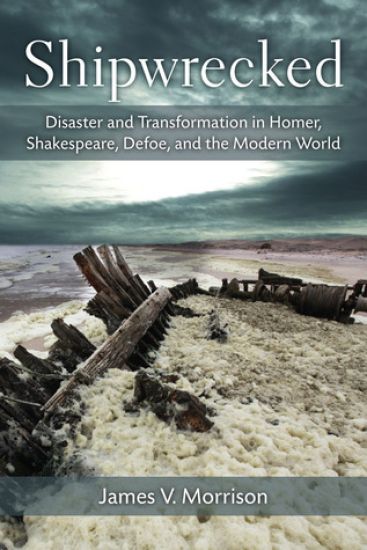
Shipwrecked

Shipwrecked

James Morrison

The University of Michigan Press
2014
sidottu
Shipwrecked: Disaster and Transformation in Homer, Shakespeare, Defoe, and the Modern World presents the first comparative study of notable literary shipwrecks from the past four thousand years, focusing on Homer’s Odyssey, Shakespeare’s The Tempest, and Defoe’s Robinson Crusoe. James V. Morrison considers the historical context as well as the “triggers” (such as the 1609 Bermuda shipwreck) that inspired some of these works, and modern responses such as novels (Golding’s Lord of the Flies, Coetzee’s Foe, and Gordon’s First on Mars, a science fiction version of the Crusoe story), movies, television (Forbidden Planet, Cast Away, and Lost), and the poetry and plays of Caribbean poets Derek Walcott and Aimé Césaire. The recurrent treatment of shipwrecks in the creative arts demonstrates an enduring fascination with this archetypal scene: a shipwreck survivor confronting the elements. It is remarkable, for example, that the characters in the 2004 television show Lost share so many features with those from Homer’s Odyssey and Shakespeare’s The Tempest. For survivors who are stranded on an island for some period of time, shipwrecks often present the possibility of a change in political and social status—as well as romance and even paradise. In each of the major shipwreck narratives examined, the poet or novelist links the castaways’ arrival on a new shore with the possibility of a new sort of life. Readers will come to appreciate the shift in attitude toward the opportunities offered by shipwreck: older texts such as the Odyssey reveals a trajectory of returning to the previous order. In spite of enticing new temptations, Odysseus—and some of the survivors in The Tempest—revert to their previous lives, rejecting what many might consider paradise. Odysseus is reestablished as king; Prospero travels back to Milan. In such situations, we may more properly speak of potential transformations. In contrast, many recent shipwreck narratives instead embrace the possibility of a new sort of existence. That even now the shipwreck theme continues to be treated, in multiple media, testifies to its long-lasting appeal to a very wide audience.
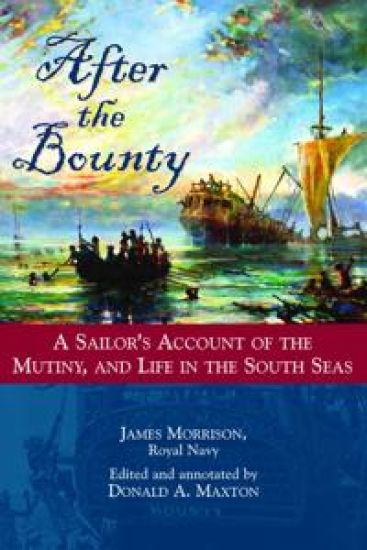
After the Bounty

After the Bounty

James Morrison

Potomac Books Inc
2009
sidottu
In 1787 the Royal Navy ship HMS Bounty, captained by William Bligh, set sail for Tahiti in search of breadfruit plants. Soon after leaving Tahiti, Master’s Mate Fletcher Christian led a successful revolt, setting Bligh and eighteen of his men adrift. In his journal, Boatswain’s Mate James Morrison recounts the Bounty’s voyage, placing considerable blame for the mutiny on Bligh’s irascible personality and style of command. This event, however, only introduces Morrison’s remarkable journey through the South Seas. A born storyteller, Morrison pens compelling tales of the time after the mutiny, beginning with ringleader Fletcher Christian’s two ill-fated attempts to establish a refuge on the island of Tubuai. Morrison then recounts his eighteen-month sojourn on Tahiti, where he constructed a seaworthy schooner and closely observed the island and its way of life. He tells of the subsequent arrival of HMS Pandora, which was charged with bringing the mutineers back to England for trial, and his imprisonment in the horrific “Pandora’s Box.” Morrison once again faces peril when the Pandora sinks on Australia’s Great Barrier Reef, where thirty-one of the crew and four prisoners perished. Although Morrison did not actively participate in the Bounty insurrection, he had remained with Fletcher Christian’s party, which was enough evidence for his eventual condemnation. While imprisoned, Morrison began composing his journal. King George III granted a pardon, and soon after his release, Morrison wrote the second half of the journal, which he filled with detailed descriptions of Tahitian life, culture, and natural history. Morrison’s journal is an invaluable resource for naval and cultural historians and an enthralling tale for the general reader.
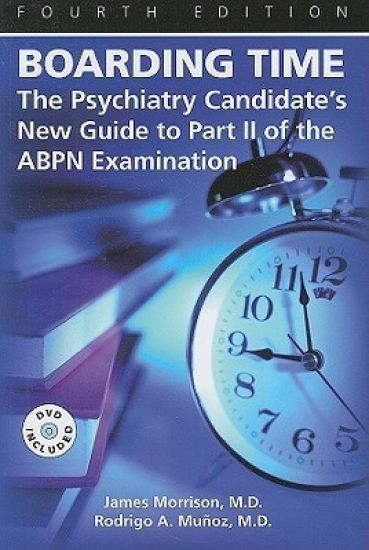
Boarding Time

Boarding Time

James Morrison; Rodrigo A. Muñoz

American Psychiatric Association Publishing
2009
pokkari
By the time psychiatrists face Part II of the American Board of Psychiatry and Neurology examination, they have completed many years of coursework, untold hours of study, and the rigors of internship and residency. Yet this oral exam may be among the most stressful events in their careers. With no "right" answers and the spotlight on their patient interview techniques, they must rapidly formulate and defend a diagnosis and discuss etiology, prognosis, and therapy. With so much riding on this examination, candidates need all the insight and guidance they can obtain. That's where Boarding Time: The Psychiatry Candidate's New Guide to Part II of the ABPN Examination comes in. Long a classic in the field, this practical, systematic guide has been thoroughly updated to reflect new developments in clinical psychiatry and the latest changes to the exam. Grounded in the authors' exhaustive review of the literature and extensive interviews with candidates and examiners, this book also offers other features sure to benefit the candidate: • For the first time, it includes training vignettes—both in written and video formats—that capture the immediacy of the examination experience. In an appendix, the authors discuss each video vignette included on the DVD. • The authors have designed the book to be useful to all candidates—whether they are just beginning their preparations, have limited time, have already reviewed extensively, or have failed the exam and are retaking it. Study strategies are provided for each of these groups.• As the authors point out, Boarding Time is "a manual of advice, not a scientific treatise." This pragmatic, down-to-earth approach ensures that it will be useful, not only as exam preparation, but as a concise reference work for interviewing and diagnosis after the candidate obtains certification.• An appendix devoted to "Maintaining Your Certification" provides a guide to steps in the process of recertification: the self-assessment program, lifelong learning activities, "Performance in Practice," and "Cognitive Expertise." Easy-to-read and filled with actual case examples, Boarding Time provides indispensable knowledge and support at a critical juncture in every psychiatrist's career.
Roman Polanski

Roman Polanski

James Morrison

University of Illinois Press
2007
nidottu
A new take on an eclectic and controversial director James Morrison's critical study offers a comprehensive and critically engaged treatment on Roman Polanski's immense body of work. Tracing the filmmaker's remarkably diverse career from its beginnings to 2007, the book provides commentary on all of Polanski's major films in their historical, cultural, social, and artistic contexts. Morrison locates Polanski's work within the genres of comedy and melodrama, arguing that he is not merely obsessed with the theme of repression, but that his true interest is in the concrete—what is out in the open—and why we so rarely see it. The range of Polanski's filmmaking challenges traditional divisions between high and low culture. For example, The Ninth Gate is a brash pastiche of the horror genre, while The Pianist is an Academy Award-winner about the Holocaust. Dubbing Polanski a relentless critic of modernity, Morrison concludes that his career is representative of the fissures, victories, and rehabilitations of the last fifty years of international cinema. A volume in the series Contemporary Film Directors, edited by James Naremore
The CIA's Secret War in Tibet

The CIA's Secret War in Tibet

Kenneth Conboy; James Morrison

University Press of Kansas
2002
nidottu
Defiance against Chinese oppression has been a defining characteristic of Tibetan life for more than four decades, symbolized most visibly by the much revered Dalai Lama. But the story of Tibetan resistance weaves a far richer tapestry than anyone might have imagined. Kenneth Conboy and James Morrison reveal how America's Central Intelligence Agency encouraged Tibet's revolt against China—and eventually came to control its fledgling resistance movement. While the CIA's presence in Tibet has been alluded to in other works, the authors provide the first comprehensive, as well as most compelling account of this little known agency enterprise. The CIA's Secret War in Tibet takes readers from training camps in the Colorado Rockies to the scene of clandestine operations in the Himalayas, chronicling the agency's help in securing the Dalai Lama's safe passage to India and subsequent initiation of one of the most remote covert campaigns of the Cold War. Establishing a rebel army in the northern Nepali kingdom of Mustang and a para-commando force in India designed to operate behind Chinese lines, Conboy and Morrison provide previously unreported details about secret missions undertaken in extraordinarily harsh conditions. Their book greatly expands on previous memoirs by CIA officials by putting virtually every major agency participant on record with details of clandestine operations. It also calls as witnesses the people who managed and fought in the program—including Tibetan and Nepalese agents, Indian intelligence officers, and even mission aircrews. Conboy and Morrison take pains to tell the story from all perspectives, particularly that of the former Tibetan guerrillas, many of whom have gone on record here for the first time. The authors also tell how Tibet led America and India to become secret partners over the course of several presidential administrations and cite dozens of Indian and Tibetan intelligence documents directly related to these covert operations. Ultimately, they are persuasive that the Himalayan operations were far more successful as a proving ground for CIA agents who were later reassigned to southeast Asia than as a staging ground for armed rebellion. As the movement for Tibetan liberation continues to attract international support, Tibet's status remains a contentious issue in both Washington and Beijing. This book takes readers inside a covert war fought with Tibetan blood and U. S. sponsorship and allows us to better understand the true nature of that controversy.
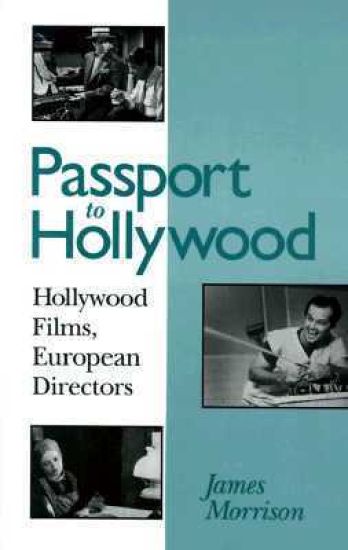
Passport to Hollywood

Passport to Hollywood

James Morrison

State University of New York Press
1998
pokkari
Examines popular films made in Hollywood by European directors, offering a fresh take on the much-debated issue of the "great divide" between modernism and mass culture. CHOICE 1999 Outstanding Academic BooksIn Passport to Hollywood, James Morrison examines a series of Hollywood films by directors from European art-cinemas. Drawing widely on current research in film theory, film history, and cultural studies, he traces the influence of European filmmakers in Hollywood from the 1920s to the 1980s and illuminates the relation between modernism and mass-culture in American movies. By interpreting important American films, Morrison also shows how these films illustrate key issues of cultural hierarchy and national culture over fifty years of American cinema. In addition, he explores the complex and often contradictory ways that these Hollywood movies conceptualize ideas about "foreignness." Using insightful close viewings, Morrison demonstrates new connections among modernism, postmodernism, and American movies.